
Introduction
I still remember the first time I felt the wind whip past my face on the track. It wasn’t just the speed; it was the realization that the right adaptive sports equipment didn’t just support my body—it set my spirit free.
For years, the barrier to entry for disabled athletes was high, heavy, and frankly, quite clunky. But as we move through 2026, the landscape has shifted from “making it work” to “making it fly.” The era of “handicapped gear” is dead; we are now in the age of high-performance human augmentation.
The New Golden Era of Sports Gear for Disabled Athletes
The revolution we are witnessing today isn’t just about carbon fiber and lighter alloys. It’s about intelligence. Whether you are a weekend warrior or training for the Milano Cortina 2026 Paralympic Winter Games, the gear hitting the market this year is more intuitive than ever.
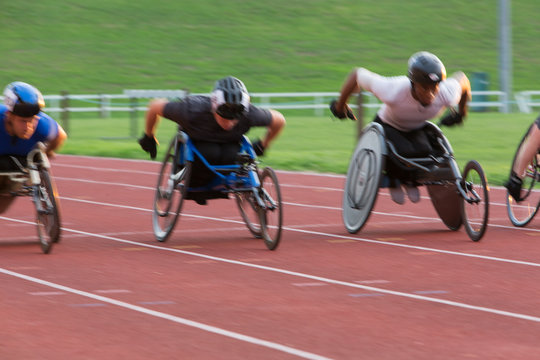
We are no longer looking for “assistive” tools; we are looking for high-performance instruments. In this guide, I’ll walk you through the top-tier sports gear for disabled athletes that is currently redefining the limits of human potential.
Why 2026 is a Turning Point
In previous years, adaptive gear was often a secondary thought—modified versions of “standard” equipment. Today, engineering firms like Honda and specialized startups are building from the ground up. This shift is driven by three main pillars:
AI Integration: Real-time feedback loops that adjust to an athlete’s fatigue.
Generative Design: 3D-printed frames optimized for an individual’s specific bone structure and center of gravity.
Material Science: The use of graphene and aerospace-grade composites that were cost-prohibitive just five years ago.
1. High-Performance Racing Wheelchairs: The Speed Demons
In 2026, wheelchair racing has moved into the realm of Formula 1 engineering. The focus has shifted from mere stability to aerodynamic efficiency and kinetic energy recovery.
The Rise of the Honda KIWAMI Series
Brands like Honda have integrated their F1 carbon technologies into frames that weigh less than a gallon of milk. The KIWAMI series has become the gold standard for elite racers.
Integrated Steering Dampers: New models now enclose critical steering parts inside the frame. This doesn’t just look sleek; it protects the damper from rain and grit, ensuring the steering stays “true” even on rougher road surfaces.
Stroke-Power Visualization: Using sensors on the wheels, athletes can now see real-time data on their heads-up display (HUD). It tells you exactly how many Newtons of force each push generates, allowing for instant form correction mid-race.
Custom Contoured Seats: Gone are the days of foam inserts. 2026 racing chairs feature 3D-scanned, resin-printed seats that mirror the athlete’s exact pelvic tilt.
Mid-Range Alternatives for Emerging Talents
Not everyone needs a $20,000 carbon fiber rig. For intermediate athletes, the “Elite-Lite” series offers modular aluminum-scandium frames. These allow you to upgrade components—like the wheels or the compensator—as your performance improves.
2. Bionic Limbs and AI-Powered Prosthetics
If 2025 was the year of the “smart” limb, 2026 is the year of the “intuitive” limb. The latest adaptive sports equipment in the prosthetic world now features neural-linked systems that learn how you move.
The “Embodiment” Breakthrough
The biggest complaint I hear from fellow athletes is that a prosthetic feels like an “attachment.” In 2026, technology from companies like Ottobock and Össur is closing that gap.
“The limb reads my intention before my muscles even twitch. It’s no longer a tool; it’s just… me.” — Anish, 2026 Para-Snowboarder
Comparison of Leading Prosthetic Technologies in 2026
| Feature | Traditional Carbon Blades | AI-Bionic Systems (2026) |
| Material | Standard Carbon Fiber | Bio-mimetics & Aerospace Alloys |
| Feedback | Passive Energy Return | Real-time Neural Feedback |
| Adaptability | Fixed Stiffness | Dynamic AI-Stiffness Adjustment |
| Weight | Lightweight | Ultra-Lightweight (Under 0.9 kg) |
| Connectivity | None | Bluetooth 6.0 / Smartphone App |
The Power of Haptics
One of the most exciting additions this year is haptic feedback. For runners, “sensing” the ground is vital for balance. New bionic feet use micro-vibrations in the socket to tell the athlete exactly how much pressure they are applying to the track. This reduces “visual reliance”—the need to look down to see where your foot is landing—saving precious seconds and reducing neck strain.
3. Winter Sports Innovation: Conquering the Slopes
With the 2026 Winter Paralympics currently in the spotlight, innovation in sit-skis and mono-skis has reached a fever pitch.
Custom Mono-Skis: The “Smart-Shock” Revolution
The new generation of mono-skis uses shock absorbers that can be tuned via a smartphone app. You can adjust your suspension mid-mountain depending on whether you’re hitting hard-pack ice or fresh powder.
Active Suspension: Some high-end models now feature sensors that “read” the terrain 100 times per second and adjust the dampening automatically.
Outriggers 2.0: Outriggers (the handheld skis used for balance) now feature “dual-mode” tips. With the flick of a trigger, they switch from a sliding ski to a “braking” claw for easier loading on chairlifts.

Adaptive Snowboard Gear
Snowboarding has traditionally been harder to adapt than skiing, but 2026 has changed that.
Rider Bars: Waist-high, U-shaped bars mount underneath bindings, helping riders maintain balance through core movements rather than just ankle flexion.
Magnetic Bindings: No more fumbling with straps in -20°C weather. High-strength magnets pull the boot into the correct alignment, clicking into place with a mechanical lock.
4. Cycling and Handcycling: The Aerodynamic Edge
Cycling has seen the biggest infusion of sports gear for disabled athletes from the commercial E-bike world.
The AI-Powered Handcycle
Modern handcycles in 2026 are often “hybrid.” They feature small, lightweight motors that don’t just provide power, but torque-evening.
The “Dead Spot” Solution: In handcycling, there is a “dead spot” in the rotation where power is lowest. AI sensors now provide a micro-boost of 0.5 seconds exactly at that point, ensuring a perfectly smooth, circular cadence.
AR Helmets: Cyclists are now using helmets like the VitalPro, which project a transparent OLED map 2 meters in front of their eyes. This is crucial for handcyclists who are positioned low to the ground and have a limited field of view.
The “Universal” Frame
A new trend in 2026 is the “Growth Frame.” Aimed at youth athletes, these frames can be adjusted in length and width as the child grows, making the $5,000 investment last for 5 years instead of 18 months.
5. Sensory Excellence: Tech for Blind and Low-Vision Athletes
The most inspiring leap in adaptive sports equipment this year is in the realm of sensory substitution. For a long time, blind athletes were limited to tethered running or guide-led sports.
Audio Aiming for Biathletes
In the biathlon, visually impaired athletes use rifles equipped with an “acoustic sight.”
How it works: The rifle emits a tone that changes in pitch as the barrel aligns with the target.
The Result: Athletes are achieving 95% accuracy in 2026, competing on par with sighted peers in specific “acoustic-only” categories.

Haptic Navigation Belts
For open-water swimmers and marathon runners, “Wayfinder” belts are a game-changer. These belts use GPS and 360-degree sonar to vibrate on the left, right, or center of the athlete’s waist. It allows a blind runner to stay in the center of a lane without a guide runner, providing a level of autonomy that was previously impossible.
6. Inclusive Apparel: It’s Not Just About the Metal
We often focus on the chairs and the limbs, but what we wear is just as important. The 2026 Lululemon Team Canada Kit proved that inclusive design is the new standard for the industry.
Design Features of 2026 Adaptive Clothing:
Seated-Fit Engineering: Standard jackets “bunch” at the stomach when you sit in a chair. 2026 designs use a “short-front, long-back” cut.
Sensory-Friendly Seams: For athletes with neurodivergence or skin sensitivity, laser-welded seams prevent the chafing that traditionally leads to pressure sores.
Magnetic Zippers: One-handed zipper operation is now standard in high-end athletic wear.
Thermal Regulation: Adaptive athletes often struggle with temperature regulation (especially those with spinal cord injuries). New fabrics include “phase-change materials” that absorb heat when you’re hot and release it when you cool down.
7. The Psychology of Performance: How Gear Impacts the Mind
We talk about the “speed” of the gear, but we rarely talk about the mental edge. Access to high-quality adaptive sports equipment has a profound psychological impact.
From “Patient” to “Athlete”
When a person is given a clunky, hospital-grade wheelchair, they feel like a patient. When they are given a matte-black, carbon-fiber racing machine, they feel like a warrior.
Autonomy: The ability to set up your own gear without help is the greatest psychological win.
Social Integration: Having gear that looks “cool” and “high-tech” bridges the social gap, turning curiosity from “What happened to you?” to “Where can I get that bike?”
8. Making it Accessible: Funding the Future
The elephant in the room is always the price tag. In 2026, the industry is fighting back against the “disability tax.”
Grants and Opportunities
If you are looking for sports gear for disabled athletes, do not pay full price until you check these 2026 programs:
Move United Equipment Grants: Offering up to $50,000 for organizations to stock up on inclusive gear.
Challenged Athletes Foundation (CAF): Their 2026 grant cycle focuses specifically on individual equipment needs.
Insurance Advocacy: In some regions, “Physical Activity” is now being coded as a “Medical Necessity” for mental health, allowing some prosthetics to be partially covered by insurance.
Comparison of 2026 Funding Tiers
| Organization | Max Grant Amount | Primary Focus |
| Move United | $50,000 | Community/Club Equipment |
| CAF | Varies | Individual Elite & Recreational Gear |
| The Hartford | $20,000 – $30,000 | Youth-focused Adaptive Gear |
| Kelly Brush Foundation | $5,000 | Spinal Cord Injury (Skiing/Cycling) |
9. Personal Experience: Lessons from the Field
As someone who has tested dozens of pieces of adaptive sports equipment, I’ve learned that the “best” gear isn’t the most expensive one—it’s the one you’ll actually use.
My “Fail-Safe” Checklist for Buying Gear:
Transportability: If the racing bike doesn’t fit in your car, you won’t go to the track. Always check the “folded” or “disassembled” dimensions.
Repairability: Can you fix a flat tire or a loose bolt with a standard multi-tool? Avoid gear that requires a “certified technician” for basic maintenance.
The “Sweat” Factor: How does the material react to sweat? Many “cool-looking” carbon seats become incredibly slippery when wet. Look for integrated grip-tape or textured finishes.
10. Future Horizons: What’s Coming in 2027?
We are already seeing prototypes for next year that will take sports gear for disabled athletes even further.
Neuro-Gaming Integration: Using brain-computer interfaces (BCI) to control e-sports avatars for athletes with limited limb movement.
Bio-Hybrid Materials: Sockets made from lab-grown “skin-like” materials to eliminate friction entirely.
Global Rental Networks: Imagine flying to a marathon and having your exact 3D-printed chair waiting for you at the airport, rented through an app.
FAQ: Everything You Need to Know About Adaptive Sports Equipment
Q: Why is adaptive sports equipment so much more expensive than standard gear?
A: It comes down to “economies of scale.” A company might make 1 million standard road bikes but only 500 handcycles. The research, development, and customization costs are spread over fewer units, driving the price up. However, 3D printing is slowly bringing these costs down.
Q: How do I know which size of racing chair to buy?
A: You don’t “buy” a size; you are “fitted.” Elite chairs are measured down to the millimeter. For beginners, look for “adjustable” frames like the Top End Reveal, which allows you to change the seat width and center of gravity as you learn your preference.
Q: Are there “all-in-one” prosthetics for different sports?
A: Not quite yet. While a “Versa Foot” can handle some hiking and gym work, elite sprinting requires a specialized “blade” with no heel. Most serious athletes have a “quiver” of feet for different activities.
Q: Can AI gear be hacked or fail mid-race?
A: Manufacturers use “fail-safe” mechanical locks. If the battery on an AI-powered knee dies, the knee defaults to a “locked” or “high-resistance” mode so the athlete doesn’t collapse.
Q: Is there an “entry-level” sport for those on a budget?
A: Adaptive swimming and powerchair football (soccer) have lower “personal” equipment costs compared to cycling or skiing, as many clubs provide the specialized chairs or pool lifts.
Conclusion: Your Journey Starts with the First Move
The world of adaptive sports equipment in 2026 is no longer a niche market of “fixes.” it is a thriving ecosystem of innovation that celebrates what the human body can do. Whether you’re looking for your first set of outriggers or a custom carbon-fiber racing rig, the technology is here to support your ambition.
Remember, the gear is just the bridge. You are the engine.
Ready to find your perfect fit?
Check out our A Complete Guide to Adaptive Sports for All Abilities to start your journey without breaking the bank.
Next Page: How to Start Adaptive Sports for People With Disabilities
Share Now: Help another athlete find their freedom. Share this guide on [Facebook] | [Twitter] | [LinkedIn]
Key Takeaways for 2026:
AI is the new coach: Equipment now provides real-time data to prevent injury.
Sustainability is here: Bio-based frames are replacing traditional plastics.
Autonomy is the goal: The best gear is the gear you can manage yourself.
Funding is available: Don’t let the price tag stop you; grants are more accessible than ever.


