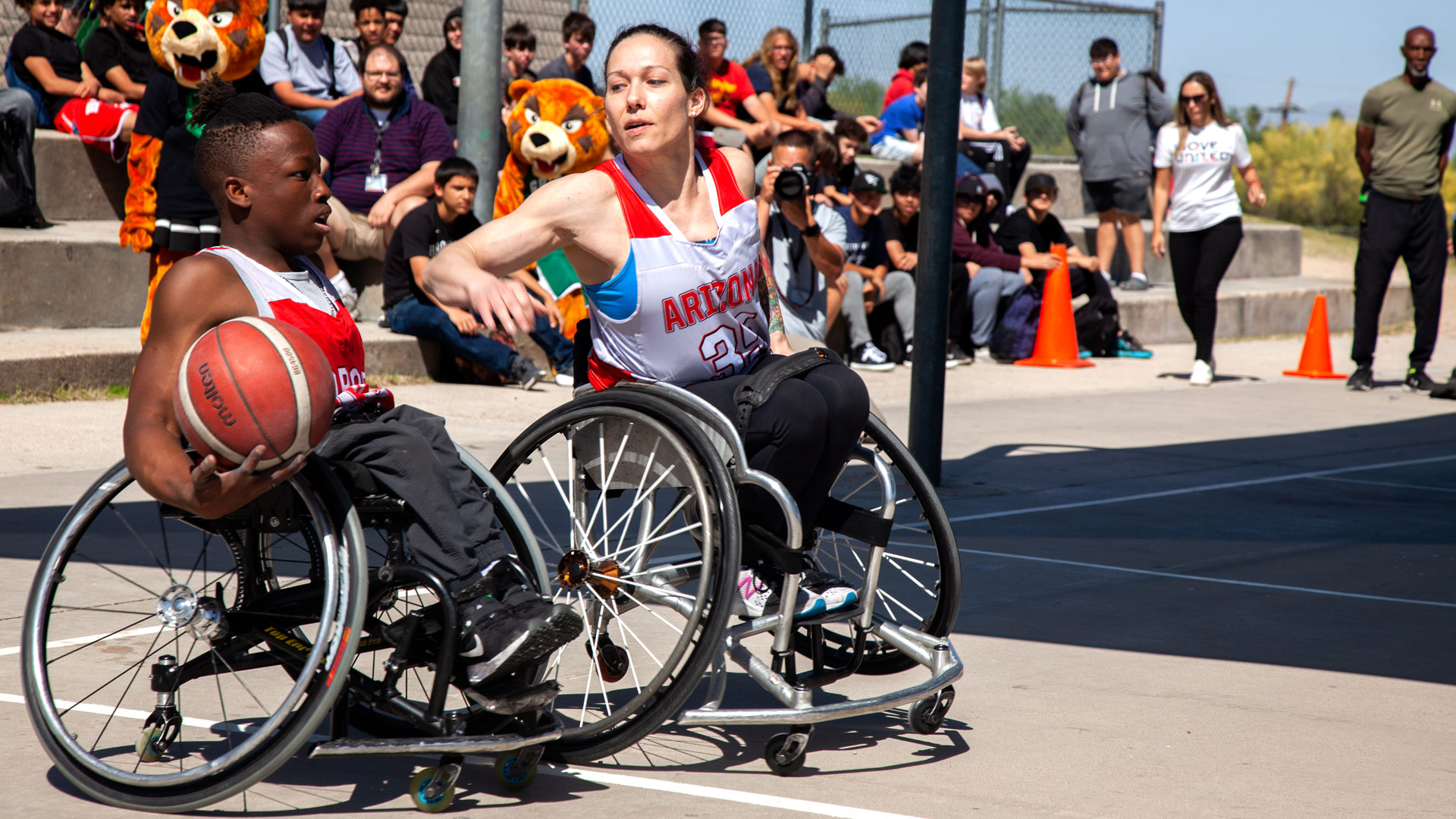
Introduction:What Is the Breakthrough in Adaptive Sports?

Imagine a world where loss isn’t the end — where a life-altering injury becomes a launching pad, not a limit. In adaptive sports, athletes aren’t just surviving; they’re rewriting what success means.
Adaptive sports — sports modified or specially designed for people with disabilities — are no longer niche therapy or recreational activities. They’ve evolved into powerful platforms that challenge perceptions of ability, resilience, and success.
This breakthrough story is not just about competition: it’s about how adaptive athletes are shifting the narrative around disability. They’re not defined by what they can’t do — but celebrated for what they can achieve.
Over decades, adaptive sports have grown from a rehabilitation tool into a global movement. But what’s truly inspiring isn’t just the scale of that growth. It’s how individuals and communities are redefining what “winning” means.
This inspiring Breakthrough Story in adaptive sports shows how athletes redefine success every day
The Roots: A Legacy of Vision & Courage
From Rehabilitation to Revolution: The Origins of Adaptive Sports
The modern adaptive sports movement traces back to Dr. Sir Ludwig Guttmann, a German-British neurologist who believed that sport could heal more than just the body. In 1944, he founded the National Spinal Injuries Centre at Stoke Mandeville Hospital in England. There, he introduced archery as part of rehabilitation, turning therapy into an athletic competition. Encyclopedia Britannica+2newseu.cgtn.com+2
On July 29, 1948 — coinciding with the London Olympic Games — Guttmann organized a contest for 16 wheelchair-bound war veterans. That modest archery event evolved into the Stoke Mandeville Games, the precursor to today’s Paralympic Games. paralympic.org+2National Archives+2
| Year | Event | Significance |
|---|---|---|
| 1948 | First Stoke Mandeville Games | Archery event for war veterans → birth of adaptive competition paralympic.org |
| 1952 | International Stoke Mandeville Games | Dutch competitors join, making it truly global paralympicheritage.org.uk |
| 1960 | First Paralympic Games in Rome | Now held every four years alongside the Olympics paralympic.org |
Guttmann’s philosophy was revolutionary: his work didn’t just aim to rehabilitate bodies — he wanted to restore dignity, purpose, and athletic ambition.
What’s New? The 21st-Century Breakthrough Story in Adaptive Sports
Adaptive sports aren’t static. The latest breakthrough story are pushing the boundaries further through innovation, inclusion, and psychological impact.
Technological Innovation: Smart, Accessible, Game-changing
- AI & biomechanics – Recent research shows that AI-driven motion capture tools (like OpenPose and ViTPose) are now accurately analyzing seated athletes’ motion in sports like boccia, helping coaches optimize performance. Beyond Barriers Sports
- 3D-printed prosthetics – Some para-cyclists used lightweight, customized 3D-printed prosthetics at recent major competitions. These designs reduce fatigue and increase comfort — removing barriers to high-intensity performance. Beyond Barriers Sports
- Neurostimulation for FES cycling – Emerging deep reinforcement learning models are powering neurostimulation systems for FES (functional electrical stimulation) cycling, allowing athletes with paralysis to pedal more efficiently. arXiv
These aren’t just cool gadgets. They represent a paradigm shift: design built for adaptive athletes, by adaptive athletes.
The Social Breakthrough: Inclusion, Empathy & Emotion
A 2025 study published in BMC Psychology found that participation in adaptive sports significantly boosts emotional resilience and empathy, two factors that in turn drive social inclusion and cognitive flexibility. BioMed Central
Participants in adaptive sports described:
- A stronger sense of belonging
- Better ability to bounce back from setbacks
- Deeper connection with others
Similarly, broader research shows psychological benefits such as improved self-esteem, social integration, and coping strategies. KMAN Publications
In other words, adaptive sports are more than physical exercise — they’re emotional and social training grounds.
Community & Empowerment: Building Bridges, Breaking Barriers
Over the decades, adaptive sports have created inclusive ecosystems where innovation meets empathy:
- Former patients turned coaches
- Athletes collaborating with tech developers
- Nonprofits supporting access and training
These communities don’t just nurture champions — they amplify voices. Many adaptive athletes become advocates, sharing their stories and pushing for systemic change.
Real People. Real Stories. Real Inspiration.
Here are several standout stories that illustrate how this breakthrough narrative plays out in real life.
Spotlight on Adaptive Sports Champions
1. Marilyn Hamilton
Marilyn Hamilton’s life transformed after a hang-gliding accident left her paraplegic. Rather than retreat, she co-founded Quickie Wheelchairs, a company that designed lightweight, customizable chairs — and then used one to become a silver-medal-winning alpine skier in the Paralympics. Wikipedia
2. Sandy Dukat
Sandy Dukat lost her right leg above the knee but forged a storied career as a Paralympic athlete in alpine skiing, triathlon, distance running, and swimming. Wikipedia
3. Craig “Gator” Bodzianowski
A boxer who returned to the ring — with a prosthetic leg. His comeback not only shattered sporting boundaries, but also inspired innovation in athletic prosthetics. Wikipedia
4. PADS Dragon Boat Team
The Philippine Accessible Disability Service (PADS) Dragon Boat Team is a cross-disability crew comprised of amputees, Deaf, and blind members. Their spirit and success in racing symbolize the transformative power of unity and adaptive design. Wikipedia
Why This Breakthrough Story Matters: The Broader Impact
Beyond Medals: What Redefining Success Looks Like
This is about redefining success — not just winning gold, but building connection, pushing innovation, and changing mindsets.
Here are key areas where the impact is felt most:
- Healthcare & Rehabilitation
- Sports as therapy → physical recovery + psychological empowerment
- Innovations like neurostimulation and robotics aid long-term wellbeing
- Technology & Design
- Equipment is being re-engineered with adaptive athletes in mind
- AI, 3D printing, and wearable systems are making elite performance more accessible
- Education & Inclusion
- School programs are including adaptive sports, shaping a future of integration
- Emotional resilience and empathy learned on the field translate into classrooms and communities
- Social & Cultural Change
- Adaptive athletes challenge stereotypes — showing what true resilience looks like
- Broader public recognition helps shift societal views about disability, not as a limitation but as a different dimension of human experience
Challenges & Future Frontiers
No journey is without obstacles — and adaptive sports face their own:
- Unequal access to technology: Not all adaptive athletes can access cutting-edge equipment, especially in low-resource contexts.
- Funding gaps: High costs for custom prosthetics, AI coaching, and neurostimulation systems can limit adoption.
- Perception and visibility: While adaptive sports have grown, media coverage and sponsorship still lag behind their able-bodied counterparts.
- Sustainability: Building programs that last requires institutional support, policy backing, and community investment.
Despite these challenges, innovators — from athletes to nonprofits to designers — are pushing forward.
Looking Ahead: What’s Next for Adaptive Sports
What might the next chapter look like?
- Expanded use of AI & VR for training and competition
- Greater integration of adaptive sports in schools and community centers
- Accessible innovation: open-source designs for prosthetics and assistive equipment
- Global growth: more countries embracing adaptive programs, especially in underserved regions
- Policy momentum: stronger advocacy for funding, inclusion, and infrastructure
All of this is driven by a shared belief: that adaptive sport is not just about overcoming, but thriving.
Conclusion: More Than a Game — A Breakthrough in Human Potential
The inspiring breakthrough story redefining success in adaptive sports is not a single moment — it’s a movement. It’s about how sport, technology, psychology, and community converge to uplift human potential, no matter the physical circumstance.
Success here isn’t measured in trophies alone. It’s measured in healed spirits, in friendships formed, in barriers broken, and in futures reimagined.
Adaptive athletes remind us that the greatest victories often come from the places we least expect — not by returning to what was lost, but by building something new, powerful, and wholly human.
If this breakthrough story moved you, share it now — and help inspire others with the powerful message that achievement looks different when defined on one’s own terms.


