Introduction
What if you could lift heavy loads effortlessly, run longer without fatigue, or hike up a mountain without gasping for breath — all by simply wearing a suit?
Exoskeletons promise exactly that: a kind of super-power for everyday humans. But beneath the hype lies a deeper secret… and a warning about what’s coming next.

What Are Exoskeletons — And How Do They Work
The Basics of Exoskeleton Technology
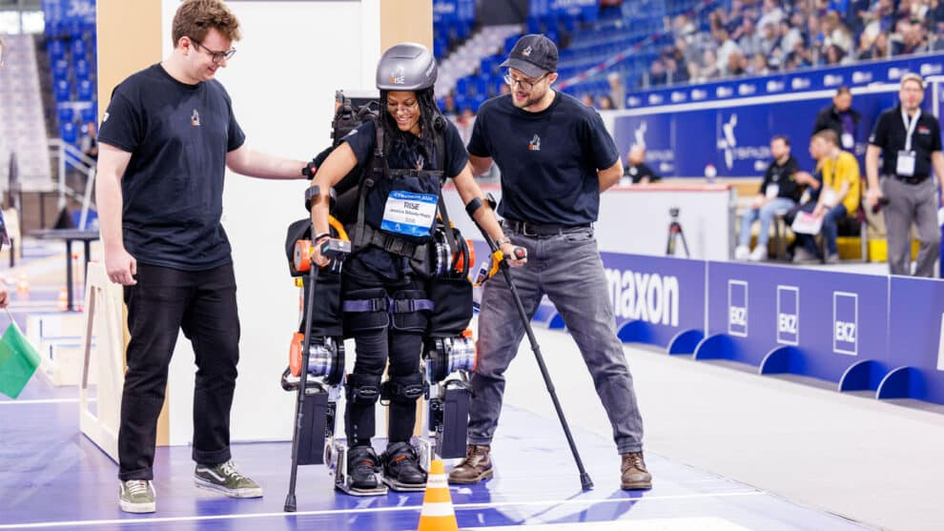
An exoskeleton is a wearable device — often robotic — designed to either assist or amplify the user’s physical movements. Think of it as an external skeleton that works in tandem with your body.
- Some exoskeletons cover just one part (like a back brace), others — full limbs.
- They may use motors, hydraulics, springs, or pneumatic systems to apply extra force. Wikipedia+2Tomorrow Desk+2
- Modern designs increasingly rely on biomechanics — matching human anatomy and natural movement patterns to provide support that feels intuitive rather than robotic. Exoskelette.com+1
In short: exoskeletons don’t replace you. They augment you — boosting strength, endurance, mobility, or stability depending on the design.

The Secret Behind Strength & Agility Gains
What makes exoskeletons truly powerful is not just mechanical support — but smart integration of biomechanics, control systems, and adaptive feedback.
Torque Amplification & Load Redistribution
- Torque at key joints: Exoskeletons can apply force at joints like hips, knees, ankles — reducing the effort your muscles need to produce. For example, assistive exoskeletons can generate joint torque that dramatically lowers muscular workload during activities like climbing stairs or lifting. Tomorrow Desk+1
- Redistributing load: Rather than letting your back, legs, or arms bear all the weight, many exoskeletons transfer load through stronger structural elements or redirect it toward the ground. This reduces muscle strain and fatigue. Tomorrow Desk+1
Result? You can handle heavier loads, do repetitive tasks longer, or move with greater ease.
Biomechanics & Smart Design — Making the Suit Feel Like an Extension of You
Thanks to advances in biomechanics, exoskeletons are no longer rigid, clunky machines. Designers now analyze human gait, joint angles, muscle dynamics — then build suits that support natural movement rather than fight it. Exoskelette.com+1
- Sensors and feedback systems adapt assistance in real time. If the user starts climbing uphill, the exoskeleton adjusts support at hips/knees to match terrain changes. mona-care.com+1
- Soft, flexible materials — instead of heavy metals — now let exoskeletons remain wearable for longer durations. Robotics Meta+1
The result is a level of agility and power that can feel surprisingly natural — almost like the exoskeleton is part of your own body.
7 Ways Exoskeletons Boosting Agility Are Creating a New Era of Human Power
Exoskeleton technology is evolving at lightning speed — and the results are starting to look like something out of a sci-fi movie.
From factories to athletics to military operations, here are the 7 most powerful ways exoskeletons are boosting agility and transforming human strength.
1. Power Amplification Through Mechanical Assistance
Modern exoskeletons use actuators, motors, and smart sensors to add extra power to human movement.
This translates to:
- Increased lifting capacity
- Reduced fatigue
- Higher endurance during physically demanding tasks
This is one of the core ways exoskeletons boosting power help ordinary people perform extraordinary tasks without strain.
2. Enhanced Agility Through Real-Time Motion Tracking
AI-powered sensors track micro-movements in your legs, hips, and spine.
This allows the exoskeleton to respond instantly, improving:
- Balance
- Coordination
- Reaction speed
- Dynamic stability
This is why exoskeletons boosting agility are being tested in sports and emergency response teams today.
3. Injury Reduction by Supporting Joints & Spine
One of the biggest benefits is injury prevention.
Exoskeleton frameworks absorb pressure around:
- Knees
- Lower back
- Shoulders
- Hips
This reduces joint strain and prevents the kind of repetitive injuries that limit human performance over time.
4. Boosting Endurance for Industrial and Military Use
Wearing an exoskeleton makes heavy work less taxing, allowing humans to operate for much longer periods.
Industries using this include:
- Warehouses
- Construction
- Transportation
- Defense
Soldiers wearing exoskeletons can walk, march, or climb for extended hours without losing strength — a huge leap in human endurance.
5. Assisting Mobility & Rehabilitation in Medicine
Medical exoskeletons support walking, standing, and rehabilitation for people with:
- Spinal cord injuries
- Stroke recovery
- Mobility disabilities
These wearable devices retrain the body to move correctly and safely.
This is a powerful example of how technology is restoring independence — not just boosting human capability.
6. Increasing Speed and Movement Precision
Athletes and high-performance workers gain sharper movement control with exoskeleton support.
The technology improves:
- Stride alignment
- Muscle coordination
- Motion accuracy
- Sprint stability
The result?
A level of speed and precision humans could not naturally achieve.
This directly supports the idea of exoskeletons boosting power & agility in competitive environments.
7. Unlocking Superhuman Capabilities for Future Applications
Here’s where things get exciting — and a little alarming.
Exoskeleton companies are experimenting with:
- Hybrid robotic muscle fibers
- AI-predictive movement
- Strength multiplication systems
- Micro-power amplification units
These advancements could soon give humans:
- Three–five times their natural strength
- Faster running speed
- Higher jumping ability
- Frictionless mobility across difficult terrain
Experts warn this could blur the line between human ability and machine-enhanced capability, creating ethical and regulatory challenges faster than we can manage.
Real-World Benefits: What Exoskeletons Are Already Doing
From Factories to Outdoors — Where Exoskeletons Shine
| Domain | Benefit of Exoskeleton Use | Evidence / Example |
|---|---|---|
| Industrial / Manufacturing | Reduced fatigue, fewer injuries, increased productivity | A study found wearing exosuits reduced back muscle activity by 7–18% and increased lifting endurance by 28–75%. Forbes+1 |
| Warehouse / Handling & Distribution | Lower risk of musculoskeletal disorders, improved load handling | Field trials of back-support exosuits showed a 41% reduction in fatigue and 27% less lower-back discomfort. Forbes |
| Construction / Heavy labor | Enables older or less-fit workers to handle heavy tasks; reduces workplace injuries | Exoskeletons relieve stress on back, shoulders, arms — helping mitigate risks common in manual labor jobs. eksobionics.com+1 |
| Rehabilitation / Medical | Helps people with mobility impairments walk or regain strength | Exoskeletons assist movement for people recovering from injuries, enhancing mobility and independence. kjtherapysg.com+1 |
| Outdoor activities / Recreation | Boosts mobility for hiking, long-distance walking, or physically demanding tasks | New “wearable-robot” exoskeletons are being designed for everyday mobility and active lifestyles. Forbes+1 |
In many cases, exoskeletons don’t just make tasks easier — they make them safer, more sustainable, and accessible to more people.
Recent Breakthroughs — The Coming Age of Smarter Exoskeletons
AI-Powered Exoskeletons — The Next Frontier
Recent advances are making exoskeletons more intelligent, adaptive, and user-friendly.
- Researchers at Georgia Institute of Technology recently demonstrated a new AI-based method to train exoskeleton controllers — drastically reducing the time and data required for development. This accelerates the timeline for practical, real-world deployment of exoskeletons for mobility assistance. coe.gatech.edu+1
- On the sensor side, some “soft exosuits” now integrate sensors that detect real-time muscle signals; combined with machine-learning algorithms, the exoskeleton can anticipate intended movement and deliver support almost instantaneously. arXiv+1
These innovations mean exoskeletons are shifting from industrial tools to everyday wearables — potentially available for rehabilitation, outdoor adventure, or even casual use.
Lightweight Materials & Better Ergonomics
A key enabler of recent progress is the move from heavy metals to advanced composites (lightweight aluminum alloys, carbon-fiber, etc.). This dramatically reduces bulk while preserving strength — making exoskeletons more comfortable, less energy-intensive, and more practical for extended wear. Robotics Meta+1
Manufacturers are also designing devices that adapt to the user’s body shape, distribute pressure evenly, and reduce hotspots — improving comfort and reducing risk of injury over long-term use. Exoskelette.com+1
The Dark Side: What Experts Warn Is Coming Next
The power and promise of exoskeletons are real — but many experts warn the next wave could bring unintended consequences.
Risks, Limitations & Ethical Concerns
Safety, Comfort, and Suitability
- If not fitted or adjusted properly, exoskeletons can cause pressure injuries, nerve compression, or soft-tissue irritation. tdi.texas.gov+1
- Bulky or poorly designed suits can shift a user’s center of gravity. During unexpected events — like slipping or rapid directional change — this can increase risk of falls or reduce ability to react naturally. ConstructionPlacements+1
- Usability is a challenge: anthropometric differences (body shape, size), previous injuries, or uneven tasks may make some users incompatible with particular exoskeleton designs. PMC+1
Access, Cost & Inequality
High-end exoskeletons remain expensive — often accessible only to large companies, military, or wealthy individuals. Luxwisp+1
This high cost risks creating a divide: those who can afford “super-power suits,” and those who can’t — potentially amplifying social inequalities. Some worry exoskeletons could become another status symbol rather than a universal aid. Tomorrow Desk+1
Ethical and Societal Implications
As exoskeletons become more powerful and accessible:
- Will workplaces pressure workers to adopt them — turning “assistive gear” into “mandatory PPE”?
- Will individuals with enhancements have unfair advantages (in sports, labor, daily life)?
- As suits blur the line between human and machine — how will identity, privacy, and bodily autonomy be affected? Tomorrow Desk+1
Public sentiment is already mixed: many see the potential, but a substantial proportion are uncertain — or even uncomfortable — with the idea of “wearable robots.” Pew Research Center
Why the “Secret” Isn’t Just About Power — It’s About Amplifying Human Potential
It’s Not Just Strength — It’s Efficiency, Rehabilitation & Mobility
The real secret of exoskeletons is not the headline-grabbing notion of “super strength.” It’s how they integrate with the human body to deliver efficiency, endurance, stability, and mobility.
- For injured or disabled persons, exoskeletons offer a path to regained mobility. Rehabilitation and gait-training applications are already promising. mona-care.com+1
- In industrial and labor-heavy contexts, exoskeletons drastically reduce wear-and-tear on the body — meaning fewer long-term injuries, higher quality of life, and longer working careers. Exoskelette.com+1
- For everyday life or outdoor adventures, lightweight, smart exoskeletons may soon make physically demanding tasks accessible to more people — regardless of age or baseline fitness. Forbes+1
In short: exoskeletons are less about “making humans into robots,” and more about amplifying human potential while staying human.
What’s Next — And Why Experts Are Watching Closely
Rapid Advances + Growing Reach — But With Caution
The field is evolving fast. With AI-driven control systems, improved materials, and smarter ergonomic design, exoskeletons are on the brink of entering mainstream use — not just in factories or labs, but in homes, hospitals, and perhaps even on hiking trails.
But with this rapid expansion comes serious questions:
- Will regulatory frameworks (safety standards, manufacturing oversight, user training protocols) keep up? Many current exoskeletons still lack universal standards. tdi.texas.gov+1
- Will access remain limited by cost — leading to inequality in who gets to benefit?
- Will social norms shift to expect or demand such enhancement — pressuring people to “upgrade” themselves just to compete?
The next few years will likely be critical: we could see exoskeletons become tools of empowerment — or tools of disparity.
FAQ — Exoskeletons: Common Questions Answered
Q: Are exoskeletons only for people with disabilities or injuries?
A: Not at all. While exoskeletons are extremely useful in rehabilitation and mobility aid, modern designs cater to a wide range of users — from factory workers needing physical support, to outdoor enthusiasts, to people simply wanting to reduce fatigue in daily tasks.
Q: Do exoskeletons make you “superhuman”?
A: They don’t grant superhuman powers — but they augment human strength, endurance, and mobility. The gains depend on design, task, and proper use.
Q: Are there risks to using exoskeletons long-term?
A: Yes. Improper fit, lack of training, or misuse can lead to discomfort, pressure injuries, or even increased risk of falls. That’s why proper ergonomics, customization, and user training remain crucial.
Q: Will exoskeletons become affordable and widespread?
A: Possibly — especially as materials, manufacturing, and AI controls improve. But cost, regulation, and social acceptance remain major hurdles before widespread adoption.
Conclusion — Exoskeletons: A New Era of Human Potential, Not Without Its Shadows
Exoskeletons — once the stuff of sci-fi — are no longer fantasy. The secret behind their strength isn’t just in heavy motors, but in smart design, biomechanics, and adaptive control.
They hold incredible promise: from empowering workers and reducing injury, to giving mobility to the disabled, to transforming how we experience physical tasks. But with that power comes a warning: if we rush headlong into adoption without careful regulation, equitable access, and ethical reflection — the “next chapter” could be as unsettling as it is fascinating.
Are we ready for a world where humans are part-biomechanical, part-machine? Only time — and how we choose to implement these tools — will tell.
Share this insight — and join the debate.
Share Now


