Introduction
If you thought surfing was just about balancing on a board and catching waves, hold on tight. A new wave of adaptive surfboard tech — from electric hydrofoils to sensor-loaded smart boards — is transforming who can surf and how. But as excitement builds, a growing chorus of experts and advocates are asking: is this revolution too fast?
Why Everyone’s Talking About Adaptive Surfboard Tech

What is “adaptive surfboard tech”?
The term refers to modern surfboards and related gear designed to open up surfing to people with disabilities, or to augment performance with electric propulsion, sensor technology, or ergonomic design. coastaladaptivesports.org+2Mo’s Surf Shop+2
Traditionally, surfboards are shaped by a “shaper” — essentially a craftsman who carves a foam blank (often from polyurethane or EPS foam) and then laminates it using fiberglass or resin. Wikipedia+1
But adaptive surfboards depart from that norm. They may:
- Be wider, longer, or thicker, with extra buoyancy and stability, to support riders with limited mobility or balance issues. Royal Rehab LifeWorks+1
- Feature handles, straps, handholds, or even built-in seats (for tandem or assisted surfing). Royal Rehab LifeWorks+1
- Use advanced materials — like epoxy resins, carbon-fiber reinforcements, or sustainable bio-resins — making them more durable, lighter, or eco-friendly than classic boards. WordPress+2BoardsVibes+2
- Incorporate electric propulsion or hydrofoils (aka “powered foilboards” / eFoils) — enabling riders to glide above the water, or catch waves without requiring traditional paddling skills. Wikipedia+2topjetsurfing.com+2
- Offer smart-board features: some new boards include sensors (pressure, flex, accelerometers, etc.) to monitor performance in real time and help surfers refine technique. floatingonwater.com+1
In short: adaptive surfboard tech is a broad umbrella — not one gadget, but a multitude of innovations aiming to make surfing more accessible, inclusive, and high-tech.
The Excitement: Why Many Surfers Are Embracing It
Inclusivity & Access — Surfing for All
For decades, surfing was often seen as an exclusive sport: requiring balance, strength, and access to challenging waves. Adaptive surfboards are breaking those barriers.
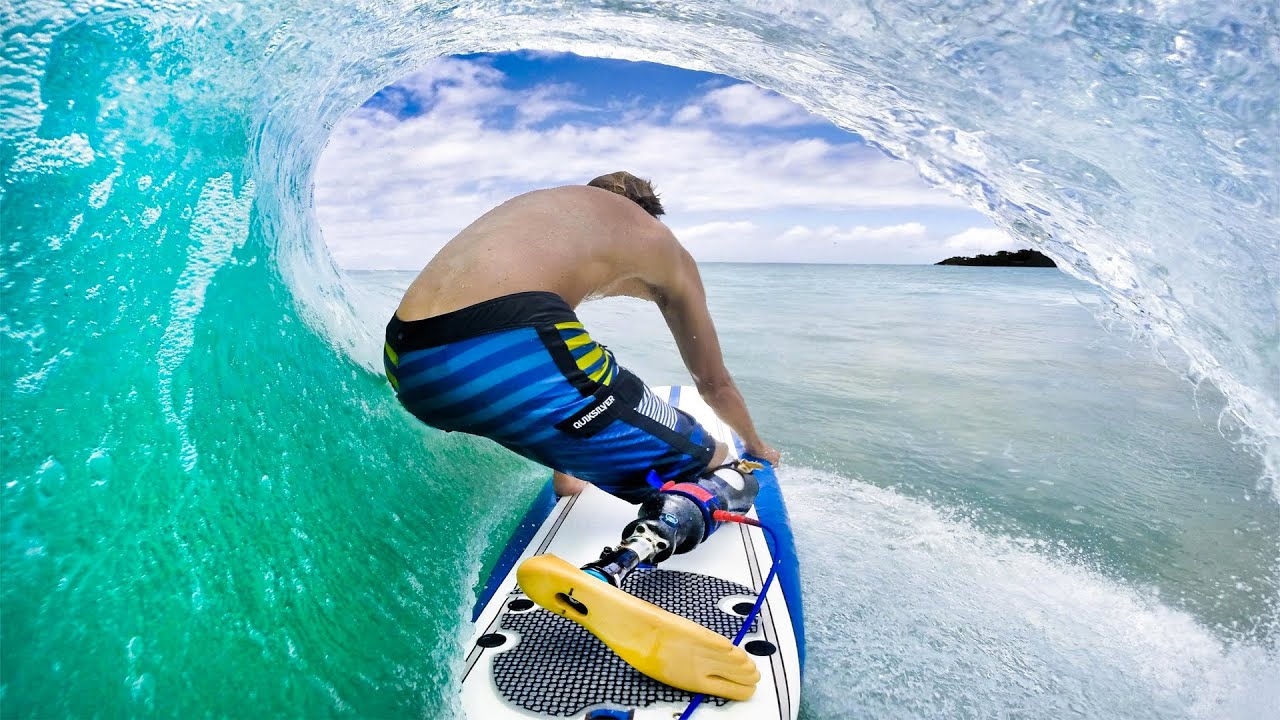
- People with spinal cord injuries, amputations, neurological conditions, or other mobility impairments can now experience surfing safely — something nearly impossible decades ago. Royal Rehab LifeWorks+2coastaladaptivesports.org+2
- Some adaptive boards are even designed for tandem surfing — letting an instructor or assistant ride along, so newcomers or disabled surfers can enjoy waves with support. Surfertoday+1
- For many, it’s more than a sport: adaptive surfing has therapeutic, emotional, and social benefits — boosting confidence, fitness, and a sense of inclusion. Royal Rehab LifeWorks+2Digital Journal+2
A 2025 update in the surfing community reflects this trend: adaptive surfing continues to gain traction as a lifestyle and community—not just a novelty. surfer.com+1
Performance & Innovation — Surfing Gets a Technical Upgrade
For able-bodied surfers, the new tech brings fresh ways to enjoy the ocean:
| Innovation | Benefit |
|---|---|
| Electric-powered hydrofoils / eFoils / motor-assist kits | Allows surfing even in minimal wave conditions; reduces physical exertion; makes surfing more accessible to beginners and non-traditional surfers. Wikipedia+2Foil Drive Pty Ltd+2 |
| Smart sensor boards | Real-time feedback on speed, wave engagement, technique — helps surfers improve quickly, like a surf “fitness tracker”. floatingonwater.com+1 |
| Advanced materials (epoxy, carbon fiber, bio-resins) | Greater durability, lighter boards, more eco-friendly materials — boards that perform well and last longer. WordPress+2Mo’s Surf Shop+2 |
| Custom shapes / modular designs | Surfboard tailored to individual needs/waves — from stability-focused adaptive boards to performance-driven shortboards or foils. surferweek.com+1 |
For surfers who grew up on standard longboards or competition shortboards, this new wave of tech opens a whole new playground.
The Bigger Movement — Sustainability & Future-Thinking
It’s not just about performance or accessibility. Many innovators are embedding sustainability into surfboard design:
- Use of recycled foam, eco-resins, and sustainable wood to reduce environmental footprint. surferweek.com+1
- Modular or upgradeable boards — reducing waste by letting users swap parts instead of buying a full new board for small tweaks. floatingonwater.com+1
In a sport powered by nature, many surfers and designers feel a responsibility to give back to the ocean — and adaptive surfboard tech is increasingly reflecting that ethos.
So Why Are Some Experts Worried? The Hidden Concerns
For all the hype around adaptive surfboard tech, there’s a growing undercurrent of concern — from safety experts, surf purists, sustainability advocates, and disability-community voices alike.
Safety Risks — The Double-Edged Sword of Power
Adding motors, propellers, hydrofoils — and putting tech in the water — carries inherent risk.
- Electric surfboards and eFoils rely on battery packs, motors, and remote/throttle controls. If not properly maintained — or used incorrectly — they can cause malfunctions. Pulseer+2SurfSpheres+2
- For beginners especially, there’s a steep learning curve: balancing speed, water conditions, power output, and avoiding obstacles. Boat & Sail Magazine+2eFoil Forum+2
- One safety guide warns about: battery handling, environmental awareness (currents, waves, underwater hazards), training, and regular maintenance — neglect one and risk serious accidents. Pulseer
Think about it: riding a board that can accelerate you across water — or lift you above it — is closer to jet-skiing than traditional surfing. That demands respect, safety gear, and responsibility.
Cost & Accessibility — Is This Really “Inclusive”?
While adaptive surfboards promise inclusivity, the reality is often more complicated.
- Many advanced boards — especially electric or hydrofoil ones — are expensive, putting them out of reach for many potential users. DataString Consulting+2InsideHook+2
- The market for adaptive surfboards remains small and specialized. In many regions, awareness is low, supply is limited, and training or support infrastructure is lacking. DataString Consulting+1
- Without proper support — local trainers, safe surf spots, maintenance facilities — the “access for all” dream may stay out of reach for many, especially outside affluent or coastal communities.
In short: for many, adaptive surfboard tech remains a dream — or, at best, a once-in-a-blue-moon experience.
Environmental & Ethical Questions — At What Cost?
While many manufacturers highlight sustainability, critics point to new environmental drawbacks:
- Electric motors require batteries — often lithium-ion — whose production and disposal has environmental and ethical footprints.
- Noise and water disturbance from propellers or hydrofoils may affect marine life, especially in fragile ecosystems. As more riders adopt motorized boards, widespread use could alter aquatic environments. Indeed, some safety/environment guides for electric surfboards point out concerns around environmental impact and noise pollution. SurfSpheres+1
- The “tech luxury” nature of many adaptive-tech boards raises ethical questions: who truly benefits? Are we building sustainable surfing for all — or just for those who can afford the gear?
Mission Creep — From Inclusion to Commodification
Originally, adaptive surfboards emerged out of a desire for inclusion — giving people with disabilities a chance to experience surfing. coastaladaptivesports.org+2Royal Rehab LifeWorks+2
But as with many emerging technologies, there’s a risk of mission creep: from inclusive gear to high-tech luxury toys for the wealthy.
When boards cost as much as high-end electric bikes, and marketing focuses on speed and thrill rather than accessibility, some longtime surfers and disability-advocacy groups feel uneasy: is adaptive surfing still about empowerment — or now status and performance?
A Closer Look: Adaptive vs. Traditional vs. Electric Surfboard Comparison

| Surfboard Type | Who It’s For | Pros | Cons / Risks |
|---|---|---|---|
| Traditional Surfboard (wood, foam + fiberglass) | Traditional surfers; general public | Light, low-tech, widely available; great feel with waves; affordable | Requires physical strength, balance; not accessible for many with disabilities or mobility issues; reliant on wave conditions |
| Adaptive Surfboard (non-motor) — wide, stable, with seats/handles/straps | People with mobility impairments, beginners | High buoyancy, stability, customizable; enables surfing for more people; often safer | Limited availability; may still require assistance; less speed or performance compared to high-end boards |
| Electric / Hydrofoil / eFoil / Motor-assist Surfboards | Surfers seeking ease, speed, less dependency on waves; adaptive surfers needing motor assist | Can ride in calm water, minimal wave dependence; reduced physical exertion; smooth glide; “surf anywhere” potential | Expensive; safety risks (battery, motor, propellers); learning curve; maintenance; environmental & ethical concerns; limited battery life / range JetFly+2Pulseer+2 |
Note on “eFoil” / “powered foilboards”: These boards typically include a mast with a hydrofoil and a motor — allowing the board to lift above water and glide smoothly. Once on foil, many riders switch off the motor and ride like a conventional foilboard. Wikipedia+2Foil Drive Pty Ltd+2
The Big Debate: Does Adaptive Surfboard Tech Undermine the Spirit of Surfing?
This is where surfers, ethicists, and advocates diverge — and the tension isn’t just technological, but philosophical.
Surfing as a Test of Man + Nature vs. Surfing as Tech-Augmented Experience
Traditional surf culture often frames surfing as a dance with nature — mastering balance, reading waves, harnessing natural energy. Adaptive and motorized surfboard tech shifts that paradigm:
- Electric boards mean you don’t need waves, strength, or long paddles — you just need throttle and balance.
- Sensor boards transform surfing into a data-driven sport: tracking metrics, optimizing performance. Some argue that removes the soul, spontaneity, and primal connection to ocean rhythm.
From this perspective, the debate isn’t about “better” or “worse” — but about what surfing stands for.
Inclusion vs. Exclusivity — Who Surfing is For
On one hand, adaptive surf tech democratizes surfing — making it available to people who otherwise would never ride a wave. That’s a powerful message of inclusivity.
On the other, when new boards cost thousands of dollars, and only appear in wealthy coastal zones — surfing risks becoming even more elitist. The tech may help some, but exclude many who lack resources.
Sustainability Values vs. Environmental Impact
Many surf advocates value sustainability, conservation, and harmony with the ocean. While adaptive surfboard innovators often highlight eco-friendly materials, adding motors and batteries introduces new environmental and ethical challenges.
Is it worth it to gain accessibility and thrill at the potential cost of greater environmental impact or social inequality?
Real Stories: Adaptive Surfing Changing Lives — and Raising Eyebrows
- One of the early examples of adaptive surfboards: A “tandem surfboard” developed for disabled children — a longboard with a supportive “bucket seat,” allowing instructors to ride with them for safety. This gave a child with cerebral palsy the chance to catch his first ever wave. Surfertoday
- Surfers with paralysis have returned to the water via motorized surfboards: e.g. a rider who navigated a board with a Bluetooth-connected motor and propeller after injury — regaining a sense of freedom and ocean connection. ABC+1
- On the performance side, new sensor-loaded boards — the “smart surfboards” — are being tested by experienced surfers looking to analyze and improve every move. For them, surfing becomes as much about feedback and refinement as about flow. floatingonwater.com+1
But along with the wins come stories of safety scares, mechanical failures, and heartbreak when boards fail or are misused — underscoring the fine line between innovation and risk.
What Experts Are Warning Us: Key Concerns
- Safety & Liability — Without proper safeguards, electric/motor boards can cause injuries; maintenance, battery safety, rider training and environmental factors must be taken seriously. Pulseer+2InsideHook+2
- Economic Access — High cost limits adoption among people who might benefit most; adaptive tech risks becoming a “rich person’s surf toy.” DataString Consulting+1
- Environmental Impact — Batteries, motors, noise, and potential ecosystem disruption raise sustainability concerns — perhaps antithetical to surfing’s traditional respect for nature. SurfSpheres+2Unity Sport+2
- Cultural Shift — As surfing moves from pure, wave-driven sport to tech-augmented activity, some fear the essence of surfing — connection with ocean, spontaneity, challenge — may be lost.
- Equity and Representation — Without broader infrastructure, awareness, and support (especially outside wealthy or coastal areas), adaptive surfing may remain niche — rather than truly inclusive.
Looking Forward: Can Adaptive Surfboard Tech Live Up to Its Promise?
The future of surfing may well be hybrid — a world where classic boards, adaptive designs, motorized foils, and smart-tech all coexist. But for that vision to be ethical, sustainable, and inclusive, the community needs to be intentional.
What Could Get It Right
- Affordability: More manufacturers producing lower-cost adaptive boards and power-assist kits — making it possible for middle-income people to participate.
- Safety Standards & Training: Surf schools, instructors, and certification systems to teach new riders how to use motorized/adaptive boards responsibly.
- Sustainable Production: Widespread adoption of recycled materials, bio-resins, and sustainable manufacturing; proper battery recycling.
- Inclusivity Infrastructure: Local surf-therapy centers, adaptive surfing programs, accessible beaches — not just in wealthy surf towns, but globally.
- Respect for Surf Culture: Maintaining a balance between innovation and surfing’s traditional values: love of waves, connection to ocean, respect for nature.
What Could Go Wrong
- Tech becomes exclusive, reserved for the rich.
- Safety incidents lead to stricter regulations or bans.
- Surfing loses its soul: over-commercialized, data-driven, stripped of spontaneity.
- Environmental costs outpace benefits.
Final Thought: A Revolution — But Also a Responsibility
Adaptive surfboard tech is undeniably amazing. It opens up surfing to people who’ve long been excluded, injects fresh energy into a beloved sport, and brings the future — with all its possibilities — closer.
But with great innovation comes great responsibility. As surfers, designers, and ocean-lovers, we need to ask honest questions: Who benefits? Who’s left out? What are the environmental costs? Do we preserve the spirit of surfing even as we reinvent it?
If we answer those right, this could be the start of something transformational — not just for surfing, but for how we think about inclusion, technology, and our relationship with the sea.
Common Questions About Adaptive Surfboard Tech
Q: Are adaptive surfboards only for people with disabilities?
A: No — while many adaptive boards are designed for surfers with mobility challenges, others (like electric hydrofoils or smart surfboards) target able-bodied surfers seeking convenience, performance, or new experiences.
Q: Are electric surfboards safe?
A: They can be — but only if battery systems, motors, and controls are properly maintained, and riders receive training. Safety gear, awareness of water conditions, and responsible riding are crucial. Pulseer+2KOOTUBIKE+2
Q: Does adaptive surfing require waves or strong ocean conditions?
A: Not always. Electric or hydrofoil-powered boards can let riders surf even in calm water — broadening access to surfing beyond traditional surf zones. topjetsurfing.com+1
Q: Is adaptive surfboard tech environmentally friendly?
A: It depends. There are advances in sustainable materials and manufacturing, but motorized boards introduce concerns around battery production/disposal, noise, and water ecosystem impact.
Q: Where can someone try adaptive surfing or get an adaptive board?
A: Some surf therapy organizations and adaptive-surfing associations offer programs. However, availability varies widely by region — meaning accessibility remains a challenge. coastaladaptivesports.org+2DataString Consulting+2
If you’re curious about specific examples of adaptive surfboard models (eFoils, sensor-boards, etc.), the top brands pushing this forward, or how to get involved in adaptive surfing, I’d be happy to build a follow-up guide — just say the word.
Share Now


