Introduction: The Data Era Has Finally Hit Adaptive Sports
What if the data behind today’s fastest, strongest adaptive athletes wasn’t just impressive…
…but powerful enough to change the entire future of adaptive sports overnight?
Well — adaptive sports scientists have finally exposed that data.
And the truth is both groundbreaking… and unsettling.
For years, adaptive athletes have pushed boundaries with grit, innovation, and raw determination. But something new is happening — something bigger than better wheelchairs, more responsive prosthetics, or smarter sports technology.
A wave of Adaptive Sports Research is now uncovering detailed performance data, biomechanics patterns, physiological trends, recovery metrics, and training efficiencies that were invisible just a decade ago.
This new data is powerful — it accelerates performance, prevents injury, and reveals how adaptive athletes can train with precision once reserved for elite Olympic programs.
But there’s a massive catch…
Not everyone has access to this data.
Not everyone can benefit from it.
And for some athletes, the data revolution may actually widen the gap — not close it.

What Exactly Is Adaptive Sports Research?
Adaptive Sports Research is an emerging scientific field analyzing how athletes with disabilities move, perform, train, react, and improve across various sports.
It includes data from:
- Biomechanics (movement patterns, stroke efficiency, gait, push mechanics)
- Physiology (heart rate, oxygen consumption, muscle activation)
- Sports performance (speed, endurance, force output)
- Injury analytics (fatigue breakdown, repetitive strain risks)
- Technology interaction (prosthetics, racing chairs, exoskeletons)
It’s one of the fastest-growing research areas in modern sports science.
And crucially — it’s finally exposing the truths behind adaptive athletic performance at a scientific level.
Why Adaptive Sports Research Matters Right Now
For decades, adaptive coaching relied heavily on intuition, experience, and anecdotal evidence. Athletes pushed until something improved — or something broke.
But now?
Thanks to emerging research from organizations like the National Institutes of Health and analysis published in journals indexed on PubMed, adaptive sports scientists have access to:
- Precise movement data
- High-resolution injury risk modeling
- Real-time physiology tracking
- Device-to-athlete performance correlations
- Predictive analytics for training loads
This data is transforming training systems, rethinking sport classifications, and reshaping how coaches tailor programs for athletes with specific impairments.
For the first time, adaptive athletes can access the same granular insights that elite Olympians receive — sometimes even more complex.
But again…
not evenly.

What Scientists Have Finally EXPOSED: The Data That Changes Everything
After years of study, adaptive sports researchers are exposing findings that dramatically reshape what we thought we knew about adaptive performance.
Below are the biggest revelations.
1. Wheelchair Racing Efficiency Is NOT What Coaches Believed
New Adaptive Sports Research found:
- Many top racers lose 15–25% of propulsion power due to sub-optimal push mechanics.
- Most propulsion inefficiency happens in the recovery phase, not the push.
- Correcting a single mechanical angle can boost speed by 6–10%.
For elite racing, that’s the difference between gold and eighth place.
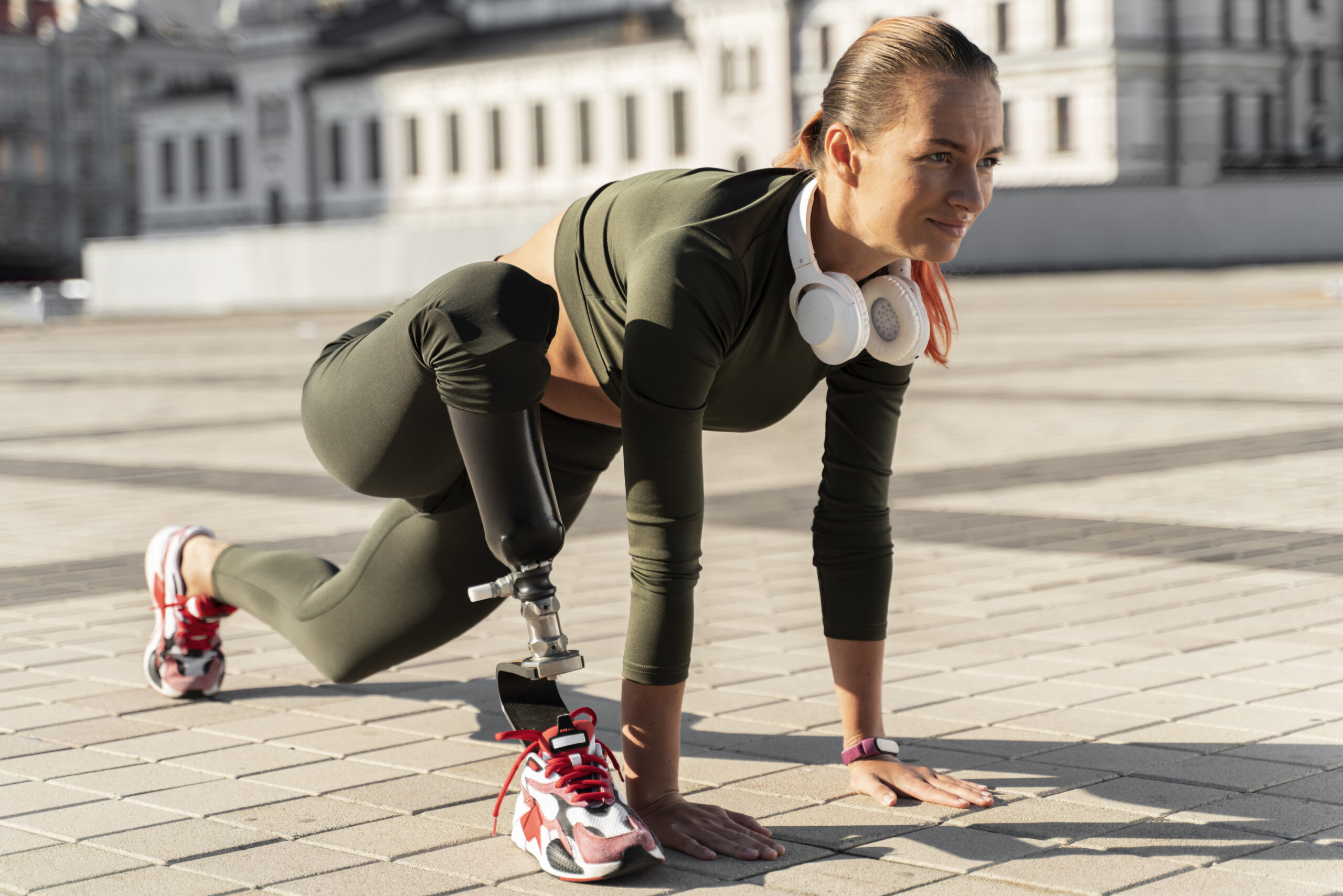
2. Prosthetic Runners Gain or Lose Speed Based on Unexpected Variables
Contrary to long-held belief, speed differences aren’t only related to prosthetic stiffness or blade length.
Data now shows:
- Stride symmetry is more important than stride length.
- Blade alignment changes joint-load patterns dramatically.
- Fatigue responses in athletes with amputations differ biologically from those of able-bodied runners.
These insights are shaping prosthetic engineering in real time.
3. Para-Swimmers Respond Differently to High-Intensity Training
Scientists using:
- VO₂ max testing
- Lactate load tracking
- Underwater motion capture
…have discovered that stroke mechanics for amputees, hemiplegic swimmers, and cerebral palsy swimmers respond differently to the same training stimulus.
Meaning:
Equal training ≠ equal improvement.
For the first time, training is now becoming impairment-specific — a massive breakthrough.

4. Injury Risk in Adaptive Athletes Was Widely Underestimated
According to recent biomechanics research available through ScienceDirect’s sports science database:
- Wheelchair athletes experience repetitive strain at levels 4–6× higher than previously recorded.
- Sitting posture creates chronic spinal loading that accumulates silently for years.
- Athletes with amputations often overuse their intact limb — causing long-term joint degradation.
The exposed data shows that many adaptive athletes are training on the edge of long-term damage without knowing it.
This has huge implications for rehabilitation and long-term athlete health.
But Here’s the Dark Side: Not Everyone Benefits
Even though Adaptive Sports Research is revolutionizing training, its benefits are unevenly distributed.
This is where things get uncomfortable.
1. Athletes in Developing Countries Are Left Behind
Most adaptive athletes globally do NOT have access to:
- Biomechanics labs
- Wearable tracking sensors
- Force plates
- VO₂ testing equipment
- Specialized prosthetic tuning
- Sports science research teams
Meaning:
While athletes in the U.S., U.K., Australia, Canada, Germany, and Japan benefit…
Many athletes in Africa, Asia, the Middle East, and Latin America remain data-dark.
2. Equipment Cost Is a Major Barrier
To participate in data research, athletes often need:
- Smart prosthetics
- Sensor-equipped gloves
- High-performance racing chairs
- Wearable EMG sensors
- Trackable orthotics
Some of this technology costs more than $15,000–$40,000 per athlete.
Not exactly accessible.
3. Talent Identification Is Now Data-Driven — and Unequal
Countries using Adaptive Sports Research can now:
- Identify promising young athletes earlier
- Train them with hyper-precision
- Prepare them for elite competitions years ahead of others
This creates a long-term competitive imbalance.

Table: Who Benefits vs. Who Gets Left Behind
| Athlete Group | Access to Data | Training Tech | Performance Benefit | Equity Risk |
|---|---|---|---|---|
| Elite athletes in wealthy nations | High | Advanced | Very High | Low–Moderate |
| Developing-country athletes | Low | Minimal | Low | Very High |
| Community-level athletes | Very Low | Basic | Low | High |
| Youth talent in funded programs | Moderate–High | Moderate | High | Medium |
| Athletes without prosthetic tech support | Low | Very Low | Low | High |
The data revolution is widening the gap — not closing it.
What This Means for the Future of Adaptive Sports
Adaptive Sports Research is undeniably powerful, but it is also reshaping competition, fairness, and athlete opportunity.
Here are the biggest implications.
1. Training Will Become Hyper-Personalized
Imagine:
- injury prediction based on your unique movement
- real-time prosthetic tuning
- AI coaching that adapts to fatigue instantly
- nutritional plans synced with your physiology
This is already happening in some labs.
2. Classification Systems May Change
More data = deeper insight into functional abilities.
This could:
- Refine classification
- Reduce classification controversies
- Or cause new disputes if certain athletes gain tech advantages
3. Sports Tech Will Explode in Innovation
Adaptive prosthetics, racing chairs, exoskeletons, and assistive wearables will evolve rapidly.
Fueled by data, not guesswork.

Ethical Concerns: Where Data Could Go Wrong
Adaptive Sports Research doesn’t just raise performance questions — it raises moral ones.
Privacy
Biomechanics + physiology + medical history = a complete profile of an athlete’s body.
If mishandled?
It can be exploited by brands, teams, or insurers.
Consent
Many athletes sign data-release forms without understanding:
- how their data will be used
- how long it will be stored
- who will profit from it
This is a ticking ethical time bomb.
Research Bias
Most research subjects are:
- elite
- male
- from wealthy nations
Meaning global adaptive performance patterns are under-represented.
This skews training guidelines worldwide.
Real Stories: Where Data Helped and Hurt
Athlete 1 — The Breakthrough
A wheelchair racer adjusted stroke mechanics after biomechanics testing.
Result: 8% improvement in race speed.
Athlete 2 — The Left-Behind Swimmer
A para-swimmer in a developing country lacked access to VO₂ testing.
Training plateaued while international competitors surged.
Athlete 3 — The Ethical Shock
A prosthetics company used an athlete’s gait data to develop a new commercial blade — without credit or compensation.
These stories show both the promise and the pitfalls.
FAQ Section
Q1. What is the main goal of Adaptive Sports Research?
To understand how adaptive athletes move and perform, and to create training, classification, tech, and health systems based on scientific evidence.
Q2. Is Adaptive Sports Research only for elite athletes?
No — but elite athletes currently benefit the most due to access to tech and funding.
Q3. Can research improve injury prevention?
Absolutely. Biomechanics and physiological tracking can predict injury risk earlier than traditional coaching methods.
Q4. Will data replace coaches?
Never. It enhances coaching — it doesn’t replace human insight, experience, and communication.
How to Make Adaptive Sports Research Fair for Everyone
To ensure the revolution doesn’t leave athletes behind, we need:
1. Global open-access research tools
Low-cost biomechanical tracking
Open-source software
Affordable wearable devices
2. International data-sharing partnerships
Wealthy nations pairing with developing countries.
3. Training coaches in data literacy
Not just scientists — community-level coaches too.
4. Athlete-centered privacy and consent policies
Your body data = your rights.
Conclusion — The Data Revolution Is Here… But Equality Isn’t
Adaptive Sports Research is reshaping everything we know about performance, injury prevention, and athletic capability.
It’s powerful.
It’s transformative.
It’s historic.
But unless access improves globally…
This revolution may create a world where only a small percentage of adaptive athletes get to rise — while countless others remain stuck behind an invisible wall of unequal opportunity.
The science is here.
The data is clear.
The question now is:
Who will benefit?
And who will be left behind
Help spread awareness.
More eyes = more equity.
Share this article now.