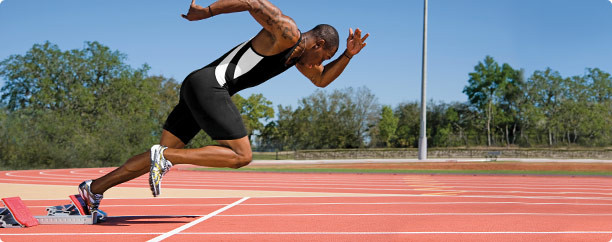
Introduction
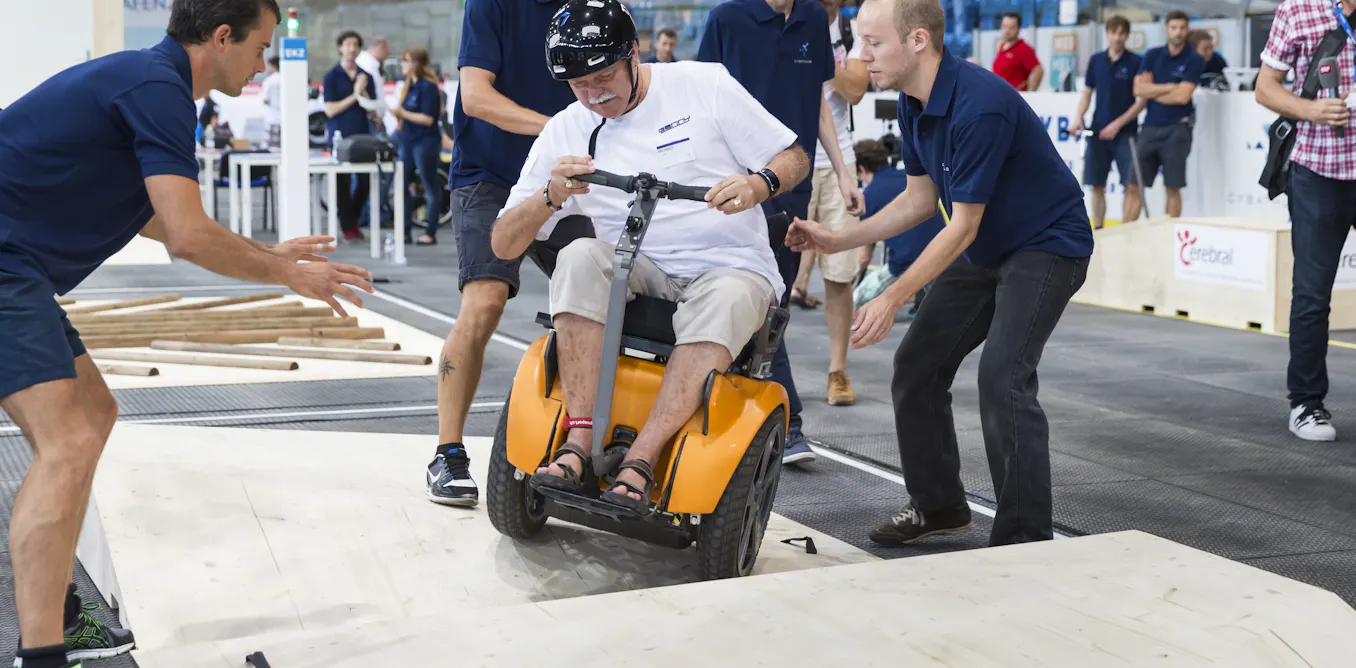
Adaptive athletes, inclusive-sport coaches, therapists, assistive-technology developers, policymakers and advocates — this one’s written with you in mind. We’ll walk through the research that’s actually moving the needle on speed and agility for athletes with disabilities, translate it into practice, and point you to tools, devices, and training models you can adopt or support. Expect science-backed takeaways, program-friendly drills, and a realistic look at tech like prosthetics, exoskeletons, and reactive-light systems.
Short version: evidence shows targeted power/plyometric work, reactive-agility (perceptual-cognitive) training, and tailored assistive technology (blades, exoskeletons, wheelchairs) can measurably improve speed and agility — if programs are adapted to the athlete, include progressive overload, and are integrated with neuro-rehab and accessibility-minded design. MDPI+1
These studies reveal effective strategies for boosting athlete speed and agility in adaptive sports.
Why “boosting athlete speed and agility” matters for inclusive sport
Training Models for Boosting Athlete Speed and Agility are central to sport performance — but for adaptive athletes they’re also about independence, participation, and psychological wellbeing. Improvements in sprint times, change-of-direction (COD) speed, and reactive agility translate to better game performance, reduced injury risk, and more equal access to competitive opportunities. Recent research isn’t just copying able-bodied training paradigms: it’s tailoring protocols, measuring outcomes in adaptive cohorts, and pairing human training with assistive tech and neuroplasticity-focused rehab. That’s what makes this wave of work game-changing. PMC+1
Key research trends actually boosting athlete speed and agility
Below are the major research-backed approaches showing consistent results across populations — and what they mean for adaptive sport programs.
1. Plyometrics and Power Training — adapted, targeted, and effective
Plyometric and explosive-power training remains a core driver of speed and COD improvements. Studies in team-sport and basketball athletes show significant gains in sprint/agility after 6–8 week plyometric blocks. Importantly, adapted protocols for wheelchair athletes (upper-body plyometrics) and athletes with intellectual disabilities show measurable improvements when intensity and movement patterns are sport- and athlete-specific. MDPI+1
Practical takeaways:
For ambulatory adaptive athletes: integrate low-to-moderate impact plyometrics (box jumps, lateral bounds) with progression and landing mechanics coaching.
For wheelchair athletes: use medicine-ball throws, rapid push-and-release drills, and trunk-focused plyometrics to increase propulsion power and reactive control. tss.awf.poznan.pl
2. Speed-Agility-Quickness (SAQ) and reactive-agility with technology
SAQ protocols (short sprints, COD drills, ladder work) are effective — and when combined with reactive-stimulus systems (lights, random visual cues) they improve not only speed but perceptual decision-making. Light-based reactive agility training (Fitlight-style systems) has been shown to produce large effect sizes for reactive-agility improvements in junior players — and early studies translate well into adaptive training when stimuli and response modalities are adapted. MDPI+1
Practical tip: use light-based or audio-reactive drills to train stimulus-response coupling. For visually impaired athletes, convert visual stimuli to tactile or auditory cues.
3. Assistive technology: prosthetic blades, running-specific AT, and exoskeletons
Advances in prosthetic design (running blades) and exoskeleton-assisted training are more than hardware PR; they shape biomechanics and energy return, enabling higher step frequency and sometimes reduced metabolic cost for specific tasks. Exoskeletons and robotic gait trainers also support high-repetition, task-specific training that promotes neuroplasticity — important for athletes with neurological impairments. Engineering research and numerical studies are refining materials and stiffness parameters to optimize energy return and fracture strength. ScienceOpen+1
Caveat: tech outcomes depend on individualized fit, classification rules (in competitive sport), and close collaboration between clinicians and biomechanical engineers. Tandfonline
4. Neuroplasticity & sensorimotor retraining
Rehabilitative research is emphasizing neuroplasticity — retraining the brain to coordinate movement faster and more reliably. Sensorimotor retraining, proprioceptive drills, and integrating cognitive load with physical tasks (dual-task training) are emerging as crucial for regaining speed/agility post-injury or neurologic impairment. Clinically informed sport programs are incorporating these elements to improve reaction times and motor planning. PMC
Quick comparison table — interventions that support boosting athlete speed and agility
| Intervention | Primary mechanism | Evidence (typical effect) | Adaptation notes for adaptive athletes |
|---|---|---|---|
| Plyometric training | Increase explosive power, neuromuscular rate of force development | Moderate–large improvements in sprint/COD after 6–8 weeks. MDPI | Modify impact; use upper-body plyometrics for wheelchair athletes. tss.awf.poznan.pl |
| SAQ + Reactive-light training | Improve speed, COD, and perceptual decision-making | Large effect sizes in reactive-agility with fitlight interventions. MDPI+1 | Substitute stimuli (audio/tactile) if needed; adjust distances and start positions. |
| Prosthetic running blades & tuned AT | Mechanical energy return, optimized stiffness | Performance gains depend on blade tuning and athlete fit; many biomech studies show improved sprint mechanics. ScienceOpen | Requires close clinician-engineer collaboration and classification oversight. |
| Exoskeleton-assisted training | High repetitions, task-specific gait practice → neuroplasticity | Early clinical gains in gait speed/endurance in neurorehab populations. ResearchGate | Useful in rehab-to-performance bridges; not a direct replacement for sport-specific training. |
| Sensorimotor / neurotraining | Improved reaction time, motor planning | Improves reinjury risk metrics and reactive control in rehab cohorts. PMC | Integrate with physical drills and AT to reinforce motor patterns. |
Concrete, research-backed training protocols you can use
Below are practical blocks adapted from the literature and field practice. Each block is 6–8 weeks, 2–3 sessions/week, and should be individualized.
Protocol A — Ambulatory adaptive athlete (6 weeks)
Warm-up: 10 min dynamic mobility + reactive footwork (3–4 min).
Main (30 min):
Plyo circuit (3 rounds): 6 box jumps/step-downs, 8 lateral bounds, 8 single-leg hops (or reduced-impact variant).
SAQ set: 6 x 10–20 m sprints with 2 CODs (rest 90–120 s).
Reactive drill: 3 sets of 30 s light-stimulus COD responses. MDPI+1
Cool-down: Mobility + breathing.
Protocol B — Wheelchair athlete (6 weeks)
Warm-up: 8–10 min propulsion technique + trunk activation.
Main (30–35 min):
Upper-body plyo: 3 rounds — 10 medicine-ball chest passes, 6 explosive push-release drills, 8 rapid-direction push sprints.
Short-interval pushes: 8 x 10–20 m max-effort pushes with COD simulation.
Balance & trunk reactive: 3 sets of perturbed-ball catches or reactive light/audio cues.
Cool-down: Stretch and shoulder/rotator cuff maintenance. tss.awf.poznan.pl
Protocol C — Neuro-rehab to performance transition
Focus on high-repetition, task-specific gait/propulsion with exoskeleton-assisted sessions (as needed), followed by progressive SAQ and cognitive-motor integration tasks. Clinician oversight required. ResearchGate+1
Measurement: how to track improvements in speed and agility
Sprint time (10 m, 20 m): objective, repeatable.
Change-of-direction (T-test, 505 test): common COD assessments with literature norms. PMC
Reactive-agility tests (Fitlight or custom): measure stimulus-response time and movement execution. MDPI
Athlete-reported outcomes: confidence in sport tasks, participation rates.
Biomechanical analysis (when possible): step length/frequency, ground contact, blade alignment for prosthetic users. ScienceOpen
Assistive tech and device design that accelerates progress
If you build or choose tech for adaptive athletes, these design principles — grounded in recent engineering and user-centered studies — matter:
Tunable stiffness and energy return: blades and frames must be adjustable to match individual biomechanics. ScienceOpen
Rapid feedback loops: devices that provide immediate performance feedback (timing, propulsion metrics, reactive cues) enable motor learning.
Inclusive interfaces: audio/tactile alternatives to visual cues for low-vision access. SpringerOpen
Clinical integration: prosthetics/exoskeletons work best when clinicians and engineers co-manage fit and progression. ResearchGate
For deeper reading on assistive-technology user experiences and design tradeoffs, see this review of athlete experiences with AT and this engineering review of running blade behavior. Both are excellent starting points: Neurosciences & Sports Rehabilitation review and Fitlight reactive-agility study (MDPI).
Programming pitfalls and how to avoid them
Pitfall: copying able-bodied protocols without modification. Fix: scale impact/velocity, choose functional equivalents.
Pitfall: neglecting upper-body and trunk power for wheelchair athletes. Fix: include plyometrics for the shoulders and trunk.
Pitfall: using prosthetics or exoskeletons without clinical/engineering oversight. Fix: require fit sessions, iterative tuning, and outcome tracking.
Pitfall: forgetting cognitive/perceptual training. Fix: layer reactive stimuli and decision-making into drills.
Policy, funding and inclusion implications — why investors and policymakers should care
Research is revealing that modest investments in inclusive tech, clinician training, and adaptive-sport equipment yield outsized returns: improved athlete outcomes, broader participation, and in many cases reduced long-term healthcare costs thanks to better mobility and fewer reinjuries. Policymakers can accelerate impact by funding community-level adaptive sport programs, subsidizing essential AT for athletes, and updating classification and competition rules to reflect technological advances. Investors — there’s clear market demand for tunable, evidence-backed assistive devices, integrated training ecosystems (hardware + software + data), and platforms that help coaches scale adaptive programming. For policymakers and funders, the evidence supports prioritizing interdisciplinary programs that pair technology with coaching and rehab services. Tandfonline+1
Case study snapshots
Junior wheelchair basketball program: adding 8 weeks of upper-body plyometrics + reactive-cue drills improved sprint-push speed and reduced on-court turnovers. This mirrors findings from upper-body plyometric trials. tss.awf.poznan.pl
Youth Special Olympics cohort: a 10-week plyometric program improved agility and social engagement in kids with intellectual disabilities, illustrating cross-cutting benefits of inclusive training approaches. Preprints
Reactive-light implementation in junior basketball: Fitlight-based reactive training produced significant gains in reactive COD vs. control training. Translate the stimulus modality and space to fit adaptive athletes (audio/tactile alternatives where needed). MDPI
Practical resources & tools
Rehabilitation & neuroplasticity review (open access): useful for clinicians integrating sensorimotor retraining into athlete programs. <a href=”https://pmc.ncbi.nlm.nih.gov/articles/PMC12015780/”>Read on PubMed Central</a>. PMC
Reactive agility / Fitlight evidence: practical evidence for reactive-light training and how it translates to sport settings. <a href=”https://www.mdpi.com/2076-3417/14/9/3597″>MDPI Fitlight study</a>. MDPI
(These external links are included so coaches and clinicians can dive into full methods and evidence.)
A checklist for coaches, therapists, and developers: implement tomorrow
Assess baseline speed, COD, and reactive-agility using validated tests.
Choose an evidence-aligned block (plyo, SAQ, reactive) and adapt modality for athlete ability.
Add assistive tech only with clinician/engineer involvement and outcome tracking.
Integrate cognitive load / sensorimotor tasks early to promote durable motor patterns.
Track outcomes (objective times + athlete-reported function) and iterate every 4–6 weeks.
Advocate for funding and policy that supports accessible equipment and coach education. MDPI+1
Final words — what “game-changing” really looks like
Game-changing research continues to redefine methods for boosting athlete speed and agility across inclusive programs.. It’s the slow accumulation of evidence that: (1) training matters and can be adapted safely; (2) perceptual-cognitive systems are as important as muscles; and (3) assistive technologies must be co-designed, clinically integrated, and treated as tools for learning — not band-aids. When coaches, therapists, engineers, policymakers, and funders align around those principles, we see rapid, meaningful gains in speed, agility, and athlete participation. The studies we’ve cited are practical roadmaps — and the next step is translating them into more inclusive, well-funded programs that scale.


