
Introduction

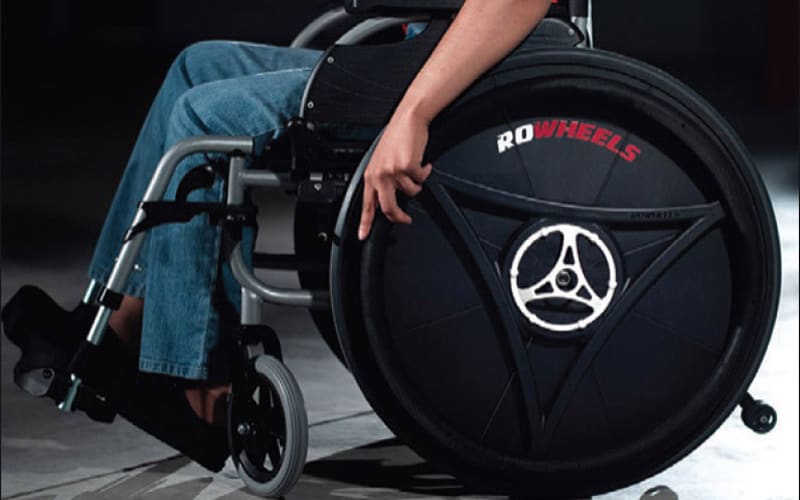
Imagine the moment when a piece of mobility equipment stops merely being functional and starts becoming transformative — empowering, inclusive, exhilarating. That’s exactly what a true revolutionary wheelchair design is striving to achieve. In the niche of assistive and inclusive sports technology, we’re witnessing a real shift: beyond simply helping people move, modern wheelchairs are enabling performance, athleticism, independence, and true freedom of motion.
In this blog post, I’ll walk you through how the concept of a “revolutionary wheelchair design” is playing out in the assistive-sports world — unpacking the key innovations, the implications for users (everyday and athlete alike), and what this means for the future of mobility and inclusive sport. Whether you’re writing about adaptive sports, mobility tech, or inclusive design, there’s something here for you.
Why the Focus on “Revolutionary Wheelchair Design” Matters
When we talk about a revolutionary wheelchair design, we’re not just talking about incremental improvements. We mean changes with the potential to:
dramatically reduce effort and increase mobility
enable athletic performance previously limited or impossible
change perceptions of “wheelchair = limitation” to “wheelchair = empowerment”
improve access, customization, and user-centric design in everyday life
Over the decades, wheelchairs were largely medical/rehab devices. As noted: “Wheelchairs provided by rehabilitation centres … were heavy and bulky, and drew on a medicalised framework of disability.” paralympicheritage.org.uk+1 The shift to sports, performance, customization and inclusive design is part of the story.
For the world of inclusive sports and mobility technology — a niche I work in — this isn’t just about gadgets. It’s about equity, access, independence, choice.
Understanding the Core Innovations in Wheelchair Technology
Lightweight & high-performance frames
One of the major breakthroughs has been materials and design-thinking borrowed from sports and aerospace: carbon fibre, titanium, advanced alloys. For example, ultralight sports wheelchairs now exist with rigid frames, tailored geometry and optimized weight. spinlife.com+1
Propulsion systems and ergonomics
Traditional manual wheelchairs often rely on push-rim systems that place strain on the user’s upper limbs. Innovations seek to reduce fatigue, increase efficiency, and allow for better athletic access. For instance:
A study described a wheelchair design whose propulsion system was inspired by a rowing motion rather than a push motion, to reduce shoulder strain. ResearchGate
Another review highlights how wheelchair design modifications influence physical activity and quality of life. ResearchGate
Smart controls, inclusive design & modularity
Beyond materials and mechanics, we’re seeing smart features (sensors, stabilisation, modular components) and inclusive design thinking (repairability, adaptability, customizable fit). For example, one project aimed to design a wheelchair with “a softer, more inviting appearance… modular components… quick-swap parts” for children’s disability sports in South Africa. Inclusive Innovation
Sports-specific design and access
In the world of adaptive sports, the chair isn’t just to transport — it’s to perform. Sports wheelchairs demand manoeuvrability, responsiveness, durability. “Many of the principles sought after in sports wheelchairs — manoeuvrability, weight reduction, responsiveness, durability — were also vital for everyday use.” paralympicheritage.org.uk
Table: Key Innovation Areas of Modern Wheelchairs
| Innovation Area | What’s Changing | Why It Matters |
|---|---|---|
| Frame materials & weight | Carbon fibre, titanium, folding options | Lighter chairs = less energy expenditure |
| Ergonomic propulsion systems | Rowing-motion, lever systems | Reduces upper limb strain, improves control |
| Smart/modular design | Sensor assist, modular parts | Custom fit, repairability, long-term value |
| Sports-specific configurations | Camber, wheel angle, athlete geometry | Enables true performance in inclusive sport |
| Access & affordability | Designs for developing world, modular | Equity in mobility & sport access |
Case Study – A Game-Changer in Wheelchair Design
Let’s zoom in on a concrete example of what I mean by “revolutionary”.
One such design is described in the insight on how sports engineering is making equipment inclusive: “One of the most significant ways in which sports engineering promotes inclusivity is through the development of adaptive sports equipment.” engineeringsport.co.uk
Example: Smart centre of gravity + ultra-light frame
The company Phoenix Instinct (UK) developed the “Phoenix i” – an ultra-light carbon fibre wheelchair that automatically adjusts its centre of gravity in response to user movement. It uses smart sensors and braking systems to reduce tipping risk and improve manoeuvrability. Wikipedia
This is more than incremental – it’s a qualitative shift: enabling users to navigate uneven terrain, slopes, daily use and sport with less risk, less fatigue, and more independence.
Why this matters in sport and daily mobility
For athletes: responsiveness = faster transitions, smoother turns, better performance
For everyday users: less strain = longer usage, less pain, more freedom
For global access: modular, smart features mean better adaptation across environments
Comparison: Traditional vs Revolutionary Design
| Feature | Traditional Wheelchair | Revolutionary Design |
|---|---|---|
| Frame weight | Heavy, often > 15 kg | Lightweight carbon/titanium, e.g., ~5–6 kg transit weight for some models sunrisemedical.com.au |
| Propulsion mechanics | Standard hand-rim push | Ergonomic lever, rowing motion systems ResearchGate |
| Adaptability | Generic size/configuration | Modular components, tailored fit |
| Smart features | None or minimal | Sensor assist, braking, centre-of-gravity control |
| Cost & access | Often expensive or not tailored for sport | Some designs focus on access, repairability e.g., children’s sports chairs in South Africa Inclusive Innovation |
Implications for Inclusive Sports Technology
Since you and I are focused on assistive and inclusive sports technology, it’s important to highlight how this “revolutionary wheelchair design” is shifting the playing field.
Enabling athletic performance
In wheelchair basketball, tennis or rugby, the difference in chair design can determine agility, speed, and safety.
For example, a newly designed sports wheelchair allows players to control movement simply by leaning (based on intuitive controls), changing the dynamic of the sport. ABILITY Magazine
More innovative frames and configurations = athletes with physical disabilities can push boundaries further, join more sports disciplines.
Expanding participation & access
As wheelchairs become more performance-oriented and user-centred, they reduce barriers for newcomers to sport.
Customisation (fit, weight, ergonomics) means less risk, more comfort, better experience.
Inclusive design also drives everyday mobility which in turn supports sport participation. Mobility independence = more opportunity for training, competition, recreation.
Impact on design culture
Designers are increasingly engaging with users, not just engineering for them. The shift from “clinic-provided heavy wheelchair” to “user-driven sport-mobility device” is a cultural change. For example: “A participatory approach to design assistive technology…” emphasised user involvement. discovery.ucl.ac.uk
This matters because user-centric design often leads to higher adoption, better outcomes, and greater satisfaction.
Challenges & considerations
Cost remains high for many high-performance models, limiting access in lower-income countries. paralympicheritage.org.uk
Maintenance and repair infrastructure may lag, especially for specialized designs.
The technology must remain reliable — sport environments are demanding (impacts, uneven ground, high fatigue).
Fit remains critical: the best design won’t work if it doesn’t match the user’s size, activity, and environment.
Global & Local Perspectives — Why It Matters in Nigeria & Africa
While much of the design innovation comes from Europe, North America and advanced economies, the implications in Africa (and Nigeria) are significant — and unique.
Mobility & sport access in Africa
Designs developed for developing regions (e.g., modular repairability, lower cost frames) are crucial. For instance, the project referenced in South Africa developed chairs with modular components to be repaired and maintained locally. Inclusive Innovation
In many African contexts, terrain is challenging (uneven roads, sandy surfaces), meaning design demands differ — all-terrain wheels, durability, ease of maintenance are critical.
Inclusive sports development
As para-sports grow in Africa, access to appropriate mobility equipment matters deeply for both training and competition.
A revolutionary wheelchair design that is adaptable and affordable could accelerate athlete development from Nigeria and beyond.
Cost & procurement realities
The high end of wheelchair design remains expensive; hence, innovation in cost-effective materials, local manufacturing, repair ecosystems are key.
Advocacy and policy matter: procurement, subsidies, training of users and technicians.
Recommendations for stakeholders
Local sports technology suppliers in Nigeria/Edo State/Benin City should monitor innovations and work on adaptation to local contexts.
Rehabilitation centres and sports clubs should look for partnerships with designers and manufacturers offering modular/custom chairs.
Athletes should receive proper fitting, training and maintenance guidance when using high-performance wheelchairs.
What to Look for When Evaluating Wheelchairs for Sport & Mobility (Focus: “Revolutionary Wheelchair Design”)
If you’re writing or advising on wheelchairs in the inclusive sports niche, you might use this checklist of criteria and questions.
Key evaluation criteria
Frame weight & materials: Is it ultralight? Carbon fibre, titanium or advanced aluminum?
Propulsion/Control system: How are the user’s arms/upper body used? Is it ergonomic?
Adaptability/Fit: Can the chair be adjusted to the athlete’s size, sport, activity level?
Durability & Terrain suitability: Can it handle sport impacts, rough terrain, everyday mobility?
Smart/Assist features: Does it include sensors, braking assistance, automated adjustments?
Repairability & cost: Are components accessible, maintainable locally? What is the total cost of ownership?
Sport-specific configuration: For sports use, how is camber, wheel angle, seat positioning optimized?
User feedback & comfort: What do real users say about fatigue, pain, control, transfer ease?
Checklist / Scorecard (example)
| Feature | Score (1-5) | Notes |
|---|---|---|
| Frame weight (< 10 kg) | ||
| Propulsion ergonomics | ||
| Adjustability & fit | ||
| Durability for sport use | ||
| Smart/assist features | ||
| Maintenance & repair access | ||
| Sport-specific readiness | ||
| User comfort / fatigue reduction |
Practical advice for buyers/users
Always test-drive the chair. A revolutionary design still needs to feel right for you.
Get professional fitting by a mobility/assistive-tech specialist.
Consider the sport(s) you’ll do — wheelchair basketball, tennis, racing all have different demands.
Ask about spares and local service — email from abroad is not the same as local support.
Factor in training and adaptation — a high-end chair may require new technique or conditioning.
For inclusive/sports contexts in Nigeria, check compatibility with local terrain, transport, repair shops.
H2: Real-Life Impact & User Stories
Let’s look at how these incredible design developments actually alter lives — beyond the specs.
Increased mobility = expanded opportunity
Research shows that better-designed wheelchairs contribute to increased physical activity and improved quality of life. For example: design modifications have been linked with higher activity levels in adults using manual wheelchairs. ResearchGate
This means more than just mobility; it’s participation, social inclusion, empowerment.
Inclusive sport participation
In sports settings, one quote stands out:
“As a disabled person being part of a team sport creates real comradery and friendship between people.” Inclusive Innovation
When wheelchair design enables easier, smoother participation in sport, then the effects ripple: improved mental health, social integration, better athletic pipelines.
Example of access challenge turned to opportunity
The piece about sports wheelchair access underscores that while access has improved, barriers remain — especially cost and geography. paralympicheritage.org.uk
But when a truly revolutionary design lowers one barrier (e.g., weight, cost, maintenance), the door opens wider for athletes and users globally.
The “game-changers” are those who bridge performance and accessibility
The story of modular chairs for children in South Africa (so components can be quickly swapped out) shows that design with context matters. Inclusive Innovation
This links directly to inclusive sports technology: If a wheelchair supports both everyday mobility and sport engagement, then a broader segment of the population can benefit.
Future Trends — Where Next for Wheelchair Design?
What’s on the horizon for revolutionary wheelchair design? Here are emerging themes worth watching:
Brain-computer interfaces (BCI) & shared-control wheelchairs
Research is moving toward wheelchairs that respond not just to manual propulsion, but to cognitive signals or shared AI control. For example: one study on EEG-based AI/BCI wheelchair systems is breaking ground. arXiv
Another describes a ROS-based “smart wheelchair” with shared control navigation for indoor environments. arXiv
While still emerging, these technologies could massively expand mobility for users with very limited upper-body control.
Materials & manufacturing advances
As carbon fibre, titanium, 3D-printing and modular manufacturing improve, we can expect lighter, more customisable, and potentially more affordable high-performance chairs. (See carbon-fibre folding powered chairs discussion.) sunrisemedical.co.uk+1
We may also see local manufacturing models in Africa or Asia, reducing cost and improving repair ecosystems.
Integrated sport & everyday mobility platforms
Instead of separate “sport wheelchair” vs “daily wheelchair,” we might see designs that scale between everyday use and sport performance — enabling more crossover, less investment, more flexibility.
For example, a design that is modular (swap wheels, adjust camber, change seat) might serve both training and competition.
Data, sensors & performance feedback
Sensors embedded in chairs could track usage, trauma, efficiency of propulsion, fatigue etc. This might support adaptive training for athletes and more responsive design for everyday users.
Price & access democratization
Perhaps the most critical trend: making high-performance wheelchair design accessible globally. Cost remains one of the greatest barriers. If innovations enable lower-cost production, local repair, modular spares, this will accelerate inclusive sport and mobility in developing regions.
Final Thoughts — Why This Matters, & What You Can Do
When I reflect on the phrase revolutionary wheelchair design, I think about more than engineering. I think about what becomes possible — mobility turned into freedom, sport turned into performance, independence turned into choice.
For the inclusive sports technology blogger, and for anyone interested in assistive design, here are some take-aways:
Focus on user impact: Beyond specs, ask “what does this allow the person to do?”
Context matters: Terrain, sport, culture, access – all shape what “revolutionary” means in any given region (including Nigeria/Edo State).
Stay curious about interdisciplinary design: Materials science + sports engineering + user-centric design = innovation.
Advocate for access: A great design is only as good as its availability and usability.
Think long-term: Maintainability, repair infrastructure, training, scaling – these matter as much as the initial innovation.
Conclusion
The world of wheelchairs is changing. What was once a device for basic mobility is increasingly becoming a tool for sport, independence and possibility. The revolutionary wheelchair design I’ve outlined — marked by ultra-light frames, advanced propulsion, smart controls and inclusive adaptability — is reshaping how we think about mobility and sport.
For athletes with disabilities, for everyday users seeking greater independence, and for the inclusive sports technology ecosystem, this design evolution offers hope, practical performance improvements and a pathway toward fuller participation in sport and life. As innovation continues, the gap between “being able to participate” and “being able to compete or explore without limitation” continues to shrink.
If you’re working in the assistive and inclusive sports tech space (or writing about it), keep your eyes on these developments. Because the chair is no longer just supporting mobility — it’s enabling possibility. And for so many people, that’s game-changing.


