Introduction — Why these are the groundbreaking studies redefining how athletes compete

Every few years, a cluster of studies emerges that doesn’t just add another data point — it reshapes our understanding of athletic performance and prosthetics. For inclusive sports and adaptive athletes, the past five years have been exactly that kind of pivotal moment: trials of brain-controlled bionic legs, detailed mechanical analyses of running prostheses, advances in sensory feedback for prosthetic hands, new evidence on non-invasive brain stimulation, and next-generation exoskeletons capable of functioning outside the lab. Together, these findings are more than “interesting science” — they are influencing coaching practices, rehabilitation protocols, classification debates, and the design priorities of assistive-tech developers.
This post unpacks the groundbreaking studies redefining how athletes compete, explains what the evidence means for practitioners and policy makers, and offers practical takeaways for coaches, therapists, product designers, and investors. Wherever useful, I link to original research and major coverage so you can dig deeper. The Guardian+4The Guardian+4PubMed Central+4
How to read this guide
- What the studies are and why they matter
- Plain-language summaries of the top five research areas reshaping competition
- A comparison table of technologies and study outcomes
- Practical implications for adaptive athletes, coaches, therapists, developers, funders, and policymakers
- Next steps and ethical considerations
The big five: areas where research is actually rewriting the rules
These groundbreaking studies redefining how athletes compete are not isolated findings — they represent a coordinated shift in inclusive performance science.
1) Bionic and brain-controlled prosthetics: closing the control loop
One of the clearest examples of science shifting practice is the emergence of brain-controlled or muscle-signature-driven prosthetic legs that restore more natural gait and speed. A high-profile trial of a bionic leg — using surgical techniques to preserve muscle interfaces and electrically powered ankle/foot control — showed substantial gains in walking speed, reduced pain, and improved stair negotiation for participants, signaling a new era where prostheses behave more like a biological limb than an attachment. This is more than rehab: it reframes what “functional advantage” and “fairness” mean in competition and classification. The Guardian
2) Running-specific prostheses (RSPs) — performance mechanics clarified
Decades of debate about whether carbon-fiber running blades provide a performance advantage have been tempered by more rigorous mechanical and biomechanical studies. Recent systematic reviews and experimental work have teased apart stiffness, energy return, and mass differences — showing that while prostheses can alter performance characteristics (e.g., lower metabolic cost in some phases), the advantage is highly task-specific and depends on design, fit, and user biomechanics. This nuance matters for classifiers, coaches, and designers alike. PubMed Central+1
3) Sensory feedback and embodiment — prosthetics that feel like part of you
Sensory feedback is not glamorous, but it’s transformative. New devices that restore temperature sense or provide reliable haptic signals to residual limbs have shown that users can gain faster adaptation, better object manipulation, and a stronger sense of limb ownership. For athletes, improved feedback can mean quicker reaction times, better balance, and reduced cognitive load when performing complex moves. Early trials report measurable perceptual gains and functional improvements — a clear stepping stone for sport-specific prosthetic control. The Guardian
4) Non-invasive brain stimulation (NIBS) and motor learning — an accelerating edge?
Transcranial direct current stimulation (tDCS) and other NIBS modalities have polarized the field: some meta-analyses show small but consistent performance benefits (motor learning, reaction time, force production) while others urge caution on effect size and repeatability. Still, systematic reviews indicate potential when tDCS is paired with sport-specific training — a possible performance amplifier for precision tasks, rehabilitation motor relearning, and returning athletes to play after injury. The research is pragmatic: pairing stimulation with targeted practice seems more effective than standalone stimulation. Frontiers+1
5) Wearable exoskeletons and assistive robots — training partners and competitive tools
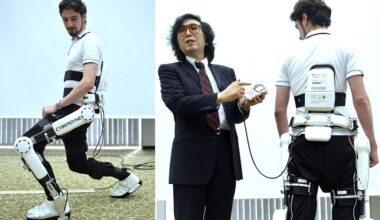
Exoskeletons have matured from bulky lab artifacts to wearable systems that can assist walking, sprint training, and strength work. Recent demonstrations of mobility-focused exosuits and autonomous wearable robots show improvements in gait and function for people with paralysis and mobility impairments — and in the near future these systems may be used in high-performance training as task-specific strength and neural-retraining tools. That potential raises both coaching opportunities and regulatory questions for sport. Reuters+1
Quick comparison table: core findings at a glance
These groundbreaking studies redefining how athletes compete are not isolated findings — they represent a coordinated shift in inclusive performance science.
| Technology / Study area | Typical cohort & year | Key measurable outcome | What it changes about competition or rehab |
|---|---|---|---|
| Brain-controlled bionic leg (AMI + powered ankle) | Small trials, 2023–2024 | ↑ walking speed (~41% reported in trial), ↑ stair navigation, ↓ pain. The Guardian | Reframes prosthetic “function” — classification criteria and return-to-play protocols may shift. |
| Running-specific prostheses (RSP) mechanics | Systematic reviews & experiments 2018–2024 | Variable: some phases show ↓ metabolic cost; stiffness & mass critical. PubMed Central+1 | Nuanced evidence informs classification, design optimization, and coaching technique. |
| Sensory-feedback devices (temperature, haptics) | Pilot trials 2023–2024 | Improved perception, task-specific control, faster adaptation. The Guardian | Better manipulation & balance; reduces cognitive load during complex moves. |
| Transcranial direct current stimulation (tDCS) | Meta-analyses & RCTs 2021–2024 | Small-to-moderate gains in motor learning & reaction times when paired with training. Frontiers+1 | Potential adjunct to training and rehab — ethical guidance & dosing protocols needed. |
| Wearable exoskeletons / exosuits | Trials & demonstrations 2022–2025 | Improved gait, assisted mobility; some can independently lock/attach. Reuters+1 | New training tools; possibility of on-field assistance raises regulatory flags. |
Deep dives: Groundbreaking Studies Redefining How Athletes Compete
These groundbreaking studies redefining how athletes compete are not isolated findings — they represent a coordinated shift in inclusive performance science.
Brain-controlled prosthetics — not sci-fi, but rigorous trials
What surprised many practitioners was how quickly surgical interface techniques (like the agonist–antagonist myoneural interface) combined with powered ankles converted into real-world functional gains. In small cohorts, users walked faster, handled stairs better, and reported more intuitive control. For coaches and therapists, that means rehabilitation targets can be more ambitious; for prosthetics developers, it signals demand for integration between surgical techniques and device controllers. This line of research is changing expectations about how seamless artificial limbs can become. The Guardian
Takeaways for coaches and therapists
- Start conversations early with prosthetists and surgeons about AMI-style approaches if long-term high-performance function is the goal.
- Build stronger gait-training programs that integrate powered-device affordances (e.g., controlled push-off timing).
- Track subjective sense of embodiment — it’s a real predictor of functional success.
RSP mechanics — the devil is in the engineering details
RSP studies have moved beyond “do blades give advantage?” to “in what contexts and for which metrics?” Stiffness, height, curvature, and weight all interact with an athlete’s residual limb, running technique, and event demands. Some research has shown phases where metabolic cost is lower for blade users; other phases or events (e.g., curve running, acceleration from blocks) reveal trade-offs. Coaches working with amputee sprinters should prioritize individualized blade tuning and event-specific biomechanics training rather than blanket assumptions about advantage or disadvantage. PubMed Central+1
Actionable checklist for coaches
- Collect baseline biomechanics (video + wearable sensors) per athlete.
- Test multiple blade stiffnesses/lengths in practice simulating event scenarios.
- Collaborate with prosthetists for iterative tuning and data-sharing.
Sensory feedback — small sensors, big psychological and performance effects
Sensory restoration studies (temperature, tactile cues) show that even simple, reliable feedback loops help users trust their prosthetic, reduce compensatory strategies, and speed up reaction times. For athletes, trust in the limb equals faster, more confident movement — particularly in sports needing fine manipulation, balance corrections, or high-speed decision-making. The Guardian
For developers and A/T teams
- Prioritize low-latency feedback channels and ergonomics; athletes won’t accept bulky add-ons.
- Design sport-specific haptics — a judo athlete needs different signals than a cyclist.
- Test subjective embodiment metrics alongside objective performance measures.
tDCS and brain-priming — a careful optimism
The literature on non-invasive brain stimulation suggests it’s not a magic bullet but can enhance motor learning when used intelligently: short sessions, targeted to motor areas, and paired with deliberate, high-quality practice show the best results. That makes tDCS more of an adjunct to training or rehabilitation than a replacement for practice. Keep in mind heterogeneity in results and ethical/regulatory debates about “neurodoping.” Frontiers+1
Guidance for practitioners
- Use tDCS only with clear protocols and under clinical/ethical oversight.
- Treat tDCS as a potentiator of training sessions, not a substitute.
- Monitor for placebo and individual variability — not everyone responds the same way.
Exoskeletons — from clinic to (near) field
The newest wearable robots are lighter, smarter, and sometimes autonomous — which opens up on-field or real-world training applications. Teams and therapy centres can use exosuits for targeted overload training, gait patterning, or endurance conditioning. Regulators, though, will want clarity on whether an exoskeleton used during training confers a competitive edge that alters classification. Reuters+1
Operational suggestions
- Integrate exoskeleton training in periodized plans for neuromuscular re-education.
- Use data captured by exosuits (joint angles, assistance levels) to inform individualized rehab plans.
- Engage governing bodies early if you plan to use exosuit-assisted training for performance gains.
Practical implications by audience
These groundbreaking studies redefining how athletes compete are not isolated findings — they represent a coordinated shift in inclusive performance science.
Adaptive athletes
- Ask about sensory feedback and powered options early — they may materially change performance and comfort.
- Work with multidisciplinary teams (surgeon, prosthetist, coach, therapist) to optimize device–athlete pairing.
- Keep data logs: lap times, perceived effort, and subjective embodiment help iterate prosthetic setups.
Coaches & trainers in inclusive sports
- Design drills that reflect prosthetic affordances (e.g., take-off timing for blades).
- Pair neuro-priming or exosuit sessions with deliberate practice blocks, not as standalone interventions.
- Push for evidence-based classification conversations; blanket assumptions about devices hurt athletes.
Sports therapists & rehab specialists
- Embrace device-informed rehab: powered ankles and exosuits change progression windows.
- Include sensory-retraining protocols (haptics, temperature cues) as part of functional rehab.
- Measure both objective metrics and sense-of-ownership outcomes.
Assistive technology developers
- Co-design with athletes: sport-specific needs differ drastically from daily-living users.
- Prioritize low-latency feedback, modularity, and data export for coaching analysis.
- Plan for regulatory pathways — sport use introduces classification and competitive considerations.
Inclusive sports organizations & policymakers
- Update classification frameworks to reflect nuance: device effects are not binary.
- Fund trials that test devices in sport-specific contexts (not just clinical walking tests).
- Consider accessibility funds for advanced prosthetics/training tools to level the playing field.
Investors in sports tech
- Look for companies integrating clinical evidence with user-centered design.
- Favor modular systems that can be upgraded as sensor and control tech improves.
- Expect regulatory complexity when devices cross from rehab to competitive training.
Ethical, legal, and classification considerations
These groundbreaking studies redefining how athletes compete are not isolated findings — they represent a coordinated shift in inclusive performance science.
As devices close the gap between human intent and machine output, sport authorities face hard questions. If a bionic ankle returns the ability to sprint faster, is that a therapeutic gain or an unfair advantage? Current research suggests effects are context-dependent, which means policy should move away from binary “device allowed/not allowed” lists and toward evidence-based, sport-specific standards that consider the athlete’s residual function and device role. Open, transparent testing, and athlete-centered decision-making are essential. PubMed Central+1
Key policy principles:
- Evidence-first classification (task- and event-specific testing).
- Athlete safety and autonomy prioritized over abstract fairness arguments.
- Rapid update cycles for regulations as device capabilities evolve.
Frequently asked practical questions
These groundbreaking studies redefining how athletes compete are not isolated findings — they represent a coordinated shift in inclusive performance science.
Q: Are prostheses going to make athletes “faster than able-bodied” athletes?
A: In isolated cases and event-specific contexts, prosthetic users have matched or exceeded able-bodied standards (e.g., some sprint metrics). But the scientific consensus is nuanced: prosthetics change the performance profile in specific ways (energy return, reduced metabolic cost in some phases), and outcomes depend on design, tuning, and athlete technique. Blanket claims are misleading. PubMed Central
Q: Is brain stimulation safe and legal for athletes?
A: tDCS and similar NIBS techniques are generally considered safe under controlled protocols, but they’re not yet uniformly regulated in sport. Ethics boards and some federations are watching neurodoping concerns closely — use only under clinical oversight and transparent reporting. Frontiers
Q: Should my program invest in exoskeletons now?
A: If your program focuses on rehabilitation, neuromuscular re-education, or specialized overload training, exoskeletons are a high-value investment. For competitive advantage, stay mindful of how training with exosuits may interact with classification rules.
Two do-follow resources to bookmark
- Trial coverage and summary of a brain-controlled bionic leg (excellent accessible reporting): The Guardian — “Bionic leg makes walking quicker and easier for amputees, trial shows.” The Guardian
- Systematic biomechanical review of running prostheses and their mechanical properties (open-access review): PubMed Central — Beck et al., “Sprinting with prosthetic versus biological legs.” PubMed Central
Implementation checklist — turning research into routine practice
These groundbreaking studies redefining how athletes compete are not isolated findings — they represent a coordinated shift in inclusive performance science.
For clinics, teams, and product teams:
- Create interdisciplinary case reviews for each athlete considering advanced devices (surgeon + prosthetist + coach + therapist).
- Add embodiment and sensory measures to standard functional testing.
- Pilot tDCS or NIBS only within institutional review and with pre-registered protocols.
- Use exosuits for targeted neuromuscular training blocks, with thorough data capture.
- Advocate for and contribute to sport-specific device-effect testing — data from real athletes matters.
Final thoughts — the future is co-designed
As these groundbreaking studies redefining how athletes compete continue to evolve, inclusive sports will only become faster, smarter, and more human.
The most exciting takeaway from the groundbreaking studies redefining how athletes compete is the human-centered arc: devices and interventions are shifting from “assistive” to “integrative.” That means better performance, richer participation, and new ethical conversations. When scientists, clinicians, designers, and athletes co-design the next generation of prosthetics, exosuits, and training protocols, inclusive sport becomes not just possible but optimally competitive.
If you’re a coach, therapist, or developer: test early, measure often, and center athletes’ lived experience. If you’re a policymaker or organizer: favor evidence, transparency, and athlete safety. The studies are clear — the future of sport will be defined not by machines replacing humans, but by smarter partnerships between mind, body, and technology. The Guardian+2PubMed Central+2