Introduction — why this matters to adaptive sport communities


If you work with adaptive sports/athletes — as a coach, therapist, assistive-tech developer, educator, policymaker, investor, or accessibility advocate — the phrase boosting mobility, speed & safety isn’t just marketing copy. It’s a mission. Recent high-quality studies are rewriting the playbook by showing which interventions actually move the needle for functional mobility, athletic speed, and injury/fall prevention in people with impairments. In this long-form guide I’ll unpack the latest evidence, show pragmatic ways to apply it in training and rehab, and compare the tools side-by-side so you can make smart choices for real people.
Along the way I’ll point you to original studies and reviews so your program designs stay evidence-based and defensible. Two quick links you can open now for deeper dives: an accessible Frontiers review of real-world exoskeleton training and a comprehensive MDPI review of wearables in sport. Frontiers+1
Big picture findings about boosting mobility, speed & safety
Recent studies on boosting mobility, speed & safety in adaptive sport:
Robotics and exoskeletons can improve walking function and independence when used as part of a structured program — especially for neurologic injury and cerebral palsy — but they’re most effective when combined with traditional therapy. BioMed Central+1
Wearable sensors and IMU systems provide reliable, low-cost objective data to personalize interventions and track progress outside the lab. They improve training precision and adherence. PubMed Central+1
Blood-flow restriction training (BFRT) allows meaningful strength and power gains at low loads — a game changer for athletes and patients who can’t tolerate heavy loads. Recent trials support its role in accelerating strength gains and returning people to sport. PubMed Central+1
Perturbation-based balance training (PBT) meaningfully reduces fall-related injuries and improves reactive balance responses — a direct safety win for athletes with balance impairments. Frontiers+1
Each of these tools targets one or more dimensions of mobility, speed, and safety — and the best gains come from combining them into person-centered programs rather than relying on any single technology or method.
How new exoskeleton studies are changing rehabilitation
Recent studies on boosting mobility, speed & safety in adaptive sport:
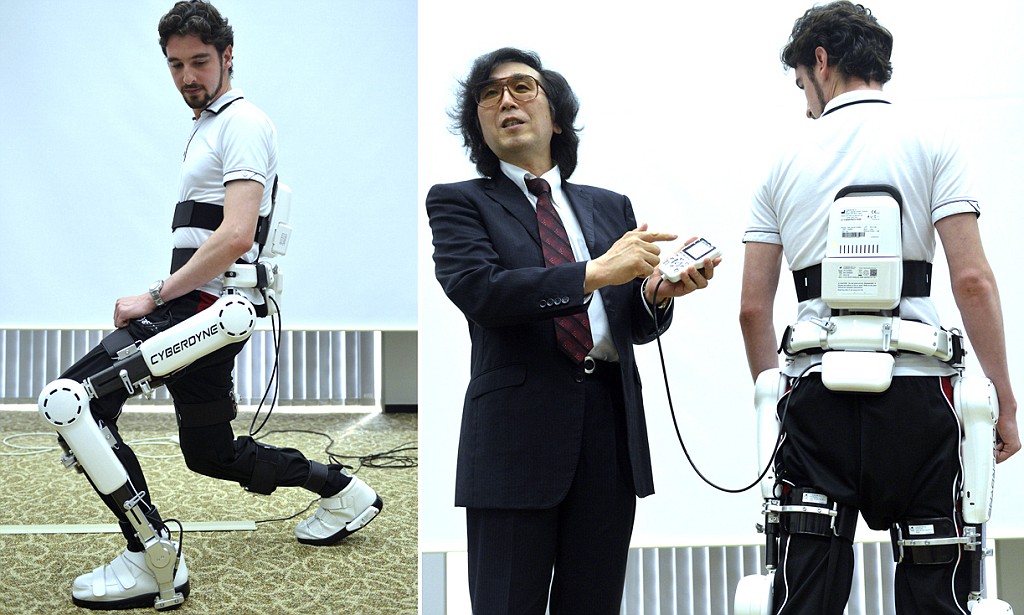
Robotic exoskeletons used to feel sci-fi. Now, clinical trials and meta-analyses show they can deliver measurable gains — increased gait speed, better balance, and improved independence — particularly for people with spinal cord injury (SCI) or cerebral palsy (CP). A 2024 feasibility study of an untethered ankle exoskeleton found improved spatiotemporal gait outcomes after low-frequency, real-world training. A 2025 meta-analysis reported improvements in walking balance and lower-limb strength versus conventional therapy, though walking speed advantages depended on protocol and chronicity. Frontiers+1
Why exoskeletons help:
They deliver consistent, repeatable assistance to critical joints across many gait cycles.
They enable task-specific practice (walking on varied terrain, inclines, stairs) which drives neuroplasticity.
Adaptive controller algorithms can tailor assistance to the user’s residual capacity, allowing progressive challenge.
Caveats:
Cost and access remain barriers.
Best outcomes occur when exoskeleton training is integrated with gait retraining, strength work, and functional tasks rather than used as a standalone therapy. BioMed Central
If you’re deciding whether to invest in exo technology for a clinic or program, prioritize devices with proven safety records, adaptable control strategies, and strong provider training modules. See the Frontiers feasibility study for protocol details and realistic outcome expectations. Frontiers
Wearables & sensors: unobtrusive ways to keep improving performance and safety
Recent studies on boosting mobility, speed & safety in adaptive sport:
Wearables have exploded beyond step counters. Modern systems combine inertial measurement units (IMUs), pressure sensors, and machine learning to capture gait symmetry, ground reaction proxies, limb velocity, and fatigue markers — all outside lab settings. Comprehensive reviews confirm wearables’ value for performance monitoring, injury risk screening, and remote rehabilitation monitoring. MDPI+1
Practical uses for adaptive sport:
Use IMUs to quantify asymmetries during sprint drills or wheelchair propulsion and tailor corrective exercises.
Combine heart rate variability (HRV) and workload sensors to prevent overtraining and optimize recovery for athletes with autonomic changes.
Set up remote monitoring dashboards that feed data to coaches and therapists, enabling rapid program adjustments and objective reporting for funders.
Remember: data is only as useful as the action it drives. Establish clear decision rules (e.g., if asymmetry > X% then add neuromuscular drills) and validate them on a small group before scaling.
Blood-Flow Restriction Training (BFRT): low load, big gains — ideal for safety-first progress
Recent studies on boosting mobility, speed & safety in adaptive sport:
Blood-flow restriction training (BFRT), where low-load resistance is combined with limb occlusion, has surged in clinical research. Recent randomized trials and systematic reviews show BFRT can produce muscle strength and hypertrophy comparable to heavy-load training — but at much lower mechanical stress — which reduces joint pain and risk for re-injury. That makes BFRT a powerful tool for clinicians working with adaptive athletes who have load tolerance limits. PubMed Central+1
Practical BFRT tips:
Always follow pressure and cuff width protocols from validated studies — improper pressures increase risk.
Start with very low loads (20–30% 1RM) and short sets while monitoring pain and limb perfusion.
Combine BFRT cycles with neuromuscular control drills to translate strength gains into speed and functional mobility.
Safety note: BFRT should be supervised by trained clinicians initially and contraindications (e.g., active DVT, severe vascular disease) must be screened.
Perturbation-based balance training: a direct route to increased safety
Recent studies on boosting mobility, speed & safety in adaptive sport:
Perturbation-based balance training (PBT) works by exposing participants to controlled slips, trips, or surface shifts so they learn reactive strategies that stop a fall in real life. Meta-analyses and RCTs show PBT reduces fall-related injuries and improves reactive stepping, dual-task gait speed, and choice stepping reaction time — outcomes directly tied to safety for athletes with balance deficits. Frontiers+1
Where PBT fits:
Early in rehab to build reactive responses when static balance has been restored.
As ongoing injury-prevention work for athletes returning to play.
In community programs to reduce fall risk for athletes aging into masters categories or those with sensory deficits.
Implement PBT with graded intensity, robust safety harnessing, and clear progression metrics (number of successful recoveries, reaction time improvements).
Comparison table: interventions that help with boosting mobility, speed & safety
| Intervention | Primary benefits | Typical settings | Evidence strength (recent reviews/studies) |
|---|---|---|---|
| Exoskeleton-assisted gait training | Improves gait symmetry, balance, functional independence | Clinic, inpatient, real-world training | Moderate–High (2024–2025 trials & meta-analyses). Best as adjunct to conventional therapy. Frontiers+1 |
| Wearable sensors (IMUs, pressure insoles) | Objective monitoring of biomechanics, fatigue, training load | Field, clinic, tele-rehab | High (reviews 2023–2025). Strong for monitoring and personalization. MDPI+1 |
| Blood-flow restriction training (BFRT) | Strength and hypertrophy with low mechanical load; accelerates return-to-sport | Clinic, gym with supervision | Growing evidence (2024–2025 RCTs & reviews). High clinical promise with safety caveats. PubMed Central+1 |
| Perturbation-based balance training (PBT) | Improves reactive balance, reduces fall-related injuries | Clinic, community falls programs | Moderate–High (2022–2024 systematic reviews & RCTs). Effective for safety outcomes. Frontiers+1 |
Practical program design: combine tech + training to maximize outcomes
Recent studies on boosting mobility, speed & safety in adaptive sport:
If your goal is boosting mobility, speed & safety, here’s a sample 12-week hybrid program blueprint for an ambulatory adaptive athlete returning from lower-limb injury (adapt the parameters for wheelchair athletes and non-ambulatory users):
Weeks 1–4: Foundation
Goals: restore safe walking mechanics, reduce pain, establish monitoring.
Interventions:
Light neuromuscular drills (balance, step length, trunk control).
Wearable IMU baseline testing (weekly): gait symmetry, cadence.
BFRT 2×/week for quadriceps/hip abductor strength (clinician-supervised).
Short exoskeleton-assisted sessions (2×/week) focusing on symmetrical stance time (if available).
Weeks 5–8: Load & skill transfer
Goals: build power, start speed drills, train reactive balance.
Interventions:
Progress BFRT intensity and add explosive concentric actions (sit-to-stand velocity).
Add PBT sessions (1×/week) with harnessed perturbations.
Increase exoskeleton session complexity (uneven terrain, inclines).
Monitor training load with wearables; keep weekly symptom check-ins.
Weeks 9–12: Sport-specific integration
Goals: translate strength and balance into sport actions and safe high-speed movement.
Interventions:
Sprint or propulsion interval training (modified) with IMU feedback.
Sport-specific drills (cutting, turns, falls practice).
Final exoskeleton taper to test independent level walking or task performance.
Outcome testing: timed up-and-go, 10m walk, sport-specific velocity, reactive stepping metrics.
This integrated approach increases the odds that strength gains become faster, safer function rather than just larger but unused muscles.
Real-world evidence: what improvements look like on the ground
Studies report concrete, measurable changes after combined interventions:
Exoskeleton trials reported improvements in gait speed and balance scores and better community mobility after multi-week programs. Frontiers+1
BFRT trials have reported strength and power increases comparable to heavy-load resistance training — but achieved at 20–30% 1RM, reducing joint stress. PubMed Central+1
PBT programs reduced fall-related injuries and improved reactive stepping reaction times — directly improving safety outcomes. Frontiers+1
When outcomes are measured using wearables, you can also see reductions in asymmetry metrics and smoother acceleration profiles — metrics that correlate with better speed and lower injury risk. PubMed Central
For coaches & therapists: assessment and decision rules
Start each client with a clear, standardized assessment battery that includes:
Clinical measures: 10-meter walk test, Timed Up and Go (TUG), Berg Balance Scale, sport-specific timed tests.
Objective wearable metrics: left/right stride time, peak limb velocity, asymmetry index, propulsion power proxies.
Risk screen: vascular risk, DVT history, orthostatic intolerance, autonomic dysfunction (for BFRT and intense aerobic work).
Access and goals: device access, return-to-sport timeline, funding.
Decision rules (examples you can test and refine):
If stride asymmetry > 10% and device available → add exoskeleton real-world sessions.
If mechanical load tolerance is low but strength is needed → consider BFRT under supervision.
If reactive stepping time > normative thresholds → begin PBT protocol 1×/week until reaction time improves by 20%.
Document these rules and outcomes — they make it easier to adjust plans and justify interventions to payers or funders.
For assistive-tech developers & investors: where to focus R&D and funding
The research points to some high-value product areas:
Adaptive controllers and untethered exoskeletons that work across variable terrains — devices shown to boost real-world transfer. Frontiers
User-friendly wearable dashboards that synthesize IMU and physiological data into clear decision prompts for coaches/therapists. MDPI
Low-cost perturbation devices (portable platforms, harness-compatible systems) to scale PBT beyond specialized labs. Frontiers
BFRT systems with smart pressure control and safety features that enable clinicians to scale protocols while ensuring safety. PubMed Central
Investors should prioritize companies that provide integration (hardware + clinical workflows + outcome analytics) because evidence shows combined approaches outperform isolated tools.
Policy, accessibility, and scaling: making these advances equitable
Technology alone won’t improve lives if it’s inaccessible. To scale impact:
Advocate for reimbursement pathways for exoskeleton-assisted therapy and BFRT when evidence supports functional gains.
Support standards for wearable measurement interoperability so clinics can use data across platforms.
Invest in community programs offering PBT and wearable-guided fall prevention for underserved adaptive athletes.
Policymakers: when you evaluate funding for innovation, require outcome reporting (objective wearable metrics + functional scores). That creates accountability and accelerates evidence-based scaling.
Quick takeaways & actionable checklist
Top 5 practical takeaways
Combine tech + training — exoskeletons, wearables, BFRT, and PBT complement each other; synergy beats standalone tools. BioMed Central+1
Wearables are essential for objective monitoring — use them to set decision rules and prove outcomes. PubMed Central
BFRT equalizes the playing field by producing strength at low loads — great for safety-first progress. PubMed Central
PBT directly reduces fall injuries — make it a safety cornerstone for balance-impaired athletes. Frontiers
Always individualize: screen for vascular/medical risks before BFRT and ensure exoskeleton sessions are clinically supervised.
Short implementation checklist (copy/paste)
Baseline: clinical + wearable assessments
Safety screen for BFRT/exoskeleton use
Decide primary focus: mobility, speed, or safety (or a combined plan)
Establish decision rules tied to wearable thresholds
Schedule combined interventions (e.g., BFRT + PBT + exo sessions)
Reassess every 4 weeks with both clinical and wearable metrics
Frequently asked questions
Q: Are exoskeletons proven to increase walking speed?
A: Some studies show improved walking speed, but gains depend on device type, training dose, and whether exo therapy is combined with conventional rehab. Meta-analyses suggest stronger gains in balance and function; walking speed improvements are more variable and often require combined approaches. BioMed Central+1
Q: Is BFRT safe for athletes with prostheses or limb differences?
A: BFRT can be safe—but clinicians must individualize cuff placement and pressure. Avoid BFRT on limbs with compromised vascular supply or active infections. Always get medical clearance. Recent systematic reviews show promising benefits when correctly applied. PubMed Central+1
Q: Can I use wearables to replace clinical tests?
A: Not yet — wearables are excellent supplements that increase measurement frequency and ecological validity, but clinical tests remain the gold standard for many functional outcomes. Use wearables to augment, not replace, clinical judgment. PubMed Central
Final thoughts: design programs that elevate real people — not just metrics
These new studies prove that boosting mobility, speed & safety is possible through evidence-based training.:
The most convincing outcome of recent research is not that any single gadget or trick will magically fix mobility or speed. The win comes when evidence-based tools are integrated into thoughtful, person-centered programs: exoskeletons and wearables that enable more practice; BFRT that builds safe strength; perturbation training that teaches the body to recover from surprise — all scaffolded by clinicians, coaches, and supportive policy.
If you’re ready to pilot any of these interventions, start small, document everything (wearable + clinical measures), and iterate. Real progress in adaptive sport is built on curiosity, humility, and careful measurement — and the new studies make that road map clearer than ever.
Selected references & further reading
Tagoe EA, et al. Exoskeleton gait training on real-world terrain improves spatiotemporal outcomes … Frontiers in Bioengineering and Biotechnology. 2024. Frontiers
Seçkin AÇ, et al. Review on Wearable Technology in Sports: Concepts and Applications. MDPI, 2023. MDPI
McCrum C, et al. Perturbation-based balance training: Principles and practice. Frontiers in Sports and Active Living. 2022. Frontiers
Wang T, et al. Effect of blood-flow restricted vs heavy-load resistance … (RCT/Systematic review), 2025. PubMed Central
De Fazio R, et al. Wearable Sensors and Smart Devices to Monitor … (PMC article) 2023. PubMed Central


