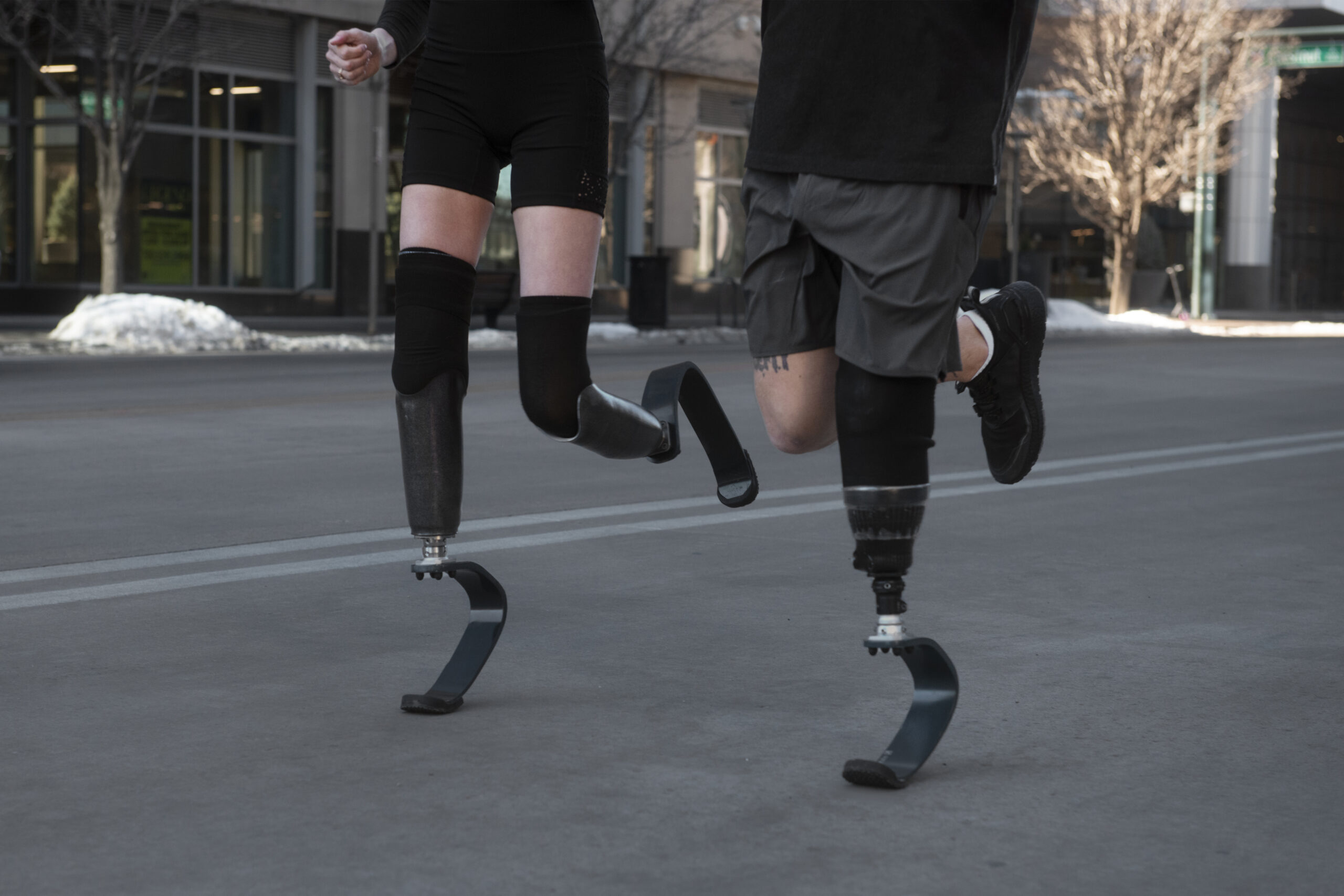
Introduction: The Rise of Adaptive Power Gear
Adaptive Athletes Gear is rapidly transforming the world of inclusive sports, introducing breakthrough technologies that enhance strength, mobility, and performance for athletes with diverse abilities. As innovations accelerate, this new wave of high-tech equipment is reshaping how adaptive athletes train, compete, and overcome real-world challenges.
Adaptive Athletes Gear is no longer limited to basic support tools—it now includes advanced exoskeletons, AI-powered mobility devices, custom prosthetics, and sport-specific performance gear designed to push human potential to new limits. These innovations are driving a powerful shift in competitive sports, giving adaptive athletes access to the same high-performance tools seen in elite training environments.
From carbon-fiber prosthetics engineered for explosive speed to adaptive strength-training systems built for precision control, the latest adaptive athletes gear offers reliability, safety, and performance improvements once thought impossible. As global interest rises, athletes, trainers, and sports tech developers are racing to understand which gear provides the biggest competitive edge—and which emerging technologies could change everything next.

Over the past few decades, adaptive sports have evolved far beyond mere accommodation. For elite adaptive athletes — amputees, wheelchair-users, and those with other physical disabilities — technology has become not just a tool of survival, but a medium of excellence. Running blades, carbon-fibre racing wheelchairs, AI-driven prosthetics, and high-precision adaptive gear have turned limitations into launchpads.
These advancements don’t just level the playing field; for some athletes, they open the door to redefining athletic performance itself. But as the gear gets more powerful, the sports community is grappling with a hard question: when does adaptive technology stop being “just fair” — and start becoming a performance multiplier?
In this deep dive we explore how new adaptive gear is transforming elite athletic performance, why many believe it’s redefining human limits — and whether those of us cheering from the sidelines should be celebrating… or worrying.
What “Adaptive Gear” Really Means: From Prosthetics to Smart Tech
Carbon-Fibre Running Blades & Running-Specific Prostheses (RSPs)
One of the most iconic technologies in adaptive sport is the “running blade”: a prosthetic limb designed not just for walking, but for sprinting and jumping. These are typically made from carbon-fibre composites. Wikipedia+2J-STAGE+2
- The original widely known model is Flex-Foot Cheetah, invented by biomedical engineer Van Phillips in the 1980s. It stores kinetic energy on the downward step and releases it like a spring on the upward push — mimicking the natural springy action of a human foot/ankle. J-STAGE+2Wikipedia+2
- Over decades, these running-specific prostheses (RSPs) have evolved: lighter materials, optimized stiffness, better energy storage and return, improved socket and attachment design — all to maximize running mechanics for amputee athletes. ResearchGate+2scienceopen.com+2
According to reviews, as a result of these innovations, amputee sport performance has improved significantly over the past 20–30 years. ResearchGate+2J-STAGE+2
Smart Prosthetics, Sensor Integration & Real-Time Adaptation
The latest generation of adaptive gear goes beyond passive carbon blades. Prosthetics are becoming “smart”: embedded with sensors, microcontrollers, feedback systems — essentially giving amputee athletes a biomechanical advantage through adaptive response. weshape.tech+2Number Analytics+2
For example:
- Some designs now adapt stiffness and response in real time depending on terrain, speed, and gait — enabling smoother movement and reducing energy waste. Web No Logix+1
- Others use advanced materials (bio-integrated polymers, gel-lined sockets) to make prosthetics feel more “natural,” more comfortable, reducing fatigue, and improving control. robobionics.in+1
Beyond running — adaptive gear now spans across sports: wheelchair racing chairs built with carbon fibre, high-tech racing gloves, adaptive swimming gear, aquatic prosthetic fins, and even neuro-controlled mobility devices in development. paralympic.org+2Web No Logix+2
How Gear is Redefining Performance: Evidence & Outcomes
There is growing empirical evidence that adaptive gear — when paired with elite training — allows adaptive athletes to reach performance levels that approach or, in some measures, rival able-bodied athletes.
Performance Gains & Closing the Gap
- A comprehensive study published in 2022 concluded that amputee sprinters using running prostheses showed no clear competitive advantage over 400m compared to sprinters with biological legs — but also no clear disadvantage. University of Colorado Boulder
- However, more recent biomechanical reviews argue there may be a competitive edge: for example, transtibial amputee runners sometimes exhibit advantageous stride frequency, enhanced ground-reaction forces, or more efficient leg swing when using stiffer running prosthetics. MDPI+2scienceopen.com+2
- Material-science advances continue to improve: recent finite-element analyses of prosthetic blades made from carbon fibre over aluminum or titanium show superior bending resilience, shock absorption, and durability — critical for high-impact sprinting or jumping events. ResearchGate+1
Broader Influence on Mainstream Sports Technology
One remarkable outcome: adaptive sports innovations often influence mainstream sports gear — benefiting all athletes, not just adaptive ones. As described under the “Adaptive Synergy” framework: advanced prosthetics, high-end wheelchairs, adaptive aquatic gear have inspired improvements in running shoes, training equipment, rehabilitation gear, and more — improving biomechanical efficiency and safety across sports. PMC+1
This synergy shows how inclusivity-driven technology doesn’t just help a marginalized population — it can push the entire athletic system forward.
Key Adaptive Gear & Their Mechanisms
Here’s a quick breakdown of the main gear redefining adaptive athletic performance:
| Gear / Tech | Primary Mechanism / Benefit | Typical Use / Sport Context |
|---|---|---|
| Carbon-fibre Running Blades (RSPs) | Stores and returns kinetic energy like a spring; lighter than traditional prosthetics | Sprinting, long jump, track events by below-knee amputees J-STAGE+1 |
| Smart Prosthetics with Sensors & Actuators | Adjust stiffness and response in real time; improve stability, energy efficiency, terrain adaptation | Running, long-distance, varied terrain athletics weshape.tech+1 |
| Advanced Racing Wheelchairs & Chairs | Lightweight carbon/titanium frames, ergonomic push rims, cambered wheels — optimized for speed and maneuverability | Wheelchair racing, basketball, rugby, tennis paralympic.org+1 |
| 3D-Printed Custom Adaptive Gear (Gloves, Swim Fins, Orthotics) | Tailored fit, reduced weight and friction, custom geometry to individual needs | Wheelchair sports, adaptive swimming, multi-sport training paralympic.org+2Web No Logix+2 |
Real Stories: How Adaptive Athletes Are Pushing the Limits
One compelling example is Markus Rehm — nicknamed “The Blade Jumper.” Despite a below-knee amputation, Rehm has repeatedly leaped to international acclaim, using carbon-fibre blade prosthetics to excel in long jump and sprint events. Wikipedia+1
Indeed, in his category, his record leaps have approached distances once thought unthinkable for an amputee athlete — a testament both to his training and the evolving power of prosthetic gear.
And yet — as experts from the adaptive sports and biomechanical engineering communities note — while prosthetics have enabled new levels of performance, they also carry trade-offs. Many adaptive athletes emphasize that their success is never “just about the blade.” It’s about relentless training, precision technique, and the mental resilience to adapt to a body that’s part biological, part machine. WIPO+1
Why Some Experts Say Adaptive Gear Might Be “Too Much”
Even as successes mount, a growing chorus of voices warns that adaptive gear may be tilting the balance — raising ethical, philosophical, and competitive fairness concerns.
The “Unfair Advantage” Debate
- Some biomechanical reviews hint that transtibial amputee runners may gain a potential advantage over able-bodied athletes under certain conditions — e.g., optimal prosthetic stiffness, stride frequency, and ground reaction force efficiencies. MDPI+1
- The history is fraught with controversy: the use of carbon-fibre blades by Oscar Pistorius sparked intense debate about whether the blades were “enhancement technology” rather than legitimate prosthetics. Wikipedia+2Wikipedia+2
- Meanwhile, many adaptive athletes resist the “superhuman” label — arguing that despite advanced gear, there remain real physical disadvantages: lack of natural proprioception, asymmetry in muscle distribution, trade-offs in certain movement phases (start, acceleration, stability), and higher cognitive/physical cost in controlling a prosthetic. WIPO+2WIPO+2
One 2025 review of literature concluded that while some prosthetic configurations might give amputee athletes a “potential competitive advantage” over able-bodied runners, the picture remains far from conclusive — especially across varied sports, surfaces, and real-world conditions. MDPI
Technology — But Not Universally Accessible
Another crucial concern: access and equity. According to a 2021 report on adaptive technologies, only a small fraction of people who need advanced prosthetics actually have access to them. WIPO+1
This means the performance-boosting potential of adaptive gear may only be available to the privileged few — deepening inequality within adaptive sports and beyond. As one adaptive athlete quoted in a 2021 interview said: high-tech prostheses are expensive, regulation-heavy, and still don’t “feel like part of my body.” WIPO+1
The “What It Means to Be Human” Question
Beyond fairness — there’s a deeper philosophical concern. As adaptive gear becomes ever more powerful — bio-integrated prosthetics, real-time adaptive response, even future neuro-controlled limbs — are we simply aiding disabled athletes — or are we entering a realm of “enhanced humanity,” where the line between human and machine blurs?
Some critics argue this raises broader ethical questions about identity, equity, and the very meaning of “sporting achievement.” After all: if prosthetics can outperform — or even equal — biological limbs, does that shift how we value natural human physiology in sport?
The Research Landscape: What Science Actually Says
The research is far from settled — in fact, many studies point in different or even contradictory directions. A few key findings:
- A 2022 biomechanical study involving elite bilateral-amputee sprinters found no competitive advantage for prosthetic-limb runners over 400-meter distances compared with able-bodied runners. University of Colorado Boulder+1
- However, a recent review (2025) indicates that certain configurations of transtibial prosthetics may offer performance benefits — especially relating to leg stiffness, stride frequency, ground reaction force, and leg swing efficiency. MDPI+1
- Finite-element analyses of modern blade materials consistently show carbon fibre yields superior stiffness, lower deformation under load, better shock absorption, and greater durability compared with aluminum or titanium — all of which matter under the repeated high-impact stress of sprinting and jumping. ResearchGate+1
- Emerging research in smart prosthetics suggests sensor-driven adaptive prostheses — with real-time adjustments — may further narrow the gap between adaptive and able-bodied performance, especially over varied terrains or extended durations. weshape.tech+2Web No Logix+2
In short — the state of knowledge remains mixed. The technology is powerful, and leads in many labs are promising. But translating those biomechanical benefits to consistent, real-world competitive advantage is still not definitively proven.
The Broader Impact: Adaptive Synergy & Sport Tech Innovation
One of the most exciting — and underrated — effects of adaptive sports technology is what some scholars call “Adaptive Synergy”: innovations developed for athletes with disabilities often inspire improvements in mainstream sports gear, benefiting all athletes. PMC+2Number Analytics+2
Examples:
- Carbon fibre running prosthetic design has influenced the design of lighter, more springy running shoes and sneakers used by able-bodied athletes. PMC+1
- Custom-fitted adaptive gear, ergonomic considerations, and sensor integration from adaptive sport design have informed rehabilitation equipment, wearable fitness tech, and athletic gear design more broadly. Number Analytics+1
- The success and visibility of adaptive athletes using cutting-edge gear has pushed sports organizations to reconsider accessibility, inclusion, and the boundaries of competitive fairness — accelerating regulatory, ethical, and design conversations across sport. WIPO+1
In many ways, adaptive athletes are not just redefining their own limits; they’re driving the entire athletic industry forward.
Where We Stand: The Controversy & Ethical Dilemmas
As adaptive gear grows more powerful, advocates and critics are increasingly locked in passionate debate. Here are the biggest flashpoints:
- Fairness vs Advantage: Is using high-tech prosthetics analogous to “doping” — or simply leveling the playing field? With inconclusive research and variable outcomes across events, many argue that until we have definitive long-term data, adaptive gear should be treated with caution.
- Access Inequality: Advanced adaptive gear is expensive, specialized, and often available only to well-funded athletes or organizations. That raises equity concerns within disabled sport communities.
- Identity & the Nature of Sport: As prosthetics approach — or even exceed — natural limb performance, what does it mean to be human in sport? Are we still celebrating human physical achievement — or technological augmentation?
- Regulation Challenges: Sporting bodies must wrestle with how to classify, regulate, and fairly integrate adaptive gear. Should there be standardization? Limits on prosthetic stiffness or materials? Guidelines on “enhancements”?
All of these issues suggest that adaptive gear is not just a technical breakthrough — it’s a paradigm shift, touching on ethics, identity, and the future of competitive sport.
What’s Next: The Future of Adaptive Performance Gear
The near future looks poised for even more radical transformations. Some promising trends:
- Smart, Bio-Integrated Prosthetics: Prosthetics with embedded sensors, actuators, microcontrollers — adapting stiffness, feedback, and movement dynamics in real time to terrain, speed, and the athlete’s gait. robobionics.in+2MDPI+2
- Neuro-Controlled Limbs: Research into methods like Targeted reinnervation is advancing rapidly — potentially allowing amputees to control powered prosthetics with neural or muscular signals, restoring more natural limb behavior. Wikipedia+1
- Adaptive Multi-Sport Prosthetics: Rather than needing different prosthetics for running, cycling, swimming — future designs may adapt dynamically, or be modular, allowing one prosthetic to serve multiple activities. robobionics.in+1
- Broader Accessibility & Cost Reduction: As materials and manufacturing improve (e.g., 3D printing, advanced composites), costs may drop — potentially making high-performance adaptive gear more accessible globally, not just for elite athletes. Number Analytics+1
If these trends hold, we may soon see adaptive athletes whose performance rivals — or in some measures even surpasses — the very pinnacle of able-bodied sport.
Balanced Perspective: Triumphs, Risks, and Responsibility
Adaptive gear is powerful. It’s giving athletes with disabilities opportunities that would have been unthinkable only a generation ago. It’s pushing the boundaries of “human potential” — redefining what’s possible physically and psychologically.
But with that power comes responsibility: from athletes, sports organizations, engineers, and fans alike. As we forge ahead, we must ensure that innovation doesn’t compromise fairness, equality, or the core spirit of sport.
We must ask tough questions:
- Should there be universal standards or limits on prosthetic gear in competitive sport?
- How can we make high-performance adaptive gear accessible — not just to elite Paralympians, but to everyday people with disabilities worldwide?
- How do we preserve the integrity of athletic achievement while embracing technological progress?
Frequently Asked Questions
Q: Do running blades give amputee athletes a mechanical advantage over able-bodied sprinters?
A: The research is mixed. A 2022 study found no clear competitive advantage over 400 m events. University of Colorado Boulder+1 However, other biomechanical reviews suggest certain prosthetic configurations (e.g., stiffer carbon-fibre blades) may yield benefits in stride frequency, ground reaction force, or energy efficiency. MDPI+1
Q: Are there any regulations limiting adaptive gear in elite sports?
A: Yes. Sporting authorities such as International Paralympic Committee (IPC) impose classification rules on prosthetic limbs — including restrictions on features like powered/electronic prosthetics at major competitions. WIPO+1
Q: Is adaptive gear only beneficial for elite athletes?
A: No. While elite athletes get the most attention, many technological advances (lightweight carbon fibre, better socket design, adaptive materials) are gradually filtering down to everyday prosthetics — improving mobility, comfort, and quality of life for non-athletes too. PMC+1
Q: What are the main drawbacks or risks associated with adaptive gear for athletes?
A: Some drawbacks include high cost, limited access, potential for unequal competition if gear is not standardized, lack of full proprioceptive feedback or natural feel, and ethical questions about “augmentation” versus “restoration.” WIPO+2MDPI+2
Conclusion — Gear, Glory & the Gray Area Between
Adaptive gear has opened a new chapter in human athleticism. For many, what once seemed like insurmountable limitations — limb loss, paralysis, disability — are no longer barriers to greatness. Carbon-fibre blades, smart prosthetics, adaptive wheelchairs, and integrated sensor tech are nothing short of game-changers.
But with those breakthroughs comes complexity. As adaptive gear gets stronger, smarter, more integrated — as the margin blurs between “normal” human physiology and technological enhancement — sport enters a gray zone. A zone where ethics, fairness, accessibility, identity, and competition all collide.
We may not have all the answers yet. The science is still evolving. The regulations are still catching up. And society is still adjusting to what “adaptive excellence” really means.
Yet one thing is clear: adaptive athletes are not just fighting for inclusion. They’re rewriting what human potential can look like. And whether that feels inspiring or unsettling — or both — depends on how we choose to respond.
Curious about the future of adaptive sports gear — and what it might mean for mainstream athletics, inclusivity, and fairness? Share this post, leave a comment with your thoughts, or explore more to dive deeper into the technology transforming sport today.


