
Introduction
The boundary between “disabled” and “athlete” isn’t just thinning—it’s being demolished by innovation. Imagine a world where the iron doesn’t care how you get to the rack, only that you’re there to move it.
Whether you are a seasoned Paralympian or a beginner reclaiming your physical agency, the right gear is the bridge between intention and achievement. We aren’t just talking about “modified” tools; we are talking about high-performance adaptive gym equipment designed to unlock the human spirit.

The Philosophy of the Adaptive Revolution
For decades, the fitness industry was built on a “one size fits all” philosophy. If you couldn’t stand at a squat rack or grip a standard barbell, you were often relegated to the sidelines. This wasn’t just a lack of equipment; it was a lack of imagination.
Today, that narrative is dead. Adaptive gym equipment for disabled athletes has evolved from bulky, clinical-looking medical devices into sleek, high-tech tools that prioritize biomechanics and performance.
This shift isn’t just about accessibility; it’s about equity. It’s about ensuring that every person has the opportunity to experience the dopamine hit of a personal best. According to the American College of Sports Medicine (ACSM), inclusive fitness programming is a critical component of public health, reducing the risk of chronic secondary conditions in the disabled community.
Defining “Adaptive” in a Modern Context
What exactly makes a piece of equipment “adaptive”? It isn’t just a sticker or a ramp. It boils down to three core engineering principles:
Universal Accessibility: The equipment must be approachable. For a wheelchair user, this means “roll-in” capability. For a visually impaired athlete, it means tactile cues and high-contrast markings.
Modular Adjustability: The ability to change the height, width, and resistance of the equipment in minute increments.
Stability and Safety: Enhanced tethering systems, lap belts, and “active” spotting technology that ensures the user remains secure even when training at high intensities.
The “Big Three” of Adaptive Strength Training
In any strength program, there are “foundational” movements. For the adaptive athlete, these movements require specific adaptive gym equipment to ensure proper form and safety.
1. The Adaptive Power Rack
The power rack is the heart of the gym. Traditional racks have a bottom cross-member that blocks wheelchair access. An adaptive rack, however, features a “U-shaped” or open-base design.
Key Feature: “J-cups” with micro-adjustability. Standard racks often have 2-inch spacing; adaptive racks benefit from 1-inch (Westside) spacing, allowing an athlete to set the bar at the exact height for their specific arm length and seated position.
The Benefit: It allows for independent bench pressing and overhead pressing without needing a team of spotters to assist with the transfer.
2. Dual-Axis Cable Systems
If you could only buy one piece of gear, this is it. Cable machines provide constant tension and a “free” path of motion, which is essential for athletes with limb differences or scoliosis.
Why it Works: Unlike fixed-path machines (which force you into a specific movement), cables allow you to pull or push in a way that respects your body’s unique mechanics.
The “Weight Stack” Problem: Traditional machines have weights out of reach. Adaptive cable machines place the stack at a height where a seated user can adjust the pin independently.
3. The Seated Smith Machine
While some purists dislike the Smith machine, it is a godsend for the adaptive community. It provides a “guided” barbell path, which is vital for athletes with neurological conditions that affect balance or cause tremors.
Comparative Analysis – Traditional vs. Adaptive Gear
Deep Dive into Gripping Solutions and Limb Support
For many athletes, the barrier isn’t the muscle—it’s the connection to the weight. Adaptive gym equipment for disabled athletes often centers on the interface between the body and the machine.
The Science of “Grip-Less” Lifting
For those with spinal cord injuries (SCI) at the C-level or those with severe arthritis, holding a dumbbell is impossible.
Grip Aids: Products like Active Hands act as an exoskeleton. They wrap around the hand and the bar, creating a mechanical lock.
Wrist and Ankle Cuffs: By moving the “pull point” from the hand to the forearm or upper arm, athletes can perform heavy rows and flyes even with zero grip strength.
Stump Protectors and Prosthetic Adapters
Amputee athletes face unique challenges with “shearing” forces. Modern adaptive benches include specialized padding and “stump cups” that allow an athlete to brace their residual limb to create a stable base of support for heavy lifting.
Research Note: The Christopher & Dana Reeve Foundation emphasizes that “neuro-plasticity” is boosted when athletes can perform complex, multi-joint movements, even with assistance from grip aids.

Cardiovascular Training in the Adaptive World
Cardio is often where the disabled community is most underserved. Traditional treadmills and ellipticals are largely inaccessible.
1. The Handcycle Revolution
Handcycling is the adaptive answer to cycling. Whether it’s a “clip-on” unit for a daily wheelchair or a dedicated racing trike, handcycling builds immense cardiovascular capacity and shoulder endurance.
2. The Concept2 SkiErg
The SkiErg has become a cult favorite in the CrossFit and adaptive worlds.
The Setup: It can be used standing or from a seated position.
The Impact: It provides a “pulling” cardio motion that balances out the “pushing” motion most wheelchair users do all day, helping to prevent shoulder impingement.
3. High-Resistance Fan Bikes
Some fan bikes (like the Rogue Echo or Assault Bike) can be modified by removing the seat. This allows a wheelchair user to roll in and use the handles for a “battle-rope” style cardio burn that hits the heart rate like nothing else.

Smart Tech – The Future of Adaptive Gym Equipment
We are currently in the “Silicon Valley” era of fitness. The integration of technology is making adaptive gym equipment smarter and more intuitive.
AI-Powered Resistance
Companies like Tonal and Vitruvian use magnets and motors rather than iron plates.
Automatic Spotting: If the AI senses the weight is moving slower than a certain threshold (the “sticking point”), it instantly reduces the resistance. This allows a disabled athlete to train to failure safely without a human spotter.
Data Tracking: For athletes in rehab, tracking progress down to the gram is essential. Smart equipment logs every rep, providing a “digital twin” of the athlete’s progress.
Virtual Reality (VR) and Gamification
VR isn’t just for gaming. For someone with limited mobility, the “boredom” of a stationary handcycle is real. VR headsets allow athletes to “race” through 3D environments, increasing the duration of their workouts by up to 30% due to the “distraction effect.”
Building Your Own Adaptive Home Gym
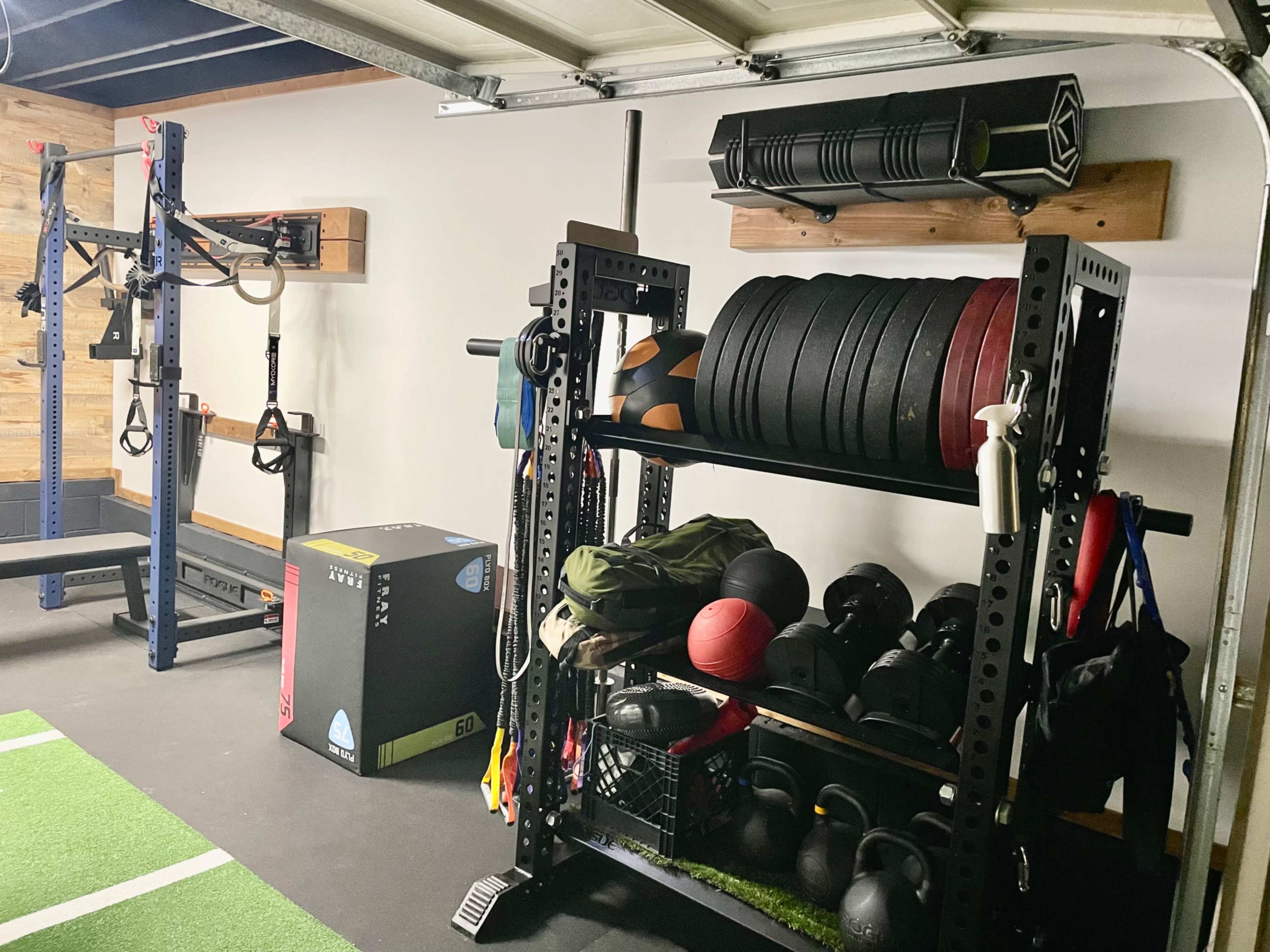
You don’t need a million-dollar facility to see results. Here is a tiered approach to building your own adaptive sanctuary.
The “Starter” Setup (Under $500)
Resistance Bands with Door Anchors: These allow for hundreds of angles of resistance.
Over-the-door Pull-up Bar: Can be used for “hanging” stretches and light pull-downs.
Lap Straps: To keep you anchored in your chair.
The “Intermediate” Setup ($1,000 – $3,000)
Wall-Mounted Cable Tower: The ultimate space-saver for seated strength work.
Adjustable Bench with Wheels: For easy relocation.
Specialty Grip Kit: A collection of cuffs, hooks, and straps.
The “Pro” Setup ($5,000+)
Open-Base Power Rack.
SkiErg or Handcycle.
Digital Resistance System (e.g., Tonal).
The Psychological Impact of Adaptive Training
We cannot talk about adaptive gym equipment for disabled athletes without discussing the “internal” shift.
Physical disability often comes with a loss of “agency”—the feeling that you are in control of your body. Reclaiming that control in the gym is a radical act of self-love.
Independence: Being able to set up your own equipment without asking for help is a massive psychological win.
Community: Adaptive gyms become hubs for shared knowledge. When you see someone with a similar injury moving heavy weight, the “ceiling” of what you thought was possible shatters.
Common Mistakes to Avoid
Even with the best adaptive gym equipment, things can go wrong. Avoid these common pitfalls:
Over-training the Shoulders: Wheelchair users already use their shoulders for mobility. Focus on “rear delt” and “back” exercises to balance the tension.
Ignoring the Core: Even with limited sensation, engaging the core (through bracing or straps) is vital for stability.
Skipping the Warm-up: Spasticity and muscle tightness are common. Use a foam roller or percussion massager before hitting the heavy weights.
Frequently Asked Questions (FAQ)
What is the most versatile piece of adaptive gym equipment?
The Functional Trainer (Cable Machine). Its ability to adjust the height of the pulleys and the freedom of movement makes it the gold standard for adaptive fitness.
How do I find a gym with adaptive equipment for disabled athletes?
Look for the “Universal Design” symbol or check the Inclusion Fitness Coalition database for facilities that have undergone accessibility training.
Is adaptive equipment covered by insurance?
Sometimes. If the equipment is deemed “medically necessary” for rehabilitation (like a specialized standing frame or FES bike), some providers may cover a portion. However, standard gym gear is usually an out-of-pocket expense.
Can I adapt my existing gym equipment?
Absolutely. Adding Velcro straps to handles, using “fat grips” for better leverage, or bolting a specialized seat to a standard machine are all common DIY adaptations.
What is “Active Hands”?
Active Hands is a specific brand of gripping aid that has become the industry standard for athletes with limited hand function, allowing them to “lock” onto bars and handles.
Conclusion: The New Era of Performance
The evolution of adaptive gym equipment has proven one thing: physical limitations are often just engineering problems waiting to be solved.
Whether you are looking to improve your daily function or stand on a podium, the tools now exist to help you get there. The “must-have” equipment listed above isn’t just about moving weight—it’s about moving your life forward.
Don’t wait for the world to become accessible. Build your own access.
Read More: The Shocking Truth About Adaptive Gym Equipment That Trainers Don’t Want You to Know… Yet
Share Now


