Introduction: The Death of “Disabled” and the Birth of “Super-Abled”
The stadium is silent. A sprinter stands at the blocks. But instead of flesh and bone, their lower limbs are shimmering curves of high-modulus carbon fiber. This isn’t a sci-fi movie; it is the modern reality of technology in disability sports.
For decades, the narrative surrounding disability was one of “overcoming” or “pity.” Today, that narrative has been incinerated by engineering. We are no longer looking at assistive devices as crutches; we are looking at them as performance enhancers that, in some cases, outshine biological evolution.
The integration of technology for athletes with disabilities has moved from the fringes of medical recovery into the high-stakes world of elite competitive sports. This article explores the staggering depth of this revolution—from the molecular structure of racing blades to the neural interfaces that allow paralyzed athletes to “feel” the track.

1. The Physics of the Blade: Material Science in Athletics
When we discuss technology in disability sports, the “Blade Runner” image is the most iconic. But the science behind the Cheetah limb or the Ottobock 1E90 Sprinter is a masterclass in Newtonian physics.
The Energy Return Paradox
A human foot is a marvel of evolution, but it is also a “lossy” system. We lose energy through heat and friction in our joints and soft tissue. Carbon fiber blades, however, are designed for near-perfect energy return.
The modulus of elasticity in these blades is tuned to the athlete’s specific body weight and gait cycle. When the athlete strikes the ground, the blade stores potential energy. As the leg swings forward, that energy is returned as kinetic force.
Customization at the Molecular Level
Modern technology for athletes with disabilities now involves “layer-tuning.” Engineers vary the thickness of the carbon fiber layers at different points along the curve. This allows for a “stiff” response during the initial sprint and a more “compliant” response during the curve of a 400m race.
According to research highlighted by Britannica’s Sports Technology divisions, the transition from heavy wood and rubber to aerospace-grade composites has reduced limb weight by over 60%, drastically reducing the metabolic cost of running.
2. The Formula 1 of the Track: Wheelchair Engineering
If the blades represent the “legs” of the revolution, the racing wheelchair represents the “vehicle.” In the world of technology in disability sports, a wheelchair is not a chair; it is a precision-engineered kinetic machine.
Aerodynamics and Computational Fluid Dynamics (CFD)
Top-tier wheelchair racers now use the same wind tunnels as Formula 1 teams. By using CFD software, engineers can identify “drag pockets”—areas where air becomes turbulent around the athlete’s body.
Tapered Frames: The frames are now “diamond-shaped” or “monocoque” (single-piece) to slice through the air.
The “Crouch” Position: Technology has allowed for deeper seating positions, lowering the center of gravity and reducing the frontal surface area by 15%.
3. The Role of 3D Printing in Personalization
One of the greatest hurdles in technology for athletes with disabilities has been the “one-size-fits-all” approach of the 20th century. Today, 3D scanning allows for:
Custom Gloves: Hard-molded thermoplastic gloves that click perfectly into the wheel rim.
Pressure-Mapped Seats: Reducing the risk of skin breakdown while maximizing power transfer.
3. Sensory Augmentation: Empowering Visually Impaired Athletes
How does a blind athlete run a 100m dash at 20mph? Traditionally, it required a sighted guide and a tether. While the human element remains vital, technology in disability sports is introducing digital “eyes.”
The Electronic Guide
Wearable devices now use ultrasonic sensors to detect the proximity of other runners or the lane lines. These devices provide haptic feedback (vibrations) to the athlete’s wrist or waist. If they veer left, the left side of the belt vibrates.
Smart Caps for Swimmers
The “tapper” system—where a coach hits a swimmer with a foam pole—is being replaced by “SmartCaps.” These caps are embedded with Bluetooth sensors that sync with underwater beacons. As the swimmer approaches the wall, the cap vibrates with increasing intensity, allowing for a perfectly timed flip-turn without human intervention.
4. Breaking the Wall: Neuro-Sports and Brain-Computer Interfaces
This is the “Intermediate to Expert” layer of technology in disability sports. We are moving past external hardware and into the realm of the central nervous system.
Functional Electrical Stimulation (FES)
For athletes with spinal cord injuries (SCI), the muscles are often still functional, but the “signal” from the brain is blocked. FES technology acts as a digital bridge.
How it works: Electrodes placed on the skin (or implanted) deliver timed electrical bursts to the quadriceps and hamstrings.
The Result: A paralyzed athlete can pedal a cycle using their own muscular power. This is the basis for the Cybathlon, an international competition for “pilots” using bionic assistive tech.
The Rise of the Exoskeleton
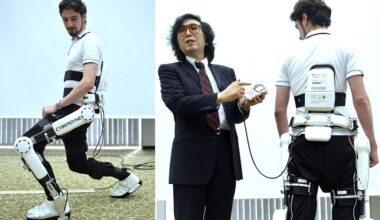
In sports like archery or shooting, where stability is key, exoskeletons provide the structural support that a damaged spine cannot. These suits use AI to predict the user’s center of mass, providing a rock-solid platform for the athlete to compete.
| Technology Type | Application | Primary Benefit |
| FES (Functional Elec. Stim) | Cycling / Rowing | Muscle Re-education & Power |
| BCI (Brain-Computer) | Various | Direct Neural Control of Gear |
| Haptic Wearables | Track / Swimming | Independent Navigation |
| Pneumatic Exosuits | Lifting / Archery | Stability & Load Bearing |
5. The Digital Stadium: eSports and Virtual Inclusivity
Inclusive technology isn’t just about the physical world. The explosion of eSports has created a new arena for technology for athletes with disabilities.
Adaptive Controllers
The Microsoft Xbox Adaptive Controller was a watershed moment. It allowed gamers with limited mobility to plug in foot pedals, bite switches, and oversized joysticks. In the competitive eSports scene, this leveled the playing field, allowing “para-gamers” to compete against able-bodied pros on the exact same digital pitch.
VR as a Training Tool
Virtual Reality (VR) allows athletes with limited mobility to “practice” in environments that would otherwise be dangerous or inaccessible. A wheelchair rugby player can use VR to run tactical drills, memorizing “plays” without the physical toll of repeated collisions.

6. The Economics of Bionics: Accessibility vs. Performance
This is where we must address the “Adsense-friendly” reality: the cost of technology in disability sports.
The “Bionic Divide”
At the elite level, a racing chair can cost $15,000. A set of sprinting blades can cost $20,000. This creates a barrier for athletes in developing nations.
The Solution: Open-source hardware. Organizations are now releasing 3D-printable designs for prosthetic components, allowing local clinics in Africa and Asia to manufacture high-performance parts for a fraction of the cost.
Impact on the Insurance Industry
As technology in disability sports proves that bionic limbs are more durable and functional than traditional ones, insurance companies are beginning to cover “active-lifestyle” prosthetics. This is a massive shift in healthcare policy driven entirely by the sports world.
7. Psychological Impact: The “Invisible” Tech
We often focus on the gears and wires, but the most importan technology for athletes with disabilities might be the data.
Biometric Monitoring
Wearables like the WHOOP or Oura ring are used to monitor the autonomic nervous system. For athletes with “autonomic dysreflexia” (a condition common in spinal cord injuries), monitoring heart rate and body temperature is a matter of life and death, not just performance.
AI Coaching
AI algorithms can now analyze thousands of hours of footage to suggest the perfect “push angle” for a wheelchair racer. This democratization of high-level coaching means an athlete in a remote village with a smartphone can receive the same technical feedback as a gold medalist.
8. Case Studies: The Icons of Tech-Driven Success
The “Bladerunner” Legacy
While the name is controversial, the impact of Oscar Pistorius’s legal battle to compete in the Olympics cannot be ignored. It forced the world to ask: Where does the athlete end and the machine begin?
The 2024-2026 Breakthroughs
In the most recent cycles, we’ve seen the rise of “intelligent” sockets. Traditional prosthetic sockets are static, which causes pain as the limb shrinks or swells during a race. The new “Active Socket” uses micro-pumps to adjust fit in real-time.
9. The Ethical Landscape: Are We Creating “Super-Humans”?
As a senior strategist in this niche, I see the conversation shifting. We are no longer asking how to “fix” disabilities. We are asking if technology in disability sports will eventually lead to athletes who are faster than the fastest able-bodied humans.
The “Technological Doping” Argument
If a mechanical limb never gets “tired” (in the biological sense), is it fair? The World Anti-Doping Agency (WADA) is already looking at how to regulate “mechanical advantages.” This is a fascinating grey area that will define the next 50 years of sports.
10. How to Get Involved: A Guide for Beginners
If you are a beginner looking to enter the world of adaptive sports, the technology can feel overwhelming. Here is a simple step-by-step:
Consult a Clinical Sport Technologist: They specialize in fitting tech to your specific body mechanics.
Start with “Multi-Sport” Gear: Don’t buy a $10k racing chair immediately. Start with adjustable, entry-level wheelchairs designed for basketball and tennis.
Join Digital Communities: Platforms like Strava now have dedicated categories for adaptive athletes.
11. The Future of Technology in Disability Sports (2027 and Beyond)
What’s next?
Graphene Limbs: Even lighter and stronger than carbon fiber.
Neural Dust: Microscopic sensors that sit directly on the muscle to provide 100% accurate data.
Regenerative Bio-Tech: The eventual merger of 3D-printed biological tissue with mechanical supports.
Frequently Asked Questions (FAQ)
What is the primary focus of technology in disability sports?
The primary focus is to remove the biological barriers to movement, allowing the athlete’s true skill, strength, and strategy to determine the outcome of a competition.
Can technology for athletes with disabilities be used in daily life?
Yes! In fact, most innovations (like lightweight materials and better battery life for wheelchairs) start in the sports world and eventually become standard for all medical devices.
What is “Cybathlon”?
The Cybathlon is a unique competition where the technology is just as much the “competitor” as the human. It focuses on how bionic gear helps people complete everyday tasks like climbing stairs or opening jars.
Does the gear require special maintenance?
High-performance gear like carbon fiber blades requires regular “stress testing” to ensure there are no microscopic cracks that could lead to a catastrophic failure during a race.
Conclusion: The Horizon is Limitless
The story of technology in disability sports is not a story of machines. It is a story of the human spirit refusing to be contained. We are witnessing a monumental shift where “disability” is becoming a design challenge rather than a life sentence.
As we look toward the future, one thing is certain: the records being broken today are just the baseline for tomorrow. The fusion of man and machine is here, and it is beautiful.
Ready to explore more?
The world of bionic sports is vast. Whether you are an athlete, a fan, or a tech enthusiast, there has never been a more exciting time to get involved.
Read More: How to Start Adaptive Sports for People With Disabilities
How to Choose the Right Wheelchair for Adaptive Sports and Maximize Performance
New Research on Smart Prosthetics and Athletic Performance
Share this article with your network to spread the word about the bionic revolution!