Introduction
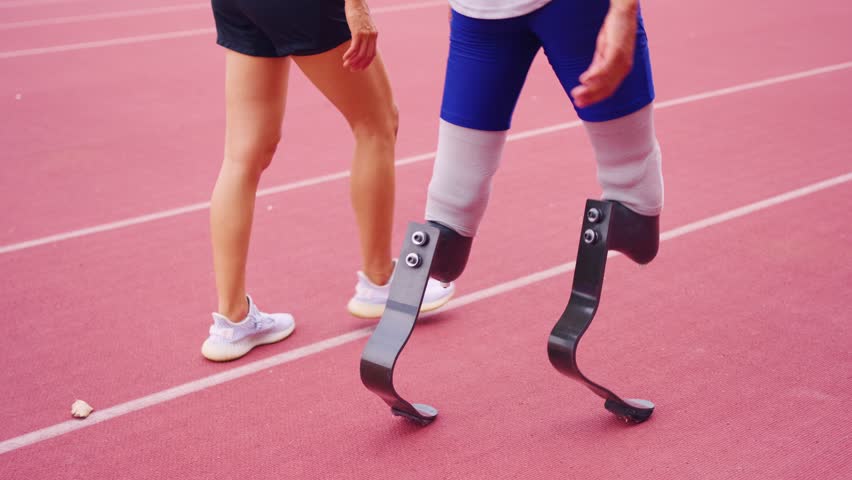
When you first see a carbon-fiber prosthetic blade flash by on a track or watch a para-snowboarder carve a run with a custom socket humming with sensors, it’s easy to think: that’s pure engineering — and it is. But it’s also a story about agency, fierce training, and technology shaped around human will. For adaptive athletes, coaches, therapists, developers, and advocates, prosthetic legs aren’t just medical devices: they’re tools that extend possibility, redefine performance, and create new questions for sport, policy, and inclusion.
What I’ll cover in this guide:
Why modern prosthetic legs matter for athletes
How running blades and sport-specific feet work
A comparison of leading prosthetic legs empowering athletes
Training, fitting, and clinical best practices
Policy, fairness, and classification in competition
Real-world stories, developer insights, and what’s next
Why prosthetic legs empowering athletes are game-changing
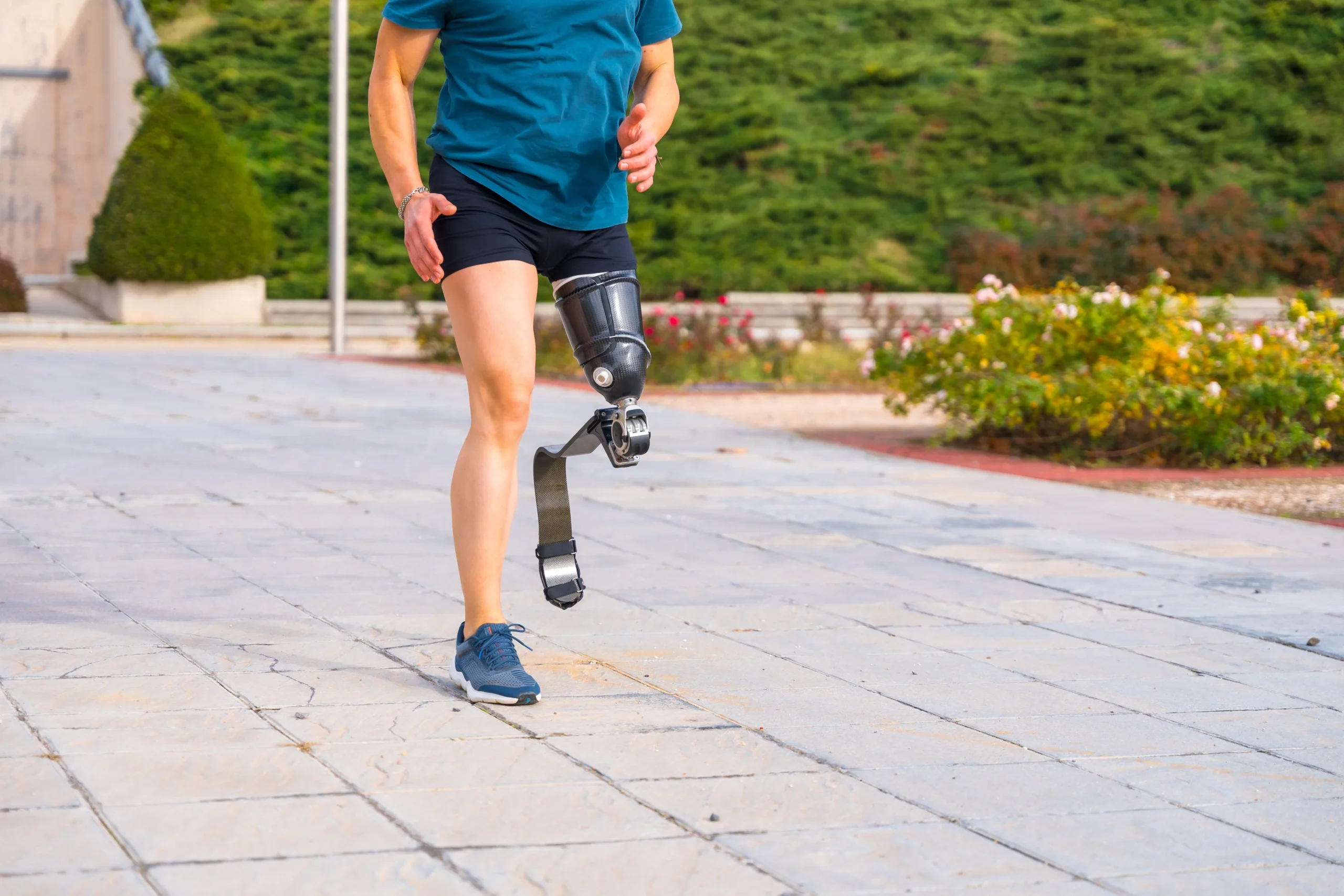
prosthetic legs empowering athletes transformed over the past three decades from heavy, basic supports to precision instruments designed for sport. Carbon-fiber “running blades” return stored energy like a spring and dramatically reduce weight, allowing amputee runners, jumpers, and multi-sport athletes to train and compete at elite levels. Manufacturers such as Össur and Ottobock — backed by ongoing research — have pushed advances in materials, geometry, and socket interfaces that make modern sport prostheses far more capable than earlier generations. ossur.com+1
How sport prostheses work: the essentials
At a fundamental level, sport prostheses (especially running-specific prostheses, or RSPs) rely on three engineering principles:
Energy storage and return — A curved carbon-fiber blade compresses under load and recoils during toe-off, storing and returning mechanical energy to assist propulsion. ossur.com
Lightweight strength — Carbon composites give a high strength-to-weight ratio, allowing repeated high-impact use without large mass penalties. ResearchGate+1
Task-specific geometry — The C-curve on sprinting blades or a longer toe lever on distance blades changes how force is applied and how much “push” the device gives per stride. ossur.com+1
These principles interact with the athlete’s physiology: hip-drive patterns, trunk control, and the intact limb’s forces. That interaction is why device choice, alignment, and training are inseparable.
Comparison table: leading prosthetic legs empowering athletes
This high-level overview is for coaches, prosthetists, and athletes evaluating options. Always verify specs with the manufacturer and consult a certified prosthetist for fitting.
| Model / Brand | Intended sport & use | Key tech features | Typical athlete profile | Source |
|---|---|---|---|---|
| Össur Cheetah Xceed | Sprinting, explosive events | High energy-return carbon blade, tuned stiffness, optimized toe lever | Elite sprinters and jumpers seeking max propulsion | ossur.com |
| Össur Flex-Run & Flex-Foot Cheetah | Distance running, multi-sport | Longer toe lever, efficient energy return, optional Nike sole for traction | Marathoners, triathletes, running enthusiasts | ossur.com+1 |
| Ottobock Runner series | Recreational to competitive running | Robust carbon construction, modular stack for different stiffness | Beginner to high-performance runners | Ottobock |
| Freedom Innovations / Catapult (examples in research/case reports) | Sprint & training blades | Tunable stiffness profiles, composite layups for durability | Sprinters and coaches needing tuning options | ResearchGate |
Deep dive: biomechanics of prosthetic legs empowering athletes
To work with an athlete using a prosthetic legs empowering athletes is to become part engineer, part coach, and part detective. The device interacts with the human body at multiple time scales — instantaneous ground-contact mechanics, stride-to-stride adaptations, and long-term tissue remodeling. Key biomechanical themes include:
Ground reaction forces (GRF): RSPs alter the vertical and horizontal GRF profile. Researchers measure how much force a blade returns to understand trade-offs between propulsion and peak loading; those measures guide stiffness selection and alignment. PMC
Effective mechanical advantage: A prosthetic limb’s geometry changes joint moments and leverage. Coaches must adapt strength programs so athletes produce hip-driven power rather than relying solely on ankle push-off.
Asymmetry management: Most unilateral athletes develop compensations. These can be performance neutral or costly; targeted strength and mobility work reduces asymmetries and secondary injuries. PMC
Case study: sprint training with the Cheetah blade
Consider a sprinter transitioning from a general-purpose prosthesis to the Össur Cheetah Xceed. A practical protocol often looks like this:
Baseline gait and power assessment (video, force-plate if available).
Trial progressive stiffness blades in controlled sprints; measure contact time, stride length, and peak forces.
Align the prosthesis to fine-tune toe-off timing and comfort.
Implement a 12-week conditioning program emphasizing single-leg hip extension, eccentric control, and progressive plyometrics.
Athletes report a learning period where timing and neuromuscular control change — not because the blade “magically” increases speed, but because coordination must be retrained to exploit different energy-return dynamics. ossur.com
Detailed table: materials and performance indicators
| Material / Component | What it does | Why it matters for athletes |
|---|---|---|
| Carbon fiber composite layup | Stores & returns mechanical energy; resists fatigue | Determines stiffness, resilience to repeated impacts, and energy-return efficiency. Different layups change response/hysteresis. ResearchGate+1 |
| Socket & suspension system | Transfers load to residual limb; controls motion | Comfort and stress distribution. Vacuum suspension improves proprioception and reduces pistoning, improving control. |
| Adjustable pylons / alignment hardware | Tune limb length & shear | Allows clinicians to tune biomechanics without remaking the full device. |
| Traction soles (e.g., Nike collaborations) | Improve ground grip | Helps in transitions and during different surfaces or disciplines; used on some distance blades for safety and efficiency. ossur.com |
Practical guide: choosing a prosthetic leg for sport
Coaches, therapists, and athletes should evaluate prostheses on clinical fit, activity goals, and training context. Here’s a practical checklist:
Before you test a device
Define the sport-specific goals (sprint times, endurance targets, agility needs).
Gather medical and biomechanical history (amputation level, residual-limb length, skin and vascular health).
Schedule with a prosthetist experienced in sports fittings.
During fitting & trial
Try multiple stiffness levels and toe geometries — many athletes use different blades for sprint vs. distance.
Use video gait analysis and force-plate data if available to observe asymmetries.
Verify socket comfort under training loads: pressure points may appear only after repeated impacts.
After selection
Build an incremental training plan emphasizing strength, unilateral plyometrics, and progressive loading.
Keep a maintenance routine: prosthetic components endure high stresses in sport — regular inspection prevents failures. Major events rely on on-site technicians for repairs and adjustments. Reuters
Coaching protocols: training plan (12-week template)
Below is a sample 12-week progression for a transtibial athlete returning to sprint training with a specialized prosthetic legs empowering athletes. Adaptation by a coach and physio is essential.
Weeks 1–4: Foundation & adaptation
3–4 sessions/week. Focus on socket acclimation, walking progression, low-impact plyometrics, and hip/knee strength.
Weeks 5–8: Power & neuromuscular integration
4–5 sessions/week. Moderate plyometrics, hill sprints (low volume), weighted hip extensions, core anti-rotation drills. Gait analysis every 2 weeks.
Weeks 9–12: Speed & competition readiness
4–6 sessions/week. Track-specific work: acceleration sets, maximal velocity, simulated competition days. Taper 7–10 days pre-event.
In each phase:
Physio check-ins every 2–4 weeks, prosthetist maintenance after heavy sessions, and recovery emphasis (sleep, graded return from micro-injuries).
Maintenance, logistics, and event support for prosthetic legs empowering athletes
No prosthetic is “set and forget.” High-performance prostheses undergo intense cyclic loads that require a clear maintenance plan:
Daily checks: inspect for delamination, cracks, loose bolts, and liner wear.
Weekly: clean socket interfaces, inspect suspension, and follow manufacturer cleaning/lubrication guidance.
Pre-competition: bring spare pylons and spare feet/blades when possible; have contact details for event technicians — at major events, manufacturers like Ottobock provide essential on-site servicing. Reuters
Transport: carbon blades need protective cases and careful handling; a dropped or crushed blade can fail in competition.
Policy pathways: how inclusive sport policy supports athletes with prosthetic legs
Policy decisions — from insurance reimbursement to classification rules — have enormous downstream effects. Here’s where stakeholders can act:
For policymakers
Expand reimbursement categories to include sport-specific fittings and replacement components.
Fund regional high-performance prosthetic clinics that serve multiple sports.
For organizers & federations
Standardize pre-competition technical inspections and provide neutral technicians so athletes aren’t unfairly disadvantaged by equipment issues.
For funders & investors
Support community programs that lease sport prostheses to reduce one-time cost barriers.
World Para Athletics sets classification standards and technical rules that determine how prosthetic-equipped athletes are grouped and assessed for para competition; coaches and sport organizers must stay current with these documents. Paralympic.org+1
Addressing controversy: do prosthetic legs create unfair advantage?
High-profile cases (e.g., historic debates around athletes like Oscar Pistorius) created intense public debate and spurred rigorous research. The contemporary consensus is nuanced: prostheses change biomechanics but do not automatically confer a universal speed advantage. Instead, they re-distribute demands — sometimes reducing metabolic cost in a specific phase while requiring different muscular strategies elsewhere. The debate has pushed sports bodies to adopt evidence-based assessments alongside classification systems. The Guardian+1
Real-world stories: athletes and the tech that empowers them
Technology alone doesn’t make champions — people do. Still, athletes repeatedly credit modern prostheses with unlocking new capacities:
Sprinters and jumpers often describe the Cheetah blade’s energy return as a “different feeling” at take-off; it’s a technical tool that, when combined with hip-drive training, can alter outcomes. ossur.com
Endurance athletes benefit from lower weight and efficient toe-levers that reduce fatigue over long distances — designs such as Össur’s Flex-Run were developed for these use-cases. ossur.com
At the elite level, on-site manufacturer technicians are essential; they repaired thousands of pieces of gear during the 2024 Paralympics, highlighting that performance depends on athlete + device + team + logistics. Reuters
A short guide for prosthetic developers and assistive-tech investors
If you’re a developer or investor focused on sport prosthetics, these areas show clear promise:
Materials & manufacturing: lighter, tougher composites and modular designs for quick stiffness changes.
Data-driven fitting: socket pressure sensors, IMUs, and cloud tools that match device parameters to athlete profiles.
Repairability & field support: fast-replacement modules and partnerships with event teams (on-site support is mission-critical). Reuters
Industry research is also pushing for standardized mechanical reporting (stiffness, hysteresis, energy return) so clinicians can compare devices objectively. PMC+1
Emerging tech trends to watch
The next decade will bring:
Sensorized sockets and live telemetry: remote tuning and objective metrics to reduce trial-and-error fittings.
Modular blades: quick-change stiffness cartridges to switch between sprint and distance setups without a full rebuild.
Distributed manufacturing & low-cost composites: regional fabrication hubs and novel layups could reduce costs and improve access. Recent studies and industry work point to improved testing and durability standards to make wider adoption safer. ResearchGate+1
Funding models and building equitable access
Making sport prostheses widely available will require creative finance:
Public–private partnerships: governments underwrite clinical capacity while manufacturers provide discounted equipment.
Lease-to-own models: spread costs for clubs and community programs.
Sponsorship & crowdfunding: often used for athletes from under-resourced regions to access elite-level blades and fittings.
A note on safety and injury prevention
Prevent injuries with a proactive plan:
Baseline musculoskeletal screening for asymmetries.
Progressive overload: avoid immediate maximal sprint loads.
Cross-training to spread physical load and maintain cardiovascular conditioning.
Track maintenance logs for components and keep replacement schedules.
Final words: prosthetic legs empowering athletes — how to advocate, coach, and build programs
If you work with adaptive athletes, your role extends beyond coaching technique — you’re an advocate and system designer. Short advocacy checklist:
Connect athletes with certified prosthetists and technicians.
Build partnerships with local manufacturers and repair networks.
Advocate for inclusive procurement in school and community sports budgets.
Measure outcomes: training loads, incidents of equipment failure, and athlete satisfaction to build a data-driven case for investment.
Appendix: Frequently Asked Questions (FAQ)
Q: Do running blades make amputee athletes faster than able-bodied athletes?
A: It’s complicated. Prostheses change mechanics but don’t automatically confer a universal advantage. Research shows blades alter force production patterns; any benefit depends on physiology, device tuning, and event specifics. The Guardian+1
Q: How often should sport prostheses be replaced?
A: It depends on use and loading. High-performance athletes subject prostheses to thousands of high-impact cycles; regular inspection and manufacturer-guided replacement intervals are essential. Event logistics commonly include manufacturer support for repairs. Reuters
Q: Are there rules that prevent prosthetic-equipped athletes from competing against able-bodied athletes?
A: Rules vary by sport and federation. World Para Athletics provides classification systems for para competition. Integration into able-bodied events may require technical assessments; keep up-to-date with governing bodies for the latest standards. Paralympic.org+1
Conclusion
Prosthetic legs empowering athletes combine cutting-edge materials science, careful clinical practice, and relentless human determination. For coaches, therapists, manufacturers, and policymakers, the goal is the same: design systems that let athletes train safely, compete fairly, and access the tools they need to push boundaries. The next leaps will come from cross-disciplinary collaboration — engineers listening to athletes, clinicians adopting data-driven fittings, and policy that funds access. When that happens, prosthetic legs won’t just restore movement; they’ll keep making the impossible possible.
Learn more about adaptive sports equipment for winter athletes to complement these prosthetic legs empowering athletes.


