Why It Matters More Than Ever
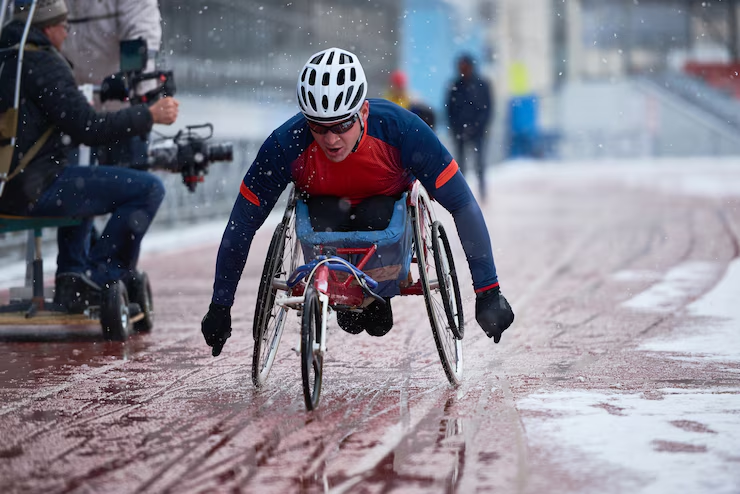
There’s a moment in every great sporting event when the crowd goes silent — not from disappointment, but from awe. That moment when a wheelchair racer rounds the final bend at a Paralympic sprint, or when a visually impaired climber reaches the summit of an artificial rock wall with nothing but a belay partner’s voice guiding them. These aren’t just athletic feats. They’re the product of decades of innovation, persistence, and a quiet revolution happening at the intersection of assistive technology and competitive sport.
Disability sports — once a niche corner of the athletic world — are now front and center in conversations about the future of human performance. And if you think the most exciting sports technology stories belong exclusively to able-bodied leagues, it’s time to reconsider. The innovations shaping Paralympic and adaptive sports today are, in many ways, more audacious than anything you’ll find on a mainstream playing field.
How Has Technology Changed Sports for Athletes With Disabilities?
The short answer? Completely. The longer answer is a story about how engineering, data science, and medical research converged to reimagine what the human body — in all its varied forms — can achieve.
Think back to the early days of Paralympic competition. Equipment was often repurposed, rudimentary, and far from optimized. A wheelchair athlete might compete in a chair designed for hospital corridors. A below-knee amputee sprinter might use a prosthetic built primarily for walking. The gap between the athlete’s ambition and the technology available to support it was enormous.
Today, that gap is closing fast. According to research published by the World Intellectual Property Organization (WIPO), innovation in disability sports has accelerated dramatically over the past two decades, with patents in assistive sports equipment rising sharply as commercial and academic interest in the space has surged. What was once a field driven by goodwill is now driven by genuine scientific and engineering ambition.

The five most transformative technologies reshaping disability sports right now are:
- Advanced prosthetic limbs engineered specifically for athletic performance
- AI-powered wheelchair systems that adapt to terrain and athlete input in real time
- Wearable biometric sensors that track performance data with clinical precision
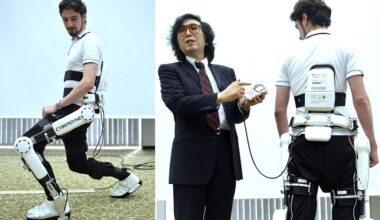
- Exoskeleton technology enabling movement for athletes with spinal injuries
- Smart visual and auditory assistance tools for athletes with sensory disabilities
Each of these represents not just a product, but a philosophy — the belief that disability is a design challenge, not a limitation.
How Is Tech Helping Disabled Athletes Compete at Elite Levels?
Here’s where things get genuinely fascinating. Modern sports technology for disabled athletes isn’t about compensating for a deficit. It’s about engineering excellence. Take the carbon fiber running blade, which has become something of a cultural icon since Oscar Pistorius introduced it to mainstream audiences. The blade’s J-shaped design mimics the energy return of an Achilles tendon, storing kinetic energy during ground contact and releasing it with each stride. Researchers have spent years refining the stiffness-to-weight ratio, blade curvature, and foot attachment points to optimize speed for specific body types and running styles.
A systematic review of emerging assistive technologies in Paralympic sports from the University of Illinois highlights how biomechanical modeling is now central to prosthetic design for competitive use. Athletes work directly with engineers and physiotherapists to create equipment that is, quite literally, built around their bodies and their goals.
Wheelchair technology tells a similar story. Racing chairs are now crafted from aerospace-grade materials — titanium frames, carbon fiber seats, and precision-engineered wheel camber — to minimize weight while maximizing stability at speed. Some chairs are now equipped with embedded sensors that feed performance data to coaches in real time, allowing for tactical adjustments mid-race in a way that would have seemed like science fiction a generation ago.
| Technology | Application in Disability Sports | Key Benefit |
|---|---|---|
| Carbon fiber prosthetics | Running, jumping, throwing | Energy return, weight reduction |
| AI wheelchair systems | Racing, court sports | Real-time adaptability |
| Biometric wearables | All sport categories | Performance tracking & injury prevention |
| Exoskeleton tech | Rehabilitation & emerging sports | Enables movement for paralyzed athletes |
| Haptic/auditory devices | Visually impaired sports | Navigation and spatial awareness |
How Has Technology Helped Those With Disabilities Beyond the Competition?
The ripple effects of sports technology innovation for disabled athletes extend well beyond the finish line. When researchers develop a lighter, more responsive prosthetic limb for a Paralympic sprinter, that same technology eventually filters into everyday prosthetics used by millions of people worldwide. This is the quiet genius of disability sports investment — it funds innovation with utility that transcends sport.
A landmark study published in PMC (PubMed Central) examined how sports participation combined with advanced assistive technology leads to measurable improvements in psychological well-being, social integration, and physical health outcomes for people with physical disabilities. The data is clear: when technology removes barriers to athletic participation, the benefits compound across every dimension of life quality.
This is why organizations like caredigitally.com are increasingly focused on the intersection of assistive technology and lifestyle — because sport is not separate from daily life. It’s an extension of it. For a deeper understanding of how digital tools are improving life for people with disabilities beyond sport, explore this resource on assistive technology and daily living.

What Are 5 Devices That Have Been Developed to Help Users With Disabilities in Sports?
If you want to understand the scope of this technological revolution, look at the hardware. These five devices exemplify where the field is headed:
1. The Össur Cheetah Xtend Blade Designed exclusively for competitive running, this carbon fiber prosthetic is engineered for athletes competing at the highest levels. Its dynamic energy return is comparable to biological tendons, making it one of the most sophisticated pieces of sports equipment ever built — for any athlete.
2. TiLite Aero Z Racing Wheelchair Ultra-lightweight titanium frame, customizable geometry, and precision-machined components make this one of the preferred choices for elite wheelchair racers. It’s the kind of chair where every gram shaved translates into fractions of seconds won.
3. Not Impossible’s eSight 4 (Adaptive Vision Technology) While originally developed as an assistive visual tool, eSight’s enhanced vision glasses are being explored in adaptive sports contexts — allowing athletes with low vision to track fast-moving objects, improving participation in sports like goalball and visually impaired football.
4. HAL (Hybrid Assistive Limb) Exoskeleton Developed by Cyberdyne (yes, like the movie, but far more benevolent), HAL reads bioelectrical signals on the skin’s surface to assist and augment limb movement. It’s currently used in rehabilitation but is actively being explored for use in emerging Paralympic sport categories.
5. AIMEE (AI Motion Enhancement Engine) Prosthetic Knee Developed through a partnership between research institutions and prosthetic manufacturers, AI-powered knee joints like AIMEE use machine learning algorithms to predict and adapt to the user’s gait patterns in milliseconds — a genuine breakthrough for athletes in bilateral amputee sports categories.
What Are the 4 Types of Assistive Technology Used in Disability Sports?
Assistive technology in the sporting context generally falls into four broad categories — each addressing a different dimension of participation:
Mobility Assistive Technology — Wheelchairs, prosthetic limbs, and crutches engineered for athletic performance. This is the most visible category and includes everything from racing chairs to blade runners.
Sensory Assistive Technology — Devices that support athletes with visual or auditory impairments. This includes guide systems, auditory navigation devices, and tactile feedback tools.
Communication Assistive Technology — Tools that enable athletes with speech or communication impairments to interact with coaches, officials, and teammates during competition. Think eye-tracking communication devices used on the sidelines.
Cognitive and Learning Assistive Technology — Emerging applications of AI and data tools that help athletes with cognitive disabilities understand tactical instructions, track their own performance, and engage with training materials in accessible formats.
The 5 P’s of assistive technology framework — People, Purpose, Product, Practice, and Place — provides a useful lens for understanding how these tools must be tailored to individual contexts rather than deployed as one-size-fits-all solutions.

What Are the Negative Effects of Using Technology in Sport?
No honest conversation about sports technology is complete without examining the friction it creates. And in disability sports, these tensions are particularly complex.
The equity problem is real. High-performance prosthetics and adaptive equipment can cost tens of thousands of dollars. A carbon fiber racing blade might retail at $15,000 or more. For athletes in lower-income communities across the US, Canada, and the UK — where disability disproportionately intersects with economic disadvantage — access to cutting-edge equipment is far from guaranteed. This creates a two-tier system where technological advantage can outweigh athletic talent.
The classification debate is ongoing. As prosthetics become more sophisticated, questions arise about whether certain technologies provide an unfair advantage — not just over other disabled athletes in the same class, but potentially over able-bodied competitors. The WIPO analysis of disability sports innovation notes that governing bodies are actively wrestling with how to classify and regulate emerging technologies without stifling innovation.
Over-reliance on tech can mask training deficits. When equipment does significant work, there’s a risk that fundamental athletic development gets deprioritized. Coaches and physiotherapists increasingly emphasize that technology should augment training, not replace it.
Data privacy is an emerging concern. As biometric wearables become standard in training environments, the data they collect — heart rate variability, movement patterns, fatigue markers — raises questions about who owns that data and how it can be used.
What Are the Advantages of Sports Technology for Disabled Athletes?
Set against those concerns, the advantages are substantial — and for many athletes, life-changing.
Performance optimization. Real-time biometric data allows coaches and athletes to make evidence-based adjustments to training loads, technique, and recovery protocols. A recent publication in PubMed underscores how data-driven training approaches have contributed to measurable performance gains in Paralympic athletes across multiple sports.
Injury prevention. Wearable sensors that track biomechanical stress on joints and muscles allow for early intervention before minor issues become serious injuries — a significant benefit in a population where secondary complications can have outsized consequences.
Expanded participation. Technology is lowering the threshold for participation in sport. Adaptive gaming technologies, for instance, are enabling people with significant physical limitations to engage competitively for the first time. This is sport’s version of the accessibility ramp — transformative in scope and impact.
Psychological empowerment. There is something profound about an athlete strapping on a piece of technology engineered specifically for their body and their ambitions. The psychological dimension of that experience — the sense of agency, capability, and identity it confers — should not be underestimated.
Visibility and advocacy. When elite disabled athletes perform at the highest level with cutting-edge technology, it reshapes public perception of disability more broadly. It challenges the notion that disability is a barrier to excellence and positions adaptive athletes as innovators, not just competitors.
Can AI Help People With Disabilities in Sports?
Artificial intelligence is arguably the most exciting frontier in disability sports technology right now. And its applications are moving faster than most people realize.
AI is being used to personalize prosthetic calibration, adjusting limb response patterns based on real-time movement data rather than relying on static factory settings. Machine learning algorithms are analyzing thousands of hours of athletic footage to identify technique improvements for wheelchair athletes. Natural language processing tools are being used to make coaching instruction more accessible for athletes with cognitive or communication differences.
Perhaps most intriguingly, AI is being explored as a tool for disability classification — the complex process of categorizing athletes into competition groups based on their functional ability. The goal is a more objective, data-driven classification system that reduces the potential for misclassification and ensures fairer competition.
For a broader look at how AI and digital tools are reshaping healthcare and support for people with disabilities, check out this insightful resource on assistive technology.
How Can Modern Technology Be Used to Overcome Impairments?
The framing of this question matters. The most forward-thinking researchers, coaches, and athletes in the disability sports world aren’t primarily focused on “overcoming” impairment — they’re focused on optimizing human performance within the full range of human physical variation.
That said, the practical answer is compelling. Exoskeleton technology is enabling athletes with spinal cord injuries to train muscle groups previously thought unreachable. Neural interface technology is exploring connections between brain signals and prosthetic control that could eventually allow for movement precision previously impossible with mechanical systems alone. Gene therapy and regenerative medicine, while not strictly “sports technology,” are being developed with implications for the disability community that will inevitably intersect with athletic participation in the years ahead.
The trajectory is clear: we are moving from technology that accommodates disability to technology that actively expands human capability — for everyone.
The Future of Disability Sports Technology: What’s Next?
The coming decade in disability sports will be defined by three converging trends:
Personalization at scale. 3D printing is making it economically viable to produce custom-fitted prosthetics and adaptive equipment at a fraction of the previous cost. What once required a bespoke manufacturing process costing thousands of dollars can increasingly be produced for hundreds — democratizing access in ways that could reshape the competitive landscape entirely.
Cross-disability innovation. Technologies developed for one disability category are increasingly finding application in others. AI calibration systems developed for lower-limb prosthetics are being adapted for upper-limb devices. Navigation tools developed for visually impaired athletes are being refined for athletes with vestibular disorders.
Mainstream convergence. The line between disability sports technology and mainstream performance technology is blurring. Insights from Paralympic research are informing training tools used by NBA teams and Premier League clubs. The innovation flows in both directions — and the entire sporting world is better for it.
Conclusion: Technology Is Rewriting the Rules of What’s Possible
If you’ve spent any time watching elite Paralympic competition — whether it’s the breathtaking speed of wheelchair racing at the Games, the precision of goalball athletes reading auditory cues in real time, or the sheer athletic poetry of a blade runner at full stride — you already know that disability sports aren’t a lesser version of sport. They’re a different expression of the same fundamental human drive to push beyond limits.
Technology is the amplifier of that drive. It doesn’t create the athlete’s ambition, determination, or grit. But it gives those qualities a vehicle worthy of them.
The revolution in disability sports technology is not coming. It’s already here — and it’s moving faster than most people outside the field realize. Whether you’re a young professional interested in assistive technology, an aspiring adaptive athlete, or simply someone who believes that sport should be genuinely inclusive, this is a story worth following closely.
Because the future being built on Paralympic tracks and adaptive sports courts today is one where the question isn’t “what can’t you do?” — it’s “what haven’t we built yet to help you do it?”
Want to stay ahead of the latest innovations in assistive technology and inclusive digital care? Explore more at beyondbarrierssports.com.
Sources & Further Reading: