Introduction


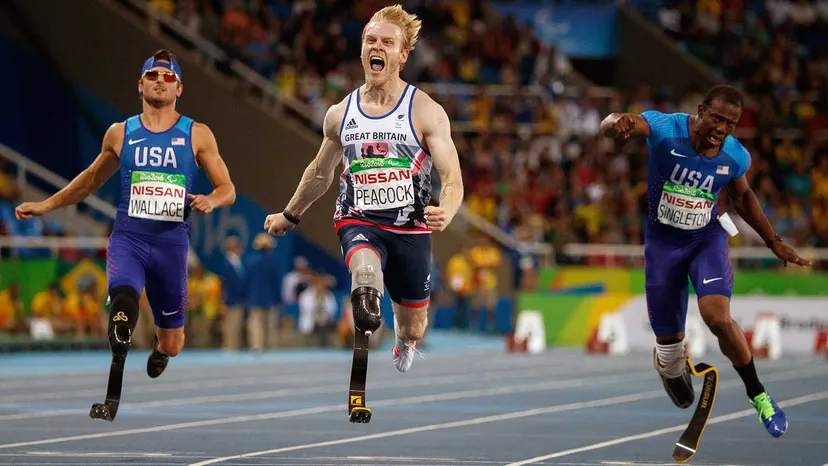
In modern sports, technology-driven strength is reshaping what paralympic athletes and their equipment can achieve together. Especially in the Paralympic arena, strength is being redefined. It is no longer measured by muscle alone, but by the fusion of human determination and intelligent technology. In this post, we explore how one Paralympian’s journey reflects this transformation, and how assistive innovation is expanding what strength can mean for athletes worldwide. We’ll examine sport technology, inclusive engineering, and the mindset shifts that are changing how performance is understood in adaptive competition.
The Rise of Assistive Sports Technology: Focus on the Paralympian Tech Strength
In recent years, growth in the adoptive field of assistive sports technology — the gear, prosthetics and devices enabling athletes with impairments to train, compete, and excel — has been dramatic. The term “assistive technology” covers a broad range of devices: advanced prosthetics, custom wheelchairs, sensor systems, release braces. World Health Organization+2Beyond Sport+2
Key Insights
At the upcoming Paris 2024 Paralympic Games, there is a strong spotlight on this tech, with campaigns like “Equipped for equity” emphasising how assistive products allow athletes to unlock potential. World Health Organization+1
According to research, assistive products are vital for Paralympic performance – yet access remains uneven globally. Monash Lens+1
Technology spans from “low-tech” (for example tactile aids for visually impaired swimmers) to high-tech carbon-fibre running blades and bespoke wheelchairs. letsenvision.com+1
These innovations do more than compensate for impairment: they redefine the athlete’s toolkit, and thus redefine strength. Instead of just “overcoming disability”, the narrative becomes “leveraging technology + training to extend performance”.
Meet the Model Case: A Paralympian Who Redefined Strength Through Tech
To illustrate how this plays out in real life, consider the case of Oscar Pistorius (for reasons we’ll discuss below) — a double-below-the-knee amputee sprinter whose story intertwines elite performance and assistive tech for Paralympians. Encyclopedia Britannica+2Al Jazeera+2
Background & Breakthrough
Born without fibulae and with malformed feet, his legs were amputated below the knee when he was an infant. Encyclopedia Britannica
He used specially designed carbon-fibre “running blades” (also called “Cheetah” prostheses) that store kinetic energy and help generate forward momentum. paralympicheritage.org.uk+1
In 2012 he became the first amputee runner to compete at the Olympic Games (London) while also being a Paralympian. TIME
What the Tech Enabled
The carbon-fibre blades gave him a platform for speed and agility that would not have been possible with older prosthetics. AZoM+1
Their design mimics the curve of a cheetah’s hind leg, storing elastic energy during the loading phase and releasing it to propel the athlete. paralympicheritage.org.uk
While the ethical question of “advantage vs compensation” remains debated, the underlying truth is: technology + athlete + training = new definition of strength. Scientific American
Redefining Strength
What stands out is the shift: strength is no longer just “lift more, run harder” in the traditional sense. For this Paralympian:
Strength includes mastering the interface between body and tech (fitting, alignment, responsiveness)
Strength is mental: adapting to a blade, to classification, to the public gaze
Strength is inclusive: showing that high performance is achievable for athletes with impairments
Important Caveats
While his story is compelling, it’s not without complication. Pistorius later became involved in criminal proceedings and his legacy is contested. But for our purposes: the intersection of athlete + assistive tech + performance remains a powerful study.
How Assistive Tech Amplifies Strength: Mechanisms & Insights
Let’s unpack exactly how assistive technology amplifies what we think of as “strength”, especially in Paralympic sport.
Mechanisms at Play
Energy return and mechanical efficiency: Running blades absorb energy like a spring and release it, reducing the energy cost of running for amputee athletes. AZoM+1
Customisation and athlete-specific design: Equipment is increasingly bespoke, tuned to athlete’s weight, limb length, sport class. ORTHOPUS+1
Integration of data & training: Sensor tech, biomechanics modelling and material science feed into design and training approaches. Sify
Bridging accessibility and equity: Access to tech remains uneven across countries and regions — this is a structural strength/weakness issue. Monash Lens+1
Insights for Athletes & Trainers
Training programmes for Paralympians emphasise both strength (muscle) and mechanism (how tech is used): e.g., stability, socket alignment, interface control. TrainHeroic
For coaches, the paradigm shifts: coaching an athlete with assistive tech is partly technical engineering problem, partly sport performance problem.
For the athlete: the mental layer is important. Accepting the technology, trusting it, and integrating it into identity can be just as big as physical training.
Comparison Table: Traditional Athlete vs Paralympian with Tech
| Attribute | Traditional Athlete | Paralympian with Assistive Tech |
|---|---|---|
| Muscle/strength focus | Primary driver of performance | Important, but interface with tech equally crucial |
| Equipment role | Shoes, apparel, minor tech | Prosthetics/custom gear central to performance |
| Training emphasis | Technique + conditioning | Technique + conditioning + equipment integration |
| Mental component | Mindset + competition psychology | Mindset + adaptation to impairment + tech trust |
| Access & equity | Relatively uniform gear availability | Significant variation in access to assistive tech |
| Example of redefining strength | Lifting heavier weights, faster sprint | Matching or exceeding able-bodied speeds via tech |
Case Study: Beyond the Blade – Tech in Inclusive Sports Strength
While our earlier case zoomed in on running blades, the world of inclusive sports tech is expansive. Let’s explore further.
Wheelchairs, Release Braces & More
In wheelchair sports (basketball, rugby, tennis) the chair is adapted for the athlete’s classification and sport demands — impact resistance, wheel angles, frame geometry. sportanddev+1
In para-archery or target sports, assistive technology such as release braces, mechanical triggers, telescopic sights provide independent performance for athletes with limb differences. Sify
Access and Equity: The Strength Gap
One of the biggest underlying issues is that while technology can enable high performance, many athletes (especially in low-income nations) lack access. As one research piece noted, only a fraction of those who need assistive tech globally can obtain it. Beyond Sport
This access gap becomes a strength issue: the strength to perform becomes partly dependent on resources and technology availability, not just training.
The upcoming Paris 2024 Games were expected to offer a window to shift this, by amplifying visibility of assistive tech and policy around access. sportanddev
Lessons Learned
For inclusive sports technologists: designing for affordability, durability and scalability is as important as designing for elite performance.
For athletes and coaches: technology must be treated as an integral part of training, not a separate add-on.
For sports policy makers: investment in assistive tech equality is a core part of building strength (in the broad sense) across all athletes..
What “Strength” Means Now: A Humanised, Tech-Enabled Perspective
When we talk about “strength” in this new era, especially for Paralympians, we’re talking about something richer than raw power or speed. Let’s break down how that evolves.
Dimensions of Strength
Physical strength: the muscular power, endurance, stability that any high-level athlete needs.
Technological strength: the ability to select, adapt, master assistive equipment; to train with it, change it, customise it.
Mental/emotional strength: coping with injury or impairment, navigating identity, embracing change, staying motivated.
Social/systemic strength: ability to access gear, support networks, inclusive coaching, adaptive training environments.
Why This Matters
It challenges old narratives: Instead of “disabled athlete fighting odds”, we see “athlete with impairment harnessing technology + training to excel”.
It widens the field of role models: Athletes using tech become ambassadors for inclusion and innovation alike.
It reframes performance: Records and achievements are not only about the body, but the body-tech ecosystem.
How One Paralympian Redefined Strength
Going back to our case, the athlete’s story shows all four dimensions:
He built physical strength through rigorous training.
He embraced technological strength by adopting state-of-the-art blades and adapting them.
He demonstrated mental strength through competition and the pressure of visibility.
He also benefitted from societal support (though not without debate) that allowed him access to high-end tech.
This redefinition provides a roadmap: for aspiring athletes, disability advocates, technologists, coaches alike.
Insights & Implications for Assistive-Inclusive Sport Technology
Here are some distilled insights and practical implications for the field of assistive and inclusive sports technology.
Insights
Integration trumps addition: Assistive tech should not feel tacked on; it must feel part of the athlete’s body-system, training programme and identity.
Design for athlete first: User-centred design (not merely engineering for performance) becomes essential. Research emphasises the value of athlete-in-the-loop. Monash Lens
Access is strength: Equal access to state-of-the-art gear is a competitive strength for nations and athletes.
Mental/tech synergy: The way an athlete engages with the technology (trust, feedback, customisation) affects outcomes as much as physical training.
Broader ecosystem matters: Coaches, prosthetists, biomechanics engineers, governing bodies all play roles in how strength is realised.
Implications
For technologists: Build modular, affordable, durable assistive devices that scale globally.
For trainers/coaches: Develop training regimes that account for equipment-athlete interactions and tech optimisation.
For policy makers/sports bodies: Ensure funding, classification fairness, and research into equity of access.
For athletes: View technology as a co-athlete; invest time in understanding fit, responsiveness, and maintenance.
Practical Tips for Athletes & Trainers
When acquiring gear, assess fit, material fatigue, customisation and service support.
Track your performance not just in raw times/loads, but how your equipment responds in training and competition.
Apply iterative feedback: How does the assistive gear feel? Is it limiting or enabling? Adjust accordingly.
Build mental practices around equipment: Visualisation, trust, adaptation. The mind-tech link is real.
Consider the broader team: prosthetist, biomechanist, sport psychologist — they matter.
Comparisons & Perspective — Able-Bodied vs Para, Tech-Enabled Strength
It’s useful to compare traditional elite sport strength paradigms vs what emerges in inclusive, tech-enabled sport.
Comparison: Ability vs Technology Focus
| Dimension | Able-Bodied Elite Athlete | Para Athlete with Assistive Tech |
|---|---|---|
| Equipment requirement | Standard sports gear (shoes, apparel) | Highly personalised assistive gear essential |
| Performance limiting factor | Often physical or tactical | Physical + technological interface + classification |
| Innovation frontier | Training methods, marginal gains | Gear design, materials science, prosthetic tech |
| Barrier to entry | Access to training, talent | Access to gear, customisation, funding |
| Narrative emphasis | Natural talent + training | Technology + talent + resilience |
Perspective
For able-bodied sport the narrative of “natural body, maximum optimisation” dominates.
In para sport with tech, the narrative shifts to “body-tech system, design meets athlete, optimisation across domains”.
This is not a diminishment of strength; rather it’s a more complex, layered notion of strength — one that embraces human and machine synergy.
Why This Comparison Matters for Our Focus Keyword: paralympian tech strength
Because it highlights how the strength of a Paralympian is not simply “equivalent to” an able-bodied athlete: it is transformed by the gear, the adaptation, the system. Understanding this transformation helps us appreciate the inclusive sports technology niche more deeply.
Future Outlook — Where Assistive Tech and Paralympian Strength Are Headed
Looking ahead, what trends and developments can we expect in the intersection of Paralympian strength and technology?
Emerging Trends
Material innovations: Lighter, stronger, more responsive materials (carbon-fibre, smart composites) will continue to push limits. paralympicheritage.org.uk+1
Sensor & data integration: Real-time feedback from prosthetics, training apps linked with assistive gear, increased biomechanics analytics.
Customisation and modularity: 3D-printing, modular prosthetic limbs, adjustable gear for sport-class changes.
Accessibility and equity efforts: Increased attention on making assistive tech affordable and globally distributed. Campaigns like “Equipped for equity” underscore this. World Health Organization+1
Cross-discipline convergence: Robotics, AI, materials science all feeding into assistive-sport gear; not just for athletes but for daily mobility, which feeds performance pipeline.
Implications for Strength
Strength will increasingly be measured in system performance — how gear, athlete and training combine.
Athletes who master the tech interface will gain competitive edges.
Parity of access will become a new battleground for fairness: good gear will matter as much as raw training hours.
What to Watch
Watch for stories of up-and-coming para-athletes who are utilising next-gen gear.
Note the policy shifts: changes in classification rules or gear regulations may impact who wins.
Consider the ripple effect: innovations in elite para sport gear often trickle down to everyday assistive devices (mobility, rehab).
Conclusion
The story of one Paralympian — his journey, his gear, his performance — offers a vivid window into how strength is being re-defined in sport. The blend of human will + advanced technology means that strength is no longer just about muscles, but about the athlete-tech ecosystem. For the assistive and inclusive sports technology niche, this redefinition has massive implications: how we design gear, train athletes, shape policy, and tell the story.
If there is one takeaway: the strongest athletes in this space are those who embrace the intersection of human and machine with purpose, authenticity and resilience. In that sense, strength takes on a richer, deeper meaning — one we can all learn from.


