
Table of Contents
ToggleIntroduction

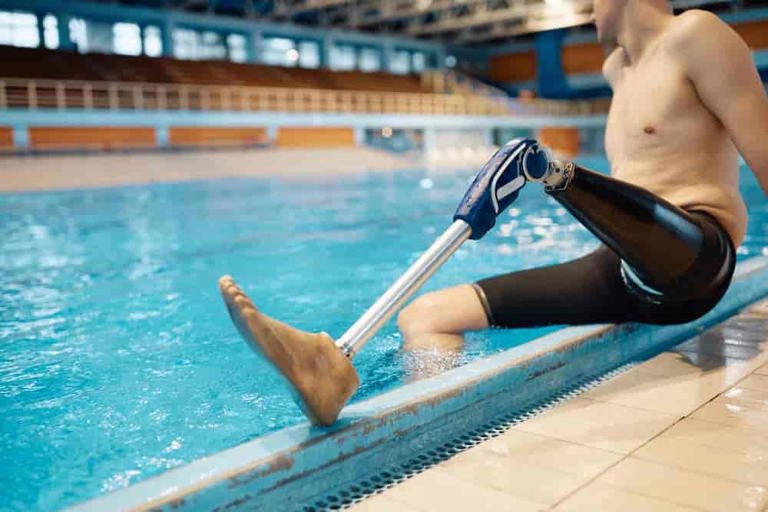
In the world of sport, there are stories that go beyond medals, competitions, and personal bests. There are stories about human spirit, innovation, inclusion and transformation. The story of a swimmer who refuses to quit — forging ahead through adversity, leveraging assistive technology, and achieving victory — offers a powerful metaphor and practical lesson for everyone committed to inclusive sports. In this article, we explore courage, tech, and victory through the lens of an adaptive swimmer, and we unpack what this means for adaptive athletes, coaches and trainers, sports therapists and rehabilitation specialists, assistive‑technology developers, inclusive sports organisations, investors in sports tech, policymakers, educators in adaptive physical education, and accessibility advocates.
Here we will use the focus keyword — courage tech and victory adaptive swimmer — throughout, in natural context, so that this article remains both inspiring and discoverable.
Setting the Scene: Adaptive Swimming as a Frontier of Inclusion
Adaptive swimming is more than a sport: it is a laboratory for inclusion, innovation and resilience. When an athlete with a disability enters the pool, they engage not only their body but also a network of support: coaches, therapists, technology, accessible facilities, and a community of inclusion.
For example, consider the story of Ellie Robinson, a Paralympic swimmer who described her journey with hip disease and said her performance was “a story of triumph, not defeat.” Entry Point Or Jessica Long, a decorated swimmer who turned her amputations and surgeries into a platform to inspire others. CBS News These real‑world examples show how the themes of courage, technology, and victory intertwine.
When we talk about courage tech and victory adaptive swimmer, we’re really looking at three interlinked domains:
Courage — the athlete’s internal drive to keep going when odds are stacked.
Tech — the assistive technologies, training tools, inclusive equipment and support systems enabling performance and inclusion.
Victory — not just medals or records, but achievement, breakthrough, inclusion, and legacy.
We now unpack each of these with actionable insights and link them to the many stakeholders who can play a part.
Courage: The Heart Behind the Swim
Courage is the foundation. Without the internal commitment and belief that one can overcome obstacles, technology and planning alone won’t do the job. For an adaptive swimmer, this courage takes many forms: adapting to a changed body, training differently, acquiring new techniques, facing stigma, and often being a pioneer.
1. The emotional and mental journey
Adaptive athletes often navigate physical barriers and emotional ones: identity changes, loss of previous function, social isolation, and sometimes low expectations from others. This is frequently documented in adaptive sports discourse: one athlete said, “I was told I couldn’t move forward… but I started pushing harder.” Wheel:Life
For coaches, therapists and educators, recognising this emotional layer is vital. It means building trust, creating accessible environments (physical and psychological), and celebrating small wins — because courage is practiced.
2. Transforming setbacks into stepping stones
A key mindset: what limits others doesn’t have to limit you. For example, one swimmer with bilateral amputation competed and inspired her team despite initially being excluded from training practices. FOX6 News Milwaukee Adaptive athletes often must innovate their training and adopt different strategies.
3. Implications for practice
Coaches/trainers: Build mental skills training into your regimen. Teach goal‑setting, visualisation, self‑talk, resilience.
Rehabilitation specialists/therapists: Recognise the athlete’s broader identity — their athletic identity remains valid even when modality changes.
Educators: Incorporate stories of adaptive athletes into curricula (in adaptive physical education) to normalise perseverance. ClickView
Inclusive sports organisations: Create peer‑mentoring opportunities where adaptive athletes share their stories — peer modelling strengthens courage.
Accessibility advocates: Promote narratives that frame adaptive athletes as agents of change, not simply recipients of access.
Tech: The Enabling Engine for Inclusive Victory
Once courage is present, assistive technologies, inclusive design and adaptive approaches become the engine that powers performance. The “tech” in courage tech and victory adaptive swimmer covers a wide spectrum: from prosthetics and specialized swim gear to training analytics, rehab tools and accessible infrastructure.
1. Assistive and adaptive equipment
For swimmers with physical impairments, adaptive swim devices, buoyancy supports, modified strokes and assistive gear enable participation. The right technology can level the playing field. Adaptive sports reports emphasise how athletes “use creativity and support to adapt and thrive”. ClickView
2. Training and therapy technologies
Rehabilitation specialists and sports therapists are increasingly leveraging technologies like underwater cameras, motion capture, force sensors, biofeedback and wearable tech to monitor performance, adapt training, and prevent injury. For example, therapists might use video analysis to compare swimmers’ stroke mechanics in an inclusive pool setting.
3. Inclusive infrastructure and event tech
The tech ecosystem around adaptive sports isn’t just about athlete gear. It’s also about event design, venue accessibility, and inclusion in competition contexts. Consider the group founded by adaptive swimmer Sophie Etheridge — the “Adaptive and Disabled Open Water Swimmers” Facebook community — which highlights how access, event design and community tech platforms matter. sophie-adaptive-athlete.com
4. Data table: Assistive technologies in adaptive swimming
Here is a comparison table of key assistive technologies, purpose, stakeholders and benefits:
| Technology | Purpose / Use Case | Primary Stakeholders | Key Benefit |
|---|---|---|---|
| Adaptive swim prosthetic / limb support | Enables swimmers with limb loss / impairment to maintain propulsion or balance | Assistive technology developers, therapists, athletes | Enhances mechanics, supports symmetry |
| Underwater video & motion capture | Analyses stroke mechanics for adaptive swimmers | Coaches/trainers, sports scientists | Optimises technique, reduces injury risk |
| Wearable sensors (in pool) | Tracks heart rate, stroke rate, power output | Therapists, trainers, inclusive organisations | Provides data‑driven training for all athletes including adaptive |
| Accessible event design tech (ramps, lifts, conversion of pool decks) | Ensures pool venues are fully accessible | Event organisers, inclusive sports organisations, policymakers | Removes barriers to participation |
| Community/communication platforms (forums, groups for adaptive athletes) | Builds peer support, knowledge‑sharing | Coaches, athletes, advocates | Enhances inclusion, shared innovation |
5. Implications for stakeholders
Assistive Technology Developers & Investors: There is a growing market in inclusive sports tech. By aligning R&D with adaptive swimming mechanics, you can deliver solutions that also scale into broader adaptive athletics.
Coaches & Trainers: You must stay current on adaptive gear and training tech — know what tools your athlete uses and how to integrate them into sessions.
Sports Therapists / Rehabilitation Specialists: Use technology not just for recovery but for performance optimization in inclusive settings.
Inclusive Sports Organisations / Policymakers: Advocate for accessible infrastructure, fund inclusive facility upgrades, support events designed for adaptive swimmers.
Educators in Adaptive Physical Education: Incorporate technology literacy into curricula — help students understand assisted movement, inclusive gear and design thinking in adaptive sport.
Accessibility Advocates: Raise awareness of the “tech ecosystem” around adaptive sport, not just gear but infrastructure, inclusion platforms and community tools.
Victory: Redefining Success in Adaptive Swimming
Victory in this context is multifaceted. It is not only about finishing first, but finishing strong, inclusive, empowered and with lasting impact. The phrase courage tech and victory adaptive swimmer reminds us that victory is the outcome of courage + tech, but also of inclusive systems.
1. What victory looks like
Personal bests and medals for athletes, yes — but also improved access, increased participation, inclusive events and role‑models.
For example, the news piece about Port Washington high school swimmers: one completely deaf and another a bilateral amputee — their participation and impact inspired others. FOX6 News Milwaukee
The narratives emphasise “if I have inspired one person, I have done my job well” (Jessica Long) CBS News
2. Metrics of success for stakeholders
Depending on your role, “victory” may mean different things:
Adaptive Athletes: Achieving personal goals, sustaining training, breaking barriers, mentoring newer athletes.
Coaches/Trainers: Developing inclusive programs, optimizing performance with adaptive tech, fostering inclusive team culture.
Sports Therapists/Rehab Specialists: Facilitating recovery and performance for adaptive athletes, reducing injury, improving functional outcomes.
Tech Developers/Investors: Releasing effective adaptive sport solutions, inclusive design case studies, market growth, social impact.
Inclusive Sports Organisations: Running accessible events, increasing adaptive participation, influencing policy, building community.
Policymakers/Educators: Embedding inclusive sport in curricula, funding inclusive infrastructure, driving awareness and equity.
Accessibility Advocates: Changing perceptions, promoting design for all, ensuring adaptive athletes are visible, valued and supported.
3. Real‑world narrative: A swimmer who never quit
While our focus is thematic rather than naming a single individual, imagine a swimmer who, after a life‑changing injury or congenital impairment, decides to train again — in the pool, in open water, with adaptive gear, supported by inclusive coaches and technology. They endure setbacks, learn new strokes, perhaps adopt a prosthetic or adaptive device, train with motion capture, and then compete — maybe not at a podium, but they finish, they inspire younger athletes, they help their coach refine inclusive practice, they contribute to a tech startup. That is victory.
4. Pitfalls and lessons
Victory is not guaranteed by technology alone. Without courage, training, community and inclusion, tech sits idle.
Inclusive design must be holistic: gear + infrastructure + culture. An adaptive athlete may have the best prosthetic but a non‑accessible pool deck undermines triumph.
Metrics must be meaningful: growth in adaptive participation is a victory just as much as medals.
Success should be shared: adaptive athletes become role‑models and mentors, converting victory into legacy.
Bringing the Three Together: A Roadmap for Inclusive Sports Stakeholders
Let’s now pull together a practical roadmap rooted in courage, tech and victory — for each stakeholder group.
For Adaptive Athletes
Embrace the mindset: view every session, every adaptation as part of the journey.
Collaborate with your coach and therapist on tech: understand how devices, analytics, training tools serve you.
Set layered goals: short‑term (tech adaptation, swim drills), medium (competition entry), long‑term (mentor role, community involvement).
Share your story: your journey becomes a model of victory for others.
For Coaches & Trainers
Develop inclusive training plans: integrate adaptive drills, modified stroke work, assistive device training.
Use technology: underwater video, motion capture, wearable sensors — adapt these tools for athletes with impairments.
Foster inclusive team culture: ensure able-bodied and adaptive athletes train together, learn from each other, raise standards.
Link to community: encourage adaptive swimmers to mentor or buddy newer athletes.
For Sports Therapists & Rehabilitation Specialists
Treat performance and inclusion as part of rehab: recovery isn’t just about “returning to baseline” but “thriving with adaptations”.
Stay informed on assistive tech: prosthetics, adaptive swim gear, sensors.
Collaborate with coaches: share data, movement analysis, assist with performance‑driven rehab plans.
For Assistive Technology Developers & Investors
Consult adaptive athletes and coaches during product design: user‑centred design is key to meaningful tech.
Consider ecosystems: beyond the device, how will it integrate with training, rehab, data analytics, community?
Seek partnerships with inclusive sports organisations and educational institutions to pilot and scale solutions.
For Inclusive Sports Organisations & Event Planners
Audit infrastructure: ensure pool access (ramps, lifts), inclusive locker rooms, accessible communication.
Design events with adaptive categories and inclusive participation in mind: e.g., open‑water adaptive swims, mixed ability relays.
Use tech platforms: build communities (forums, training groups) and share adaptive athlete stories (see Sophie Etheridge’s example) sophie-adaptive-athlete.com
Track participation metrics, not just winners: how many adaptive athletes trained, how many events included inclusive design, how many mentorships created.
For Policymakers & Educators (Adaptive Physical Education)
Embed inclusive sport in curriculum: highlight adaptive swimming, tech integration, adaptive athlete stories (see ClickView education blog) ClickView
Fund accessible infrastructure: for example, pool access, equipment subsidies, assistive tech grants.
Promote inclusive sport pathways: from school, club level, to elite adaptive swimming — ensure equity of opportunity.
For Accessibility Advocates
Raise public awareness: share narratives of adaptive swimmers overcoming, leveraging tech and achieving victory.
Influence design standards: for pools, events, devices, ensure “design for all” becomes standard practice.
Connect stakeholders: bridge athletes, coaches, tech developers, infrastructure planners and policymakers into networks of inclusion.
Illustrative Case Study: From Struggle to Success
Let’s craft a hypothetical (but realistic) case study that illustrates how courage, tech and victory converge in an adaptive swimmer’s journey:
Sarah (name fictional) was an able‑bodied swimmer and enjoyed competitive swimming in her teens. After a spinal cord injury in her early 20s, she lost full function of her legs and was unsure whether she could ever swim competitively again.
Guided by a progressive rehabilitation specialist, she re‑entered the pool. Her coach adapted training: using buoyancy aids, a prosthetic kick assist, and a modified freestyle stroke that emphasised upper‑body power.
The team integrated wearable sensors in the pool: tracking her stroke rate, propulsion per stroke, and fatigue metrics. The assistive tech developer (partnering with the club) fine‑tuned a swim‑specific limb assist device.
Sarah’s mental coach helped build resilience: she reframed her goal not “to go back” but “to go forward”. She wrote down: “I will become a role model for inclusive swimming.”
Six months in, Sarah entered a regional inclusive swim meet and placed in her category. The victory was not just her finish but her visibility, her mentor role for younger swimmers, and her club’s decision to host an adaptive swim day.
The club measured the outcome: adaptive participation up 40 % in that year, inclusive event attendance up, and the assistive tech device gained investor interest.
Sarah’s journey epitomised courage (training from adversity), tech (adaptive gear and sensors), and victory (personal success + inclusion ripple effect).
This case study underscores how all stakeholders—athlete, coach, therapist, tech developer, club organisation—participate in the courage tech and victory adaptive swimmer equation.
Key Lessons & Best Practices
Here are practical take‑aways and best practices organised by theme:
Courage
Encourage identity shift: adaptive athletes should feel their athletic identity persists through change.
Train mental resilience: include it as core training alongside physical drills.
Celebrate process, not just results: small wins reinforce courage and momentum.
Tech
Choose tech that aligns with athlete needs, not just “cool gadgets”.
Integrate training, therapy and competition tech for seamless flow.
Foster data literacy: coaches and therapists should interpret sensor data, motion capture feedback and adaptive device metrics.
Ensure infrastructure is tech‑ready: accessible pool deck, lifts, inclusive lanes, cues.
Victory
Redefine victory: beyond first place, include improved access, growth in participation, empowerment.
Build legacy: adaptive athletes become mentors, advisers, community leaders.
Measure outcomes broadly: include participation rates, retention of adaptive athletes, technology adoption, community impact.
Promote story‑telling: share adaptive swimmer stories, highlight what victory means in this context.
Cross‑stakeholder integration
Athletes + Tech Developers: Collaborate on solutions; athletes provide real‑world feedback.
Coaches + Therapists: Co‑design training protocols for adaptive swimmers, integrate therapy and performance.
Organisations + Policymakers: Plan inclusive events and facilities, fund technology and access.
Investors + Advocates: Support inclusive sport tech ventures, advocate for inclusive benchmarks and visibility.
The Future of Adaptive Swimming: Trends & Opportunities
The field of adaptive swimming is evolving rapidly. Let’s look at some emerging trends that reinforce the courage tech and victory adaptive swimmer framework.
1. Advanced wearable & sensor technology
More affordable, high‑resolution underwater sensors, AI‑based stroke analysis, real‑time feedback for adaptive swimmers. These tools will deepen performance and inclusion.
2. Inclusive and universal design of pools and events
Rather than retrofitting, we will see more pool designs with inclusive access built‑in. Events will include mixed‑ability relays, adaptive open‑water swims, and smart infrastructure. The example of open‑water event readiness for adaptive swimmers shows progress. sophie-adaptive-athlete.com+1
3. Data‑driven athlete pathways
Similar to mainstream sport, adaptive swimming will leverage performance data, injury risk prediction, training load management — but tailored for athletes with differing impairments, assistive devices and training needs.
4. Growth of adaptive sport tech investment
As inclusive sport gains visibility, investors will increasingly back assistive tech startups targeted at adaptive athletics — from swim prosthetics to inclusive training platforms.
5. Policy and educational integration
Adaptive physical education will become mainstream in schools, inclusive sport policies will mandate adaptive categories, and educational frameworks will embed adaptive athlete stories (see teaching ideas for Paralympic stories). ClickView
Opportunities for you
Adaptive athlete: Explore innovative gear, engage in communities, mentor newcomers.
Coach/trainer: Upskill in adaptive performance, invest in sensor tech, build inclusive programs.
Therapist/rehab specialist: Partner with sport programmes, use performance tech in rehab, advocate for adaptive athlete integration.
Tech developer/investor: Focus on modular, inclusive gear; partner with adaptive swimming clubs early; design for scalability.
Organisation/Policymaker/Educator/Advocate: Promote inclusive infrastructure grants; establish adaptive athlete pathways; integrate story‑sharing and role models.
Conclusion
The phrase “courage, tech and victory: the swimmer who never quit” is more than a tagline — it’s a blueprint for inclusive sport. For adaptive swimmers, it reflects the journey from adversity to achievement, mediated by assistive technology and supported by a network of coaches, therapists, developers, educators and policymakers.
If you are an adaptive athlete, coach/trainer, sports therapist, assistive technology developer, inclusive sports organisation, investor in sport tech, policymaker, educator in adaptive physical education, or accessibility advocate — you are part of this ecosystem. Your contributions matter.
Courage: nurture it, model it, embed it in culture.
Tech: choose it thoughtfully, deploy it effectively, iterate based on athlete feedback.
Victory: redefine it broadly, measure it meaningfully, share it widely.
The swimmer who never quit becomes more than a champion of the lane — they become a champion of inclusion, innovation and inspiration. And in doing so, they open up the pool — and the world of sport — to many more who previously thought the lane was closed.
External Links (Do‑Follow):
For coaches and adaptive sport educators: ClickView blog – Paralympic athlete stories in education ClickView
For assistive technology developers and inclusive sport tech insight: Vocal.Media – Unbreakable Spirit: inspiring tales of athletes who triumphed against all odds Vocal
By embracing the synergy of courage, technology and victory, we unlock a future where adaptive swimmers — and all adaptive athletes — not only participate but thrive, transform sport and leave a legacy of inclusion and excellence.
Thank you for reading. I hope this inspires you — whichever role you play — to champion adaptive sport, deepen inclusion, and build the next wave of victory in the pool and beyond.
Tags:
- adaptive athlete achievements
- adaptive athlete stories
- adaptive sports coaching
- adaptive sports mentorship
- adaptive swimming inspiration
- Assistive Technology for Athletes
- courage tech and victory adaptive swimmer
- inclusive sports programs
- inclusive sports success
- inspirational athlete journey
- overcoming adversity in sports
- Paralympic swimming
- resilience in sports
- sports motivation
- sports rehabilitation success


