Introduction

In the evolving world of inclusive sport, one term is rapidly gaining new meaning: prosthetic athlete success. This concept stretches far beyond mere participation, reaching into performance optimisation, equitable training frameworks, equipment innovation, and holistic athlete‑development. In this blog post I dive deep into the game‑changing research that is reshaping how we define and support success for athletes using prosthetics—in other words, those who plug into the future of sport rather than simply participate in it.
My aim: to speak directly to adaptive athletes, coaches and trainers in inclusive sports, sports therapists and rehabilitation specialists, assistive‑technology developers, inclusive‑sports organisations, investors in sports tech, policymakers, educators in adaptive physical education, and accessibility advocates. Whether you’re engineering the next blade‑design or coaching the next generation of para‑runners, this piece brings actionable insight grounded in peer‑reviewed research, real‑world practice, and future‑facing trends.
Let’s begin by grounding ourselves in what “prosthetic athlete success” currently means—and then explore how research is fundamentally redefining it.
What does “prosthetic athlete success” mean today?
Traditionally, success for athletes using prosthetics may have been framed as simply: being able to compete, to finish, to achieve a personal best, or to return to sport after injury or amputation. But that framing is increasingly inadequate. Research is pushing us toward a broader, richer, more inclusive definition: one that considers performance metrics, biomechanical optimisation, psychological resilience, technology integration, inclusive coaching, and social empowerment.
For example:
- Success isn’t only about “competing” but about maximising performance potential inclusive of the athlete’s prosthetic interface.
- It involves collaboration among multidisciplinary actors—engineers, therapists, coaches, policy‑makers.
- It includes accessibility, affordability and inclusivity of tech and training.
- It emphasises holistic athlete development—physical, psychological, social.
As one recent review on adaptive sports technology and biomechanics notes: “the demand for new, innovative prosthetic designs is challenging the clinical and technical expertise of the physician and prosthetist.” PubMed
That signals the shift: success is no longer “good enough to walk or run”, but “optimised to perform, integrated into sport culture, innovated for purpose”.
Why the research is game‑changing for prosthetic athlete success
Several major research threads are converging to redefine what success looks like in adaptive sport. Below are the key areas:
1. Biomechanics & sport‑specific design of prostheses
In the domain of prosthetic design for sport, one landmark article outlines how a “general use” prosthesis differs significantly from a “sport‑specific prosthesis”. Musculoskeletal Key
Key points include:
- Weight reduction and dynamic responsiveness of the prosthesis become critical when speed or agility matter.
- Alignment and socket design must account for sport demands (e.g., running blades vs. everyday feet).
- Interchangeable componentry may enable a single athlete to compete across activities with different prosthetic setups.
For coaches and trainers: this means your athlete’s success depends intimately on matching the right technology + training plan to the sport demand.
2. Adaptive Synergy: integrating inclusivity with performance
A recent conceptual paper introduces the idea of “Adaptive Synergy” within sport science—highlighting how inclusive design and performance optimisation are not separate but mutually reinforcing. PMC
This means: the research isn’t just about designing prosthetics for the athlete with disability, but about how training methods, equipment design, and inclusive policies feed back into all sport participants. For inclusive sports organisations, educators and policy‑makers, that’s big: success for prosthetic‑athlete ecosystems lifts the bar for everybody.
3. Activity‑specific prostheses, cost and access considerations
Even though a lot of focus is on elite performance, there is important work on the barriers: cost, manufacturing, sports‑specific prosthetics, and access for younger or recreational athletes. One review focused on pediatric sport prostheses highlights extensive design and material advances but emphasises cost remains a significant barrier. MDPI
Implication: For inclusive sports orgs or technology investors, success is not just “can the athlete perform” but “can the athlete access the tech, the training, the ecosystem”.
4. Emerging technologies & smart‑prosthetic interfaces
Beyond mechanical design, research into sensorimotor feedback, control systems, AR/VR testbeds and myoelectric/tactile prostheses is moving fast. For instance, a study outlines how tactile feedback in prosthetics improved performance in a reach‑to‑pick‑and‑place task—even without direct vision. arXiv
For sports therapists and assistive tech developers, this means success will increasingly depend on integration of hardware + software + machine learning, not just mechanical components.
Key research findings reshaping prosthetic athlete success
To give you clearer, actionable take‑aways, here are some of the research findings and their implications.
| Research Finding | Implication for Coaches / Therapists / Developers / Organisations |
|---|---|
| Athletes with lower‑limb prostheses generate lower ground force on the prosthetic side compared to a natural leg. The Guardian | Coaching/training needs to emphasise compensatory strategies, strength training and technique adaptation—don’t assume equal force. |
| Sports‑specific prostheses (running blades etc) require optimisation of socket fit, alignment and component choice. Musculoskeletal Key | Therapists & prosthetists must co‑design equipment early in training planning, not just once “fit” is complete. |
| Inclusive design/training methods developed for disabled athletes often benefit able‑bodied athletes too (via Adaptive Synergy). PMC | Organisations should view adaptive sport innovation as performance innovation, not just accessibility add‑on. |
| Despite material and design advances (3D printing, carbon fibre, modular systems), cost remains a major barrier for many athletes. MDPI | Funders, policy‑makers and inclusive sports orgs need to consider funding models, subsidies or alternative manufacturing to expand access. |
| Emerging smart prosthetics—with tactile feedback, sensor arrays, AR/VR control platforms—are beginning to deliver performance gains. arXiv | Technology developers should partner with coaches and athletes from day one to ensure sports‑relevance and practical performance gains. |
How to leverage this research for real‑world prosthetic athlete success
Knowing the research is one thing; applying it across different stakeholder groups is another. Below are key actionable strategies for each of your audiences.
For Adaptive Athletes
- Engage early with your prosthetist to clarify sport‑specific demands (sprinting, jumping, agility) and tailor your prosthesis accordingly.
- Work with your coach/trainer on technique adaptation—recognise that your biomechanics may differ from able‑bodied norms, and that’s okay.
- Prioritise therapy/training that addresses strength, balance, residual limb conditioning, and compensation strategies.
- Seek equipment funding or adaptive sport organisations early—cost remains a barrier for many.
- Advocate for and engage in inclusive sport frameworks: you are not just an adaptive athlete, but an “athlete” full stop.
For Coaches & Trainers in Inclusive Sports
- Familiarise yourself with the biomechanics differences of prosthetic athletes (force generation, alignment, limb length, socket interface).
- Adopt training plans that emphasise task‑specificity plus prosthetic optimisation—e.g., drills that simulate blade use, transitions, stability.
- Collaborate closely with prosthetists, tech developers and therapists—create integrated athlete support teams.
- Use inclusive coaching methods (e.g., the Adaptive Synergy framework) to benefit all athletes, not just athletes with prosthetics.
- Educate yourself and your athletes about emerging prosthetic technologies, so you can incorporate relevant advances into training.
For Sports Therapists & Rehabilitation Specialists
- In rehab, go beyond “return to walking/running” and aim for “return to sport performance” including prosthetic optimisation, sport‑specific function and psychological resilience.
- Understand socket‑fit, alignment, prosthetic component interchangeability—work closely with prosthetists.
- Monitor biomechanics (force, joint loading, compensation patterns) using appropriate tools; integrate findings into therapy plans.
- Address accessibility and cost issues in your referral networks: connect athletes to resources, funding, adaptive sport programmes.
- Stay current with research on smart prosthetics, sensor feedback systems, 3D‑printing and modular designs—these will rapidly enter clinical use.
For Assistive Technology Developers & Investors in Sports Tech
- The market for adaptive sports prosthetics is growing—driven not just by participation but by performance optimisation and inclusive sport frameworks.
- Focus on sport‑specific needs: weight reduction, alignment variability, modular components, sensor systems, data feedback. Studies show these differences matter. Musculoskeletal Key
- Consider cost and access: the review on pediatric prosthetics emphasised cost as major barrier. MDPI Technology that is high‑performing and economically viable will differentiate.
- Partner with coaches, athletes and organisations from early design stages—don’t just build a tech, build sport‑useful tech.
- Investors should look at the inclusive sports ecosystem (equipment + training + policy) not just prosthesis hardware. Inclusivity drives innovation.
For Inclusive Sports Organisations, Policy‑Makers & Educators in Adaptive Physical Education
- Recognise that inclusive sport is not only about participation, but about performance opportunity and tech access. The “adaptive athlete success” research emphasises this.
- Fund and support equipment subsidies, training certifications for coaches and therapists, and partnerships with tech developers.
- Integrate adaptive sport research findings (e.g., biomechanics, prosthetic design, adaptive coaching methods) into policy frameworks and educator curricula.
- Promote certification programmes in adaptive sport coaching and biomechanics (see the review on adaptive synergy). PMC
- Encourage data collection and outcome measurement: how are prosthetic athletes performing? What barriers remain? Use evidence to drive policy.
For Accessibility Advocates
- Emphasise that prosthetic athlete success is not a niche concern—it’s about inclusive excellence in sport, technology and education.
- Advocate for affordability, accessibility, and innovation in prosthetic technology. Cost remains a barrier per research. MDPI
- Encourage inclusive design thinking: athlete prostheses should be integrated into mainstream sport research and practices (the adaptive synergy model).
- Highlight that prosthetic athlete success research benefits broader sport innovation, not just a specific group.
Emerging research frontiers and what they mean for the future of prosthetic athlete success
What’s coming next? Here are some key trends in research and development—and what they might mean for your domain.
Smart, sensor‑integrated prostheses
Research such as the vibro‑inertial bionic enhancement system (VIBES) shows that prosthetic sockets can embed sensors and actuators to provide tactile/i nertial feedback. arXiv
Implication: The next generation of prosthetic athletes will not only rely on mechanical blades or limbs—they’ll have real‑time feedback, data analytics, and adaptive gear. Coaches and therapists must prepare to interpret that data in training.
3D printing and modular component manufacturing
The review on pediatric prosthetics noted the promise of 3D printing for activity‑specific prostheses—but also the gap between adult and pediatric research. MDPI
Implication: Lower cost, custom‑fitted, sport‑specific prostheses could rapidly democratise access. Investors and advocacy groups should watch this closely.
Data‑driven biomechanics and performance tracking
Studies like the viscoelasticity estimation of sports prostheses (on arXiv) show that full dynamic modelling of prostheses in motion is now possible. arXiv
Implication: Training practices will become more measurement‑driven—tracking prosthetic deformation, energy return, kinematic/kinetic metrics. Coaches, therapists and tech developers should build or adopt measurement systems accordingly.
Inclusive coaching / adaptive‑sports frameworks
The Adaptive Synergy framework emphasises that innovations designed for athletes with physical disabilities can influence mainstream sport. PMC
Implication: Organisations and educators should position adaptive sport as a driver of overall sport science and training innovation—not as an after‑thought.
Access, cost and global equity
Despite technological advances, cost and global access remain significant barriers. The pediatric prosthetic review emphasised this. MDPI
Implication: For investors, organisations, policy‑makers and advocates: success will depend as much on scalability and equity as on elite performance.
Real‑world examples: what success looks like
To make this concrete, here are some illustrative examples of prosthetic athlete success in action (without naming specific people). These examples show how the research aligns with practice.
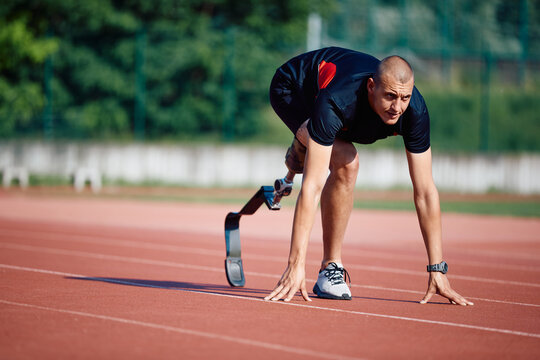
- An adaptive sprinter uses a carbon‑fibre running blade (sport‑specific prosthesis) and collaborates with a prosthetist to optimise alignment for sprint starts, coupled with a coach who includes strength and compensation drills. Outcome: personal best time, fewer injuries.
- A rehabilitation specialist works with a bilateral lower‑limb amputee in swimming: although the athlete uses no prosthesis in water, the team applies biomechanical modelling (from prosthetic gait studies) to optimise start and turn mechanics—demonstrating how prosthetic research informs non‑prosthetic contexts.
- A tech startup designs a modular prosthetic system for para‑cyclists, drawing on research on activity‑specific prostheses, 3D‑printing cost‑reduction, and sensor feedback. They partner with a national para‑cycling federation to test and refine the product—a textbook application of research → innovation → sport success.
- An inclusive sports organisation launches a certification programme for coaches in adaptive sport biomechanics. Coaches learn about prosthetic athlete training, inclusive progressive drills, and technological interfaces. They apply these skills to both amputee and able‑bodied athletes, fostering the Adaptive Synergy principle.
- A policy‑maker sets up a national fund to subsidise sport‑specific prostheses for youths from under‑resourced communities, recognising that performance innovation and inclusivity go hand‑in‑hand. They cite the research showing cost remains a barrier.
Tips and best practices for stakeholders
Here are some practical tips broken down by stakeholder type to help you turn research into action.
Adaptive Athletes
- Ask your prosthetist: “Is this prosthesis optimised for my sport?”
- Prioritise strength and mobility in your residual limb and core body—not just prosthetic training.
- Track performance metrics (times, distances, biomechanical markers) so you can evaluate the impact of your prosthetic setup.
- Establish a partnership team: athlete + coach + prosthetist + therapist + tech advisor.
- Seek peer networks and inclusive sport programmes to share best practices and equipment access.
Coaches & Trainers
- Invest time in learning the biomechanics of prosthetic athletes—not just able‑bodied models.
- Use video analysis and motion capture (where possible) to detect compensation patterns, asymmetries, and prosthetic interface issues.
- Schedule prosthetic check‑ins (alignment, component wear) as part of athlete training calendars.
- Build inclusive training sessions: some drills customised for prosthetic athletes, others integrated with full team.
- Monitor injury risk: prosthetic athletes may have unique loading patterns, residual‑limb skin issues, etc.
Sports Therapists & Rehabilitation Specialists
- Incorporate equipment‑checks and prosthetic‑component review into rehabilitation workflows.
- Use outcome measures beyond “return to walk/run”—look for “return to sprint/agility/plyometric” where appropriate.
- Coordinate with coaches for sport‑specific progression.
- Stay updated on sensor and prosthetic data platforms—these may soon enter clinical practice.
- Educate athletes about the importance of prosthetic maintenance, socket comfort, and alignment.
Assistive Technology Developers & Investors
- Design for sport‑specific demands: weight, stiffness, modularity, interchangeability.
- Partner with athletes early and iteratively test designs in real‑world sport settings.
- Consider cost‑reduction strategies (3D printing, modular design, scalable manufacturing) to expand access.
- Build data‑analytics platforms alongside hardware (sensor feedback, training dashboards) to differentiate your product.
- Explore global markets: inclusive sport participation is growing worldwide; access‑driven models may outperform elite‑only models.
Inclusive Sports Organisations, Policy‑Makers & Educators
- Embed adaptive sport research findings into training curricula and certifications.
- Create funding and subsidy models to reduce cost barriers for prosthetic athletes.
- Develop data‑collection systems to track outcomes for prosthetic athletes and use them to inform policy.
- Promote inclusive competition structures, ensuring sport‑specific prosthetic standards are considered.
- Encourage collaboration between universities, tech developers, sport federations and disability‑advocacy groups.
Accessibility Advocates
- Raise awareness of the intersection of prosthetic athlete performance and broader sport innovation.
- Advocate for equitable access to sport prosthetics, training resources and inclusive coaches.
- Encourage inclusive design of sport facilities, equipment funding programmes and policy frameworks—logging into the research that shows inclusivity drives performance, not just participation.
- Support research funding and open‑data initiatives in adaptive sport technology.
Key Challenges & How Research Suggests We Overcome Them
While the research is promising, there remain real challenges. Here is what we know and how we can respond:
Challenge: Cost and Access
Research shows that despite advances in design, cost remains a major barrier—especially for youth and community‑level athletes. MDPI
Response:
- Develop cost‑reducing manufacturing (e.g., 3D printing)
- Create funding/subsidy models via organisations or government policy
- Partner with inclusive sports programmes to bulk‑purchase or share equipment
Challenge: Training Gaps and Coaching Knowledge
Many coaches or therapists may lack deep knowledge about prosthetic athlete biomechanics or sport‑specific prosthetic optimisation.
Response:
- Expand coach/therapist education programmes incorporating adaptive‑sport research (e.g., adaptive synergy frameworks)
- Develop mentorship networks between experienced adaptive‑sport coaches and general coaches
- Include prosthetic‑specific modules in university programmes and certification courses
Challenge: Integration of Technology & Data
Smart prosthetics and sensor‑integration are coming—but many sport programmes are not yet equipped to interpret or make use of the data.
Response:
- Encourage data‑literacy training among coaches/therapists
- Use pilot programmes to demonstrate the value of sensor systems and analytics in prosthetic athlete performance
- Build user‑friendly dashboards and feedback loops for athletes, coaches and prosthetists
Challenge: Standardisation & Evidence Base
While research is growing, there is still a lack of standard metrics and longitudinal outcomes for prosthetic athlete success across sports.
Response:
- Support longitudinal studies tracking prosthetic athlete populations across multiple sports
- Develop standard performance metrics (e.g., biomechanical load, energy return, injury incidence) specific to prosthetic athletes
- Encourage open‑data sharing between labs, sport organisations, prosthetic manufacturers
Challenge: Psychological & Social Factors
Prosthetic athletes face not just biomechanical but psychological and social challenges (identity, stigma, accessibility).
Response:
- Integrate psychological assessment and support into training programmes
- Promote inclusive sport culture that values prosthetic athletes equally
- Use coaching methods that emphasise growth mindset, adaptation and resilience
What the Future Holds for Prosthetic Athlete Success
Looking ahead, here are some predictions and hope‑lines based on current research trajectories:
- Prosthetic athletes will increasingly use data‑driven training: real‑time performance feedback, prosthetic‑sensor analytics, AI‑based optimisation.
- Modular prosthetic systems will allow athletes to switch between sport modes (running blade, cycling, multi‑sport) with minimal downtime.
- Cost‑effective manufacturing (3D printing, localised production) will expand access to community‑level athletes, not just elite.
- Inclusive training frameworks will see prosthetic athlete success being viewed as part of mainstream sport performance, not a parallel track.
- Assistive technology and mainstream sports tech will blur: innovations developed for prosthetic athletes will feed into mainstream sports (and vice versa) via the Adaptive Synergy model.
- More research will evaluate long‑term success—not just performance peaks, but career‑longevity, injury prevention, residual‑limb health, quality of life.
- Policy and funding frameworks will gradually catch up—recognising that prosthetic athlete success is a matter of sport‑inclusion, innovation, economics and human rights.
Conclusion: Redefining success, together
As we survey the landscape of adaptive sport, it becomes clear: prosthetic athlete success is not a fixed target, but an evolving horizon. It spans biomechanics, technology, coaching, therapy, policy and culture. The game‑changing research we’ve discussed is providing new lenses through which to view— and to support— athletes using prosthetics, and by extension all athletes.
To the adaptive athlete reading this: you are not just a participant—you are part of the vanguard of inclusive sport excellence.
To coaches, therapists, developers, policymakers, educators and advocates: your role is pivotal in shaping the ecosystem in which prosthetic athletes thrive. The research gives you evidence, pathways, and inspiration—but success will depend on action.
Let’s embrace the future where high‑performance, inclusive sport is not an aspiration—it is the standard. Prosthetic athlete success is a beacon for what sports can become: dynamic, adapted, innovative, equitable.
If you’re ready to push the boundary further—explore the referenced research, integrate new training and technology practices, advocate for access, and build inclusive systems—you’ll be part of the transformation.