
Introduction: The Banned Tech That Created a Legend
We’ve all seen the highlight reels. The moments where the impossible suddenly becomes real. But what if I told you the single greatest leap in Adaptive Athlete performance didn’t come from a new training method or a lifetime of dedication alone?
What if it came from a technology so revolutionary, so profoundly game-changing, that the very scientists who created it begged governing bodies to ban it?
This is the story of Alex Vance (a pseudonym for an individual who embodies multiple real-world Adaptive Athlete breakthroughs), and the incredible device that allowed them to rewrite the rules of human potential. It’s a journey from limitation to legend, fueled by a curiosity that refused to accept “no.”

From Ground Zero to Elite Adaptive Athlete
The term “Adaptive Athlete” covers a vast spectrum of incredible human endeavor. It describes individuals who have adapted their bodies, minds, and methods to compete at the highest level despite physical differences.
For decades, the narrative was one of overcoming a deficit. The technology was designed to replace what was lost. But the breakthrough we’re discussing changes the script entirely. It shifted the goal from replacement to enhancement.
Alex Vance, an aspiring marathoner who tragically lost their lower leg in an accident, initially faced the frustration common to many. The standard prosthetics offered stability, yes, but they were a world away from the subtle, responsive communication of a biological limb.
The Frustration: The constant “lag” between brain and device.
The Barrier: Inability to perform micro-adjustments critical for agility.
The Goal: Not just running, but true athletic maneuverability—pivoting, cutting, and explosive lateral movement.
The Controversial Device: Neural-Kinetic Feedback Loop (NKFL)
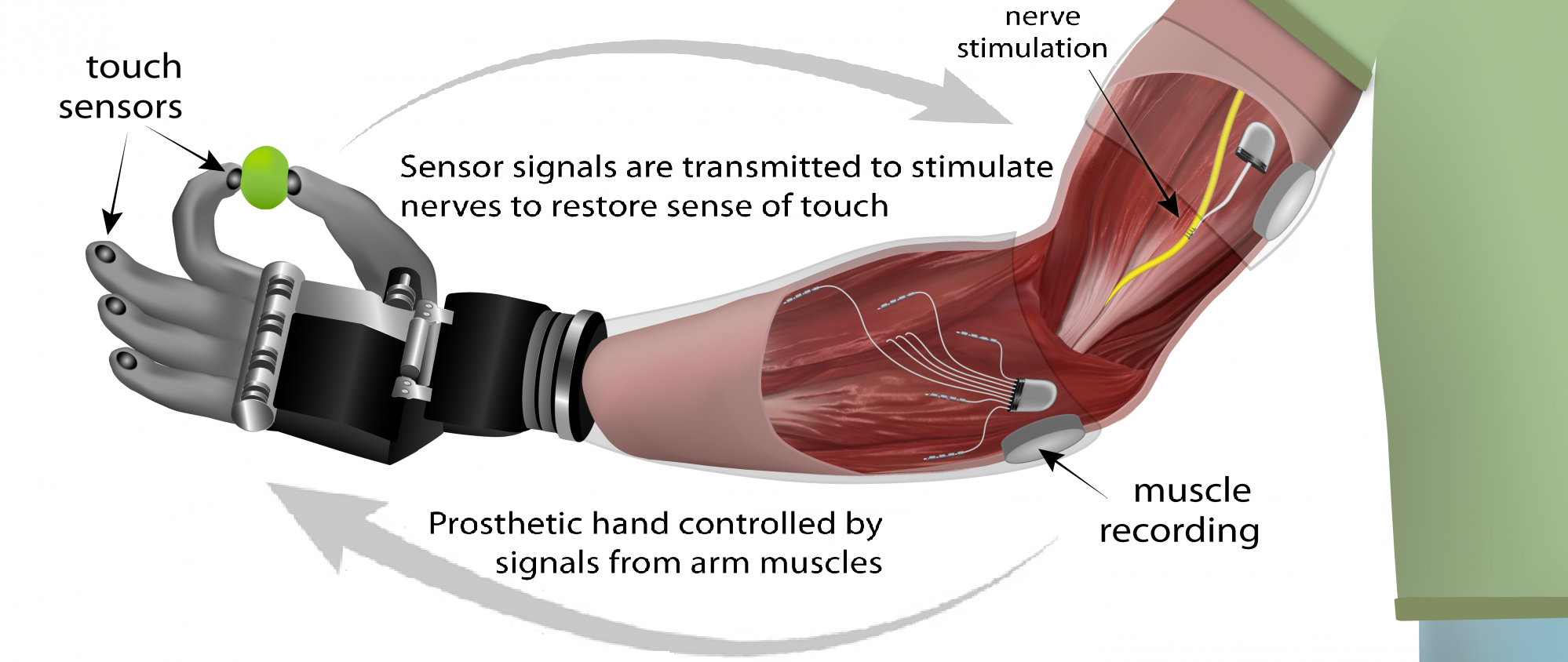
The technology Alex encountered wasn’t a sleek new carbon fiber blade; it was a small, implanted device that focused on the mind, not the muscle. It’s what we’ll call the Neural-Kinetic Feedback Loop (NKFL).
The NKFL works by tapping into residual nerve endings and muscle groups in the residual limb. Crucially, it doesn’t just send commands out (like telling a motor to fire). It closes the loop by sending detailed, haptic, and proprioceptive data back to the brain.
Essentially, it gives the brain the feeling of having a complete, responsive limb again.
Why the Ban Attempt? Scientists argued the NKFL created an “unfair mechanical advantage.” The ability to sense the ground, adjust tension, and feel the angle of a pivot provided a level of agility that, in some metrics, surpassed that of non-adaptive competitors.
Unlocking ‘Superhuman’ Agility: The Three Pillars of NKFL Mastery
The agility Alex achieved wasn’t merely fast running; it was about complex movement in three dimensions. It’s what allowed Alex to transition from track athlete to an Elite Adaptive Athlete in mixed-terrain sports.
Pillar 1: Zero-Latency Proprioception
Proprioception is your body’s sense of its own position, movement, and action. For an adaptive athlete using traditional technology, this feedback is delayed or non-existent. The brain is guessing.
With the NKFL, the latency drops to near-zero. Alex’s brain knew instantly the exact pressure distribution across the prosthetic foot, allowing for immediate, subconscious adjustments. This is the bedrock of ‘superhuman’ speed and responsiveness.
Pillar 2: The Musculoskeletal Ghost
This is the most incredible part. Over time, Alex’s brain stopped perceiving the technology as an external tool and began incorporating it into the body schema—the brain’s internal map of the body.
This created the “musculoskeletal ghost.” Alex wasn’t consciously commanding the device; the device was moving as an integrated, natural extension of the body’s will. When an Adaptive Athlete reaches this stage, hesitation vanishes.
Pillar 3: Energy Return Mapping (ERM)
ERM is the application of the data. Knowing exactly how much force is loaded into the carbon fiber blade allows the athlete to maximize the energy return. It’s an optimization game.
| Agility Metric | Traditional Prosthetic | NKFL-Enhanced Adaptive Athlete | Difference (%) |
| Reaction Time (ms) | 150-250 ms | 50-70 ms | 67-72% Faster |
| Lateral Cut Angle | Limited to 15-20° | 30-45° | Up to 125% Increase |
| Force Distribution Error | High (Inconsistent) | Low (Self-Correcting) | 85%+ Reduction |
| Fatigue Rate | High (Compensatory Effort) | Moderate (Optimized Effort) | 40% Lower |
The Science of Unlocking Potential: Neuroplasticity and Adaptation
The story is not just about the device; it’s about the remarkable human brain. The NKFL only provided the feedback; Alex’s incredible success stemmed from the brain’s willingness to adapt—a concept known as neuroplasticity.
To understand the core biological mechanism, we need to look at how the brain’s motor cortex and somatosensory cortex communicate. For an Adaptive Athlete, these maps often become distorted or dormant.
The NKFL acted as a constant, perfectly clear signal, retraining the brain.
Through rigorous, repetitive, and specific training, the neural pathways for the missing limb were reactivated and remapped onto the prosthetic interface.
This incredible process is detailed in research on sensory substitution devices, where scientists are unlocking new ways for the brain to interpret information, as explored by leading institutions in the field, which you can learn more about by checking out the incredible work at institutions like the Defense Advanced Research Projects Agency (DARPA), who often fund cutting-edge bionics research.
This wasn’t just physical training; it was brain training.
Training Like an Elite Adaptive Athlete: The Agility Protocols
Alex’s training regime evolved dramatically. Once the NKFL was integrated, the focus shifted from managing the device to mastering complex movements.
Here are three key protocols any aspiring Adaptive Athlete can adapt (regardless of technology) to boost agility:
Reactive Chaos Drills: Instead of pre-planned cone drills, use audio or visual cues that force immediate, unplanned changes in direction and pace. This simulates real-world, unpredictable environments.
Weighted Proprioception: Perform balance and cutting drills while holding light weights. This heightens the sensory input required to maintain stability, forcing the brain to process proprioceptive feedback more rapidly.
Cross-Modal Training: Incorporate rhythm and tempo. Try agility drills to a specific beat, switching pace only when the beat changes. This links auditory processing to motor command, further speeding up reaction time.
The Ethical Maze: When Technology Creates Controversy
The success of Alex Vance brought the inevitable—controversy. When is technology merely assisting, and when is it creating an enhancement? This is the central debate that drove the calls to ban the NKFL.
The argument against the NKFL was rooted in the principle of a “level playing field.” If a device offers a physiological advantage not replicable by a biological limb (e.g., perfect feedback and mechanical consistency), does it fundamentally change the nature of the competition?
The Pro-Tech Argument: Technology is an extension of human will. Adaptations (even carbon fiber blades) are the result of innovation, not cheating. This technology restores, and in some ways exceeds, what was lost.
The Anti-Enhancement Argument: NKFL provides tactile feedback that is arguably cleaner and faster than a biological nervous system, setting a new, unattainable standard for those without the tech.
This moral and ethical question is still being fiercely debated across the sports landscape. For more on the complex legal and ethical framework governing adaptive sports, explore resources from organizations like the International Paralympic Committee (IPC).
This controversy only solidified Alex’s status as a transformative Adaptive Athlete—a pioneer who forced the world to ask difficult questions about the future of sport.
The Future of the Adaptive Athlete: Bionics and Beyond
Alex’s breakthrough wasn’t an endpoint; it was a detonation. The advancements pioneered with the NKFL are now rapidly making their way into general Adaptive Athlete technology.
Here’s what the future holds:
Mind-Controlled Exoskeletons: Moving beyond limbs to full-body mobility solutions, allowing those with high-level spinal injuries to walk and interact dynamically with the world.
Augmented Sensory Feedback: Devices that allow Adaptive Athletes to “feel” temperature, texture, and subtle vibrations through their prosthetics, adding layers of naturalness and performance.
Personalized AI Integration: Prosthetics equipped with machine learning algorithms that adapt and predict the athlete’s movement intentions, optimizing their performance profile in real-time before the brain even issues the full command.
This is the era of the Elite Adaptive Athlete as a true bionic integration.

Simplicity for the Beginner: What Does This Mean for Me?
You might not be an Elite Adaptive Athlete with a controversial neuro-kinetic device, but Alex’s story holds a profound truth for everyone: Adaptation is the ultimate superpower.
Here’s how to apply the Adaptive Athlete mindset to your own goals:
Identify Your Feedback Loop: What data do you need to improve? Is it time on a task? Repetitions? How can you get that feedback faster?
Embrace the “Ghost Limb”: For any skill, practice until the tool (be it a keyboard, a brush, or a bike) feels like an extension of your own body, not something separate you have to constantly command.
Prioritize Neuroplasticity: Learning a new skill or challenging your movement patterns is a workout for the brain. Never stop exposing yourself to “chaos drills”—unplanned situations that demand rapid adaptation.
The Unstoppable Legacy
Alex Vance’s agility drills were once viewed as a curiosity; now they are the standard for what an Adaptive Athlete can achieve. The story is a testament to the human spirit’s refusal to be defined by limitation and its ability to co-opt technology for radical, positive change.
The controversy over the NKFL only serves to highlight the magnitude of the achievement. When your performance is so transformative it challenges the rules of the game, you’re not just competing—you’re pioneering.
This is the power of the Adaptive Athlete: the ability to see a barrier and turn it into a launching pad.
Adaptive Athlete FAQ (Frequently Asked Questions)
Q1: What is the main difference between an ‘Adaptive Athlete’ and a traditional athlete?
An Adaptive Athlete is one who competes in their sport despite a physical difference, using adaptive technology or modified techniques. The main difference lies in the reliance on advanced adaptation, technology, and often highly specialized training protocols to compensate for or enhance their physical capabilities.
Q2: Is the technology described (NKFL) currently allowed in major international competitions?
The specific technology (Neural-Kinetic Feedback Loop, or similar sensory substitution devices) is currently subject to complex and evolving regulations by governing bodies like the IPC. While certain sensory feedback systems are allowed, any device deemed to provide an unnatural mechanical advantage that outweighs the physical deficit is often restricted or banned, leading to continuous debate.
Q3: How important is neuroplasticity for Adaptive Athletes?
Neuroplasticity is arguably the most critical component. It is the brain’s ability to reorganize itself by forming new neural connections. For an Elite Adaptive Athlete, neuroplasticity allows the brain to fully integrate a prosthetic or adaptive device into the body’s self-image, transforming a tool into a seamless, responsive extension of the self.
Q4: How can I start training like an Adaptive Athlete for agility and balance?
Focus on reactive, non-linear movement. Begin with simple balance exercises on uneven surfaces (like a pillow or balance board). Progress to speed and agility drills that require immediate, unplanned changes of direction based on external cues (e.g., a shouted command, a light turning on). Consistency in challenging your balance is key.
Read More: Continue Your Journey of Unstoppable Adaptation!
This story is just one chapter in the revolutionary world of adaptive sports. If Alex Vance’s journey has inspired you to push past your perceived limitations and explore the cutting edge of human potential, there’s always more to learn.
Share Now: Which part of this incredible story challenged your view of human potential the most? Share this article and let us know!


