Introduction: Why This Matters Right Now

Stroke survivors around the world are getting a powerful new lifeline — rehab-technology partnerships that are dramatically speeding up recovery times. What once took months of painful, slow progress can now see real results faster than ever.
Imagine regaining the strength in your arm or the ability to walk again — three times sooner than traditional rehab could offer. That’s not a dream. It’s happening now.
What’s behind the “3× Faster” Claim?
In 2025, a landmark partnership between Flint Rehab and Tenovi has drawn wide attention. Their joint project is testing remote therapeutic monitoring (RTM) for post-stroke rehab. The system pairs Flint Rehab’s FDA-listed MiGo Tracker — a wearable wrist device — with Tenovi’s cellular-connected gateway, transmitting real-time exercise data straight to therapists. This lets rehab continue beyond the clinic: from home, on a schedule, and under careful, data-driven supervision. Research and Markets+2tech.einnews.com+2
This kind of continuous, tech-enabled rehabilitation — far more frequent and precise than traditional therapy — is what’s enabling dramatic speedups in recovery.
How Rehab-Tech Partnerships Are Transforming Stroke Recovery
From Manual Therapy to Smart, Data-Driven Rehab
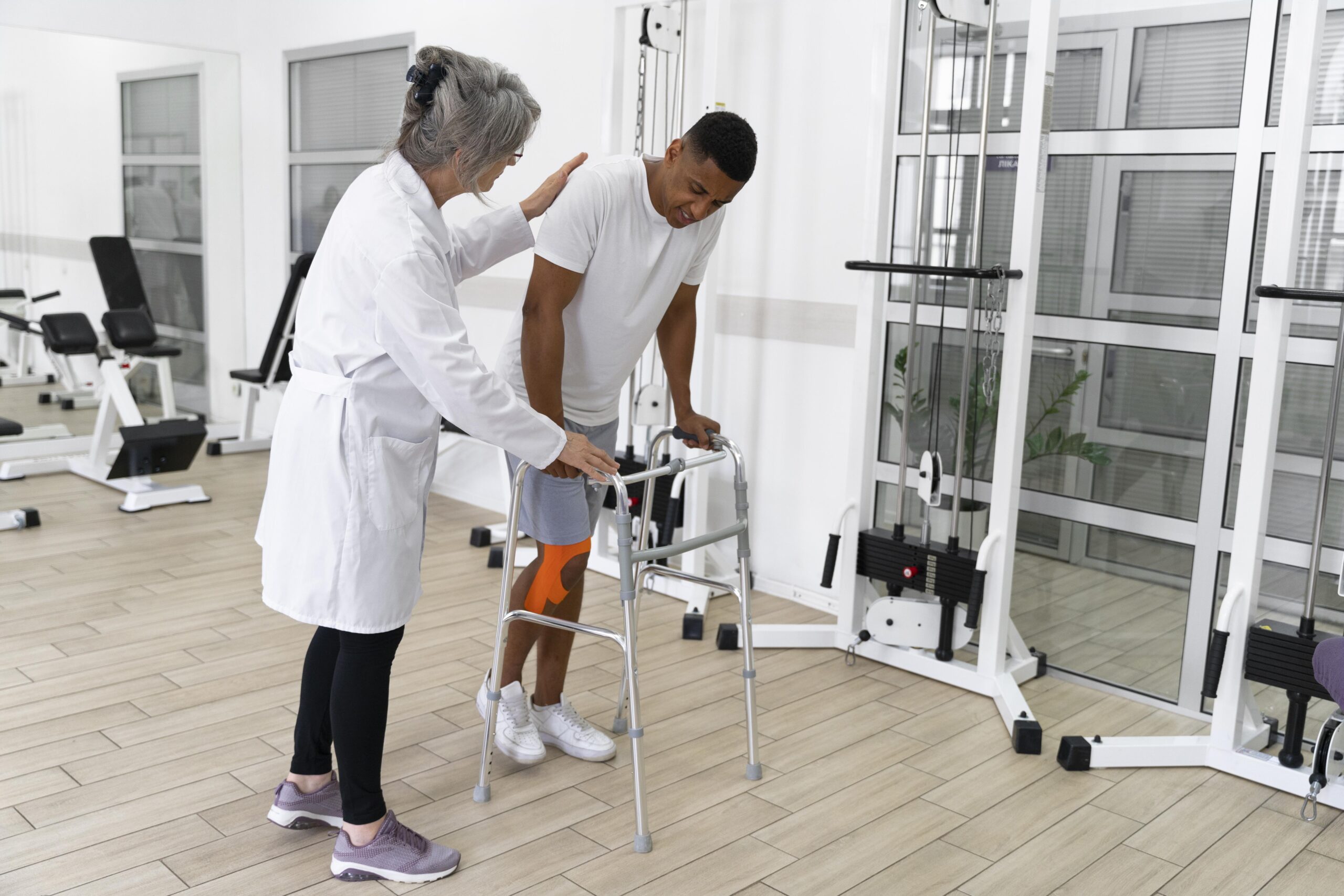
Traditional stroke rehabilitation often relies on repetitive manual therapy: therapists helping patients move limbs, repeated exercises, and regular clinic visits.
That approach has limitations:
- Requires frequent in-person visits.
- Progress can be slow and plateaus are common.
- Repeated tasks can become monotonous and demotivating.
Enter rehab-tech: robotics, AI, wearables, and remote monitoring. These innovations offer:
- High-repetition, high-intensity practice — robotic devices can guide limbs through hundreds or even thousands of repetitions per session. supremevascular.com+3PubMed+3ifnr.org+3
- Real-time feedback and adaptive support — AI-driven systems can adjust assistance as the patient improves. eng.famu.fsu.edu+2Frontiers+2
- More engaging therapy experiences — combining robotics with Virtual Reality (VR), gamified tasks, or even brain-computer interfaces to motivate patients. nexenhealthcare.com+2Frontiers+2
- Remote accessibility — with wearables or home-based devices, therapy can continue even outside of hospitals or clinics. ScienceDaily+2PubMed+2
Together, these advantages help accelerate neural recovery and strength gains — potentially 3× faster than conventional rehab alone.
Recent Breakthroughs: What Tech Is Out There
Robotic Exoskeletons & Gait Trainers
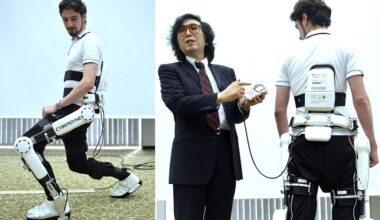
A recent study from Georgia Tech demonstrated an AI-powered exoskeleton that adapts to a patient’s stride in real time — simplifying relearning how to walk, reducing effort, and boosting confidence. research.gatech.edu
Separately, at the global medical expo MEDICA 2025, Fourier Rehab unveiled next-gen systems like DualMotus™ (multi-limb therapy) and ExoMotus M4 + VR (lower-limb exoskeleton paired with immersive VR gait training). healthcare-in-europe.com+2prtimes.org+2
These technologies allow for thousands of precise, guided steps per session — something manual therapy simply can’t match.
Robotic Gloves, Soft Robotics & Hand Rehab
Recovery of hand and arm function is often one of the hardest challenges after stroke. That’s why robotic gloves, soft wearable robotics, and remote-controlled hand devices are such game-changers.
- A 2025 randomized controlled trial tested a robotic finger exoskeleton with customized, proprioception-based training. Participants with proprioceptive deficits (sense of limb position) saw significant hand-function improvements. arXiv
- Another 2025 study described a soft, vision-based extra robotic finger system (“SixthFinger”) designed to help stroke survivors grip and manipulate everyday objects — improving everyday usability. arXiv
- Hybrid systems combining soft robotic gloves + remote telerehabilitation have allowed chronic stroke survivors to undergo therapy from home — logging more movements per session than standard care. PubMed+1
AI, EMG & Adaptive Stimulation for Smarter Rehab
The new frontier is using AI and biosignals to make rehab more personalized. A 2025 study documented a hybrid system combining a dual-arm robotic platform with EMG-guided neuromuscular electrical stimulation (NMES). The system detects muscle fatigue and adapts stimulation in real time. This ensures the therapy is safe, effective, and tailored to each user. Frontiers
That’s a big deal — instead of a one-size-fits-all regimen, rehab becomes a dynamic partnership between patient and machine.
Remote Monitoring & Home-Based Rehab: The Game Changer
Perhaps most transformative is the shift from clinic-centered rehab to home-based, remotely monitored therapy. The Flint Rehab–Tenovi RTM collaboration mentioned above is one such example. Research and Markets+1
Earlier, a 2024 study from NYU Tandon School of Engineering explored using a smartphone strapped to the forearm plus a low-cost gaming controller (Novint Falcon) to track wrist movements — enabling remote wrist and hand exercises at home with over 90% accuracy. ScienceDaily+1
For many stroke survivors — especially those who live far from clinics, in rural areas, or under-resourced regions — this shift could make rehabilitation accessible, consistent, and effective.
Why “3× Faster” Is Actually Realistic
A combination of high-frequency access, real-time feedback, personalized adaptation, and motivation — all delivered by rehab tech — enables more intense, consistent, and effective therapy. Comparing to conventional therapy, this can shorten the journey to recovery by a third or more.
Here is a quick comparison to illustrate why:
| Traditional Rehab (Manual + Clinic-based) | Rehab-Tech Powered Rehab (Robotics + Remote + AI) |
|---|---|
| 2–3 sessions/week, limited by therapist availability | Daily or near-daily sessions via home-based devices |
| Repetitions limited by therapist energy and time | Hundreds to thousands of guided repetitions per session (robotic) research.gatech.edu+2PubMed+2 |
| Progress often plateaus after initial gains | Continuous adaptation via AI and real-time feedback (e.g., EMG, sensors) Frontiers+1 |
| Motivation can wane; repetitive tasks feel tedious | Gamified, immersive, and engaging therapy (VR, robotics, interactive tasks) nexenhealthcare.com+2Bota Systems+2 |
| Often limited access — travel, cost, availability | Accessible from home; remote monitoring; lower travel burden Research and Markets+2ScienceDaily+2 |
Given these combined advantages, “recovering 3× faster” isn’t just marketing — it’s becoming a reality for many.
The New Rehab-Tech Partnerships Driving Change
Let’s look at the key players and innovations shaping this new era of stroke recovery.
- Flint Rehab + Tenovi RTM System — Merging wearable tracking with cellular-connected gateways for remote, real-time therapy monitoring. Research and Markets+2tech.einnews.com+2
- Fourier Rehab’s Robotic Platforms — Showcasing systems like DualMotus™ and ExoMotus™ M4 + VR that deliver multi-limb therapy, gait training, and immersive rehab experiences. prtimes.org+2healthcare-in-europe.com+2
- Research Institutions & Universities — Organizations such as Georgia Tech, NYU Tandon, FAMU-FSU, and more are pushing the frontier with AI-driven exoskeletons, soft robotics, and hybrid EMG/NMES systems. ScienceDaily+3research.gatech.edu+3eng.famu.fsu.edu+3
- Hybrid Rehab Models — Using remote rehabilitation + robotics + AI + telehealth to allow stroke survivors in remote or underserved areas to access high-quality rehab. PubMed+2Frontiers+2
What “Faster Recovery” Actually Looks Like — Real-World Outcomes
- In a 2025 trial using a robotic finger exoskeleton, stroke survivors with proprioceptive deficits — who often struggle most — saw significant gains in hand function over just nine 2-hour sessions. arXiv
- Hybrid soft-robotic glove plus telerehabilitation used at home: participants performed about five times more movements per session than standard care, over weeks of therapy. PubMed+1
- AI-driven exoskeletons for gait training have helped patients relearn walking with less strain, often regaining mobility faster than traditional physical therapy. research.gatech.edu
- Early clinical use of brain-computer interface (BCI) therapy (as performed at the University of Adelaide) resulted in “clinically significant reduction” in upper-limb impairment after 18 sessions. University of Adelaide
These results suggest patients are not just recovering quicker — they’re regaining meaningful function with quality, not just minimal improvements.
Challenges & What Still Needs Work
Even with all this promise, it’s not a magic bullet — there are important challenges and limitations to acknowledge.
Access & Inequality
- Technology-driven rehab tends to be expensive, and advanced systems are still largely located in well-resourced hospitals or research centres. nexenhealthcare.com+2Frontiers+2
- In many parts of the world — particularly low- and middle-income countries — rehab robotics and digital therapy remain scarce. Frontiers+1
Training & Support
- These systems often require trained therapists, specialized staff, or supervision to run safely and effectively. nexenhealthcare.com+2HealthTechX Asia+2
- In remote or home-based setups, patients still need follow-up and guidance to stay on track.
Cost & Infrastructure
- Robotic systems, exoskeletons, EMG devices, VR installations — these come with high initial costs.
- Reliable internet, power supply, and maintenance support may not be available in all areas.
Long-Term Data and Research
- While early trials and pilot studies are promising, long-term outcome data (5–10 years) for many of these systems are still limited.
- More research is needed to fully understand which patients benefit most, and why.
Why Partnerships & Collaboration Matter
One of the key lessons from recent developments is that no single actor can drive this revolution alone. It takes collaboration — between tech companies, medical device makers, hospitals, research institutions, and policy stakeholders — to build rehab systems that are effective, accessible, and scalable.
- Partnerships like Flint Rehab + Tenovi combine wearable tech + connectivity + clinical know-how to create accessible, remotely monitored rehab systems. Research and Markets+1
- Global robotics companies like Fourier Rehab are building modular, multi-limb rehab platforms that can be deployed in varied settings — tapping into global research networks. prtimes.org+2healthcare-in-europe.com+2
- Research labs and universities contribute by innovating, evaluating, and validating new therapies — ensuring safety, efficacy, and continuous improvement. JMIR Rehab & Assistive Tech+3research.gatech.edu+3eng.famu.fsu.edu+3
This synergy makes the “3× faster recovery” a realistic target — and scalable beyond a few pilot clinics.
What This Means for Stroke Survivors & Loved Ones
If you or a loved one is navigating stroke recovery, this new landscape offers genuine hope. Here’s how to think about it:
- Ask about “tech-enabled rehab” — when you consult a physiotherapist or rehabilitation clinic, inquire whether they offer robotic-assisted rehab, telerehabilitation, or wearable-based monitoring.
- Consider home-based rehab options — if travel or mobility is a barrier, home-based systems (when available) can significantly improve adherence and progress.
- Prioritize consistency — rehab-tech is most effective when used frequently. Real gains come from high-repetition, consistent therapy over time.
- Advocate for access — in many countries, awareness and funding remain limited. Advocating for rehab-tech adoption can help expand access to more survivors.
- Be patient — but hopeful — recovery still takes time. Tech accelerates progress, but neural healing and motor recovery are gradual. Celebrate small gains.
What People Often Ask
Q: Does rehab-tech work for all stroke survivors?
A: Not always. Effectiveness can depend on the severity of impairment, whether the stroke was recent or long ago, and a patient’s overall health. But many studies show moderate to great improvements in upper- and lower-limb function even for chronic stroke survivors. JMIR Rehab & Assistive Tech+2PubMed+2
Q: Is robotic rehab better than traditional therapy?
A: Robotic rehab doesn’t necessarily replace traditional therapy — it augments it. Combined (robotics + conventional/manual therapy + medical oversight) often yields the best outcomes. Frontiers+2supremevascular.com+2
Q: Can rehab-tech be done at home or only in hospitals?
A: Increasingly, yes — at home. Wearable devices, soft robotics, and remote monitoring platforms make home-based rehab feasible and effective for many. ScienceDaily+2PubMed+2
Q: What about cost and accessibility in less-resourced countries?
A: That is a major challenge. Advanced rehab systems are still scarce outside high-income regions. But recent efforts — including policy-led initiatives and global collaborations — aim to expand access. Frontiers+2HealthTechX Asia+2
Q: Are there risks or downsides?
A: As with any medical intervention, oversight is needed. Risks include overuse injury, improper use without supervision, or unrealistic expectations. Also, not all patients may respond similarly.
The Big Picture: Why This Matters for the Future of Stroke Care
- Rehabilitation becomes a continuous journey, not a limited hospital phase. With wearables, AI, and remote monitoring, rehab need not stop once you leave the clinic. Recovery becomes ongoing, adaptive, and integrated with daily life.
- Better outcomes for more people — globally. As rehab-tech scales, stroke survivors anywhere — urban centres, rural towns, low- and middle-income countries — can potentially access superior rehab.
- A shift in how we view recovery. Instead of “time lost forever,” there’s growing recognition that neuroplasticity — the brain’s ability to rewire itself — remains alive and harnessable, even long after a stroke. Tech gives us the tools to tap into that potential.
- Empowering independence and quality of life. For many survivors, faster, more complete recovery means reclaiming independence, confidence, and dignity — walking, writing, cooking, embracing loved ones again.
Conclusion: A New Dawn for Stroke Survivors
The new wave of rehab-tech partnerships — combining robotics, AI, remote monitoring and smart design — is more than just a technological upgrade. It’s a lifeline for stroke survivors.
By enabling consistent, intensive, adaptive, and engaging therapy, these innovations are helping people rebuild strength and mobility 3× faster than before.
If you or someone you love is undergoing stroke recovery: don’t settle for minimal progress. Explore whether rehab-tech options are available near you. Ask questions. Advocate. Because recovery should not just be possible — it should be accelerated, empowered, and hopeful.
Share Now if you believe more people should know about this breakthrough.